Why the chestnut is so versatile, used in Hong Kong street food, French desserts and pasta sauce

In Asia, the nuts are used in soups and stews, while in Europe they appear in pasta dishes and in desserts like Mont Blanc and marron glacé
When the temperature drops in Hong Kong, street hawkers appear with giant woks filled with small black pebbles and brown chestnuts. For Hongkongers, it’s a sure sign that winter has arrived.
Stirring the hot pebbles to prevent the nuts from burning also makes sure the smell of the roasting nuts lures in customers who buy small paper bags filled with the hot snack. In time-honoured fashion, they then try their best to peel the hard dark brown skin off to get at the tender, meaty, starchy lump inside without scorching their fingers.
Besides being eaten as a snack, chestnuts are a versatile ingredient that can be used in savoury dishes like soups, stews and pastas, and even some desserts.
For pastry chef Joanna Yuen of Otera in Hong Kong, they are one of her favourite things to eat, especially those bought from street vendors.
“When you walk by these hawkers with the big woks stirring the chestnuts in the ‘sand’, you smell that toastiness – a smell that makes you feel happy,” she says.
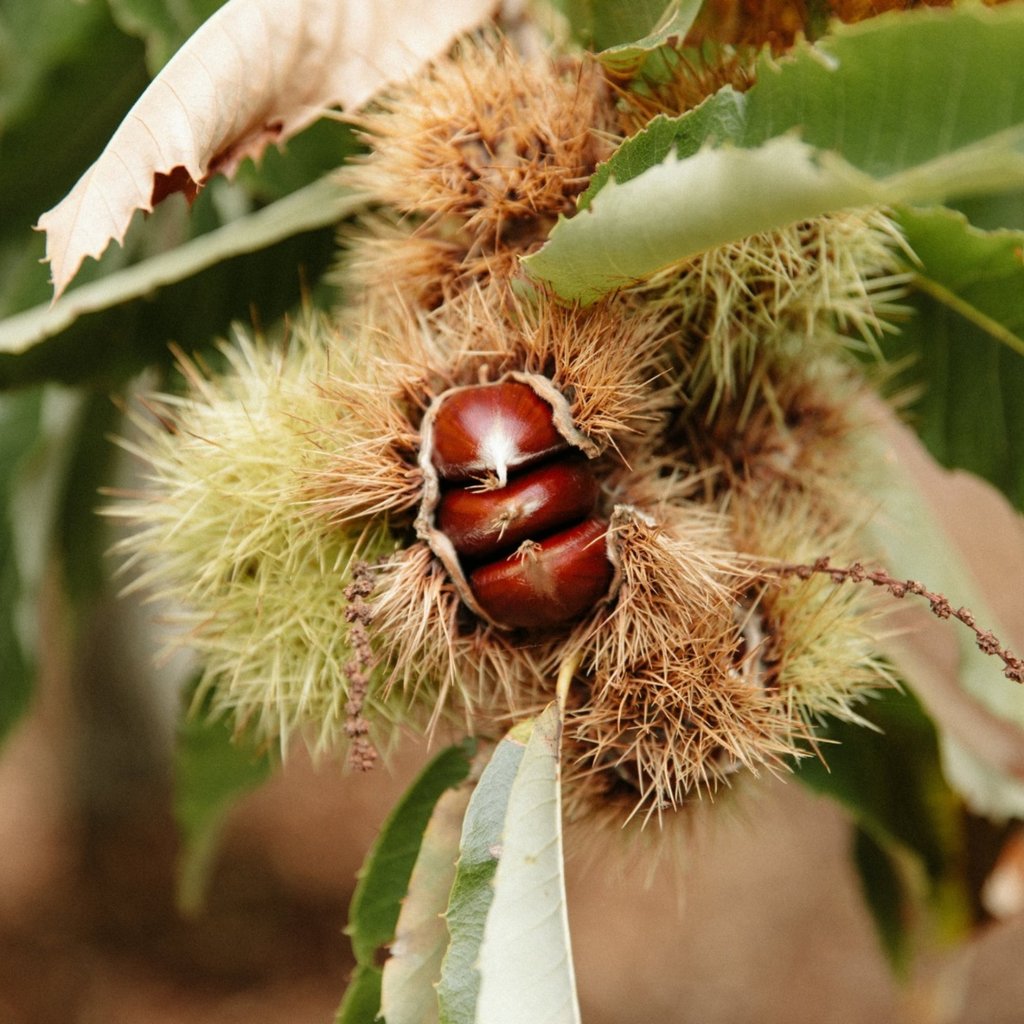
Yuen describes it as a pleasant burnt aroma, not bitter, and says she buys them from the street vendors when she can; otherwise in the rest of the year she buys packaged, ready-peeled chestnuts from Japanese snack shops.
One of the most famous European desserts using chestnuts is a Mont Blanc, named after the highest peak on the Italian-French border. The pastry chef says that when it comes to making this dessert, the typically canned chestnut purée is piped like vermicelli over Chantilly cream and meringue. The result is quite sweet – but Yuen has an alternative.
“The canned ones have sugar and preservatives, so I actually find that using the whole cooked chestnut that you can find in 759 or Sogo, where it’s peeled, and then you just crush it [into a paste], without adding sugar and adding an Italian meringue instead, brings air into it and lightens the dense texture of chestnut,” she says.
According to The American Chestnut Foundation, there are eight species of chestnut trees, from the genus Castanea, found around the world. They include the American, Ozark, Alabama, European, Chinese, Japanese and Seguin species, with the last of these [being] one of two species native to China.