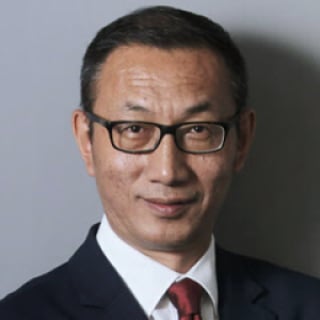
Wang Xiangwei
Wang Xiangwei is a senior visiting scholar (2026-27) at the Rajawali Foundation Institute for Asia, Harvard Kennedy School, and a former editor-in-chief of the South China Morning Post. He started his career at the China Daily, before moving to the UK, where he worked at a number of news organisations, including the BBC Chinese Service. He moved to Hong Kong in 1993 and worked at the Eastern Express before joining the Post in 1996 as China business reporter. He became SCMP's China editor in 2000 and deputy editor in 2007, a position he held for four years prior to being promoted to editor-in-chief (2012-2015). He has a master's degree in journalism, and a bachelor's degree in English.
Wang Xiangwei is a senior visiting scholar (2026-27) at the Rajawali Foundation Institute for Asia, Harvard Kennedy School, and a former editor-in-chief of the South China Morning Post. He started his career at the China Daily, before moving to the UK, where he worked at a number of news organisations, including the BBC Chinese Service. He moved to Hong Kong in 1993 and worked at the Eastern Express before joining the Post in 1996 as China business reporter. He became SCMP's China editor in 2000 and deputy editor in 2007, a position he held for four years prior to being promoted to editor-in-chief (2012-2015). He has a master's degree in journalism, and a bachelor's degree in English.
Languages Spoken:
English
In a year-long research across America, I hope to map where superpower friction ends, and where shared interest must begin.

As long as external demand holds up, policymakers appear relatively untroubled by weakening domestic demand, despite rhetoric to the contrary.

The city should seize the opportunity offered by warming US-China ties and the coming Apec summit to burnish its global prominence.

The meeting between the Chinese and US presidents laid the groundwork for more predictable China-US relations, including on cross-strait issues.
Advertisement

Beijing’s manoeuvring highlights its resolve and suggests it feels it has the upper hand in negotiations ahead of Trump’s visit.

As mainland officials manage Hong Kong affairs through the ‘one of us’ lens, it should not affect the city’s role as a superconnector.

The ‘two sessions’ is Beijing’s chance to demonstrate reliability as nations reassess their ties with China and the US in an increasingly fragmented global order.

As the US disrupts international norms, China should reconsider its place in the world system to protect its overseas investments.

To boost demand, Beijing must upend its long-held mantra of production over livelihoods and investment over consumption.

As the US reframes the dynamics between allies and adversaries, Beijing may see an opportunity to advance its cross-strait goals.

The city’s unique tapestry will remain strong as long as it keeps embracing the attributes that attract talent from the mainland and beyond.

It is time to embrace a new era in which the goal is not ‘made in China’ but ‘consumed in China’.

Beijing should encourage foreign dignitaries to visit and also nurture the city as a base for more international, multilateral institutions.

Reports of Chinese business leaders taking their lives have sparked concern over how to support the beleaguered private sector and protect its entrepreneurs.

Officials should do more to help Beijing figure out how Hong Kong’s unique capitalist character can best serve national interests.

His declaration that the US is done intervening could not have come at a better time for Chinese leaders, who have long fretted over Western influence undermining party rule.

While neither side wants to yield before the other, the mounting costs of the conflict mean Xi and Trump are likely to talk soon.

The US president’s moves could serve as a catalyst for China to increase domestic stimulus and forge closer ties with its major trading partners.

Amid budget constraints, the city should gear research and innovation towards sectors where it has an advantage rather than follow trends.

What better way to show the city can be a bridge for US-China relations and reinforce that it remains a good place to do business?

Beijing has no choice but to boost domestic consumption, and external pressure could force its hand on otherwise painful reforms.

Efforts to reassure residents, investors and observers have been sidetracked by a lack of clearer parameters on what Hong Kong can or can’t do in the new environment.

The ‘we-know-best’ mentality prevents market forces from playing a decisive role and affects investor confidence.

While short-term stimulus will help, Beijing must directly address the fears of businesses and households to get them spending again.

Deng’s guiding philosophy of the centrality of economic development is rarely mentioned now, and has become secondary to national security.

Deng’s guiding philosophy on the centrality of economic development is rarely mentioned now and has become secondary to national security

Trump’s return, while expected to affect how China will carry out Xi’s reforms, could also work in Beijing’s favour geopolitically.

When it comes to China, many international investors take their cue from Hong Kong’s business leaders – like they did 45 years ago.

As China prioritises exports and investments, the country’s stimulus measures have failed to adequately boost meek domestic consumption levels. Unless leaders are willing to adopt radical solutions to boost confidence, consumers will continue to keep their wallets closed.
