From journalist to art investor: how Kitty Go built her second act in Hong Kong
Once infamous for her tell-all novels, Kitty Go has channelled her boldness into meaningful art and impact projects across Asia

I GREW UP IN a traditional Chinese family in the Philippines. My dad was a businessman working with his brothers. My mother was a homemaker, but in true Chinese fashion, if there was a shortage of staff, she had to help out. When a new business opened, she worked alongside my aunts.
THE FAMILY BUSINESS grew and now we’re the biggest snacks and drinks producer in the Philippines. We also have shopping malls, digital banking and some media. That’s where I trained to run a media company and be an editor. Again, in true Chinese fashion, they traditionally want to hire relatives. But I went to study fashion in New York’s Fashion Institute of Technology in the 1980s and worked in America for 10 years. I was in fashion production but it wasn’t high fashion. That wasn’t a thing yet. It was for the domestic US market with overseas production in Hong Kong, Indonesia, Guatemala, Mexico and other countries.
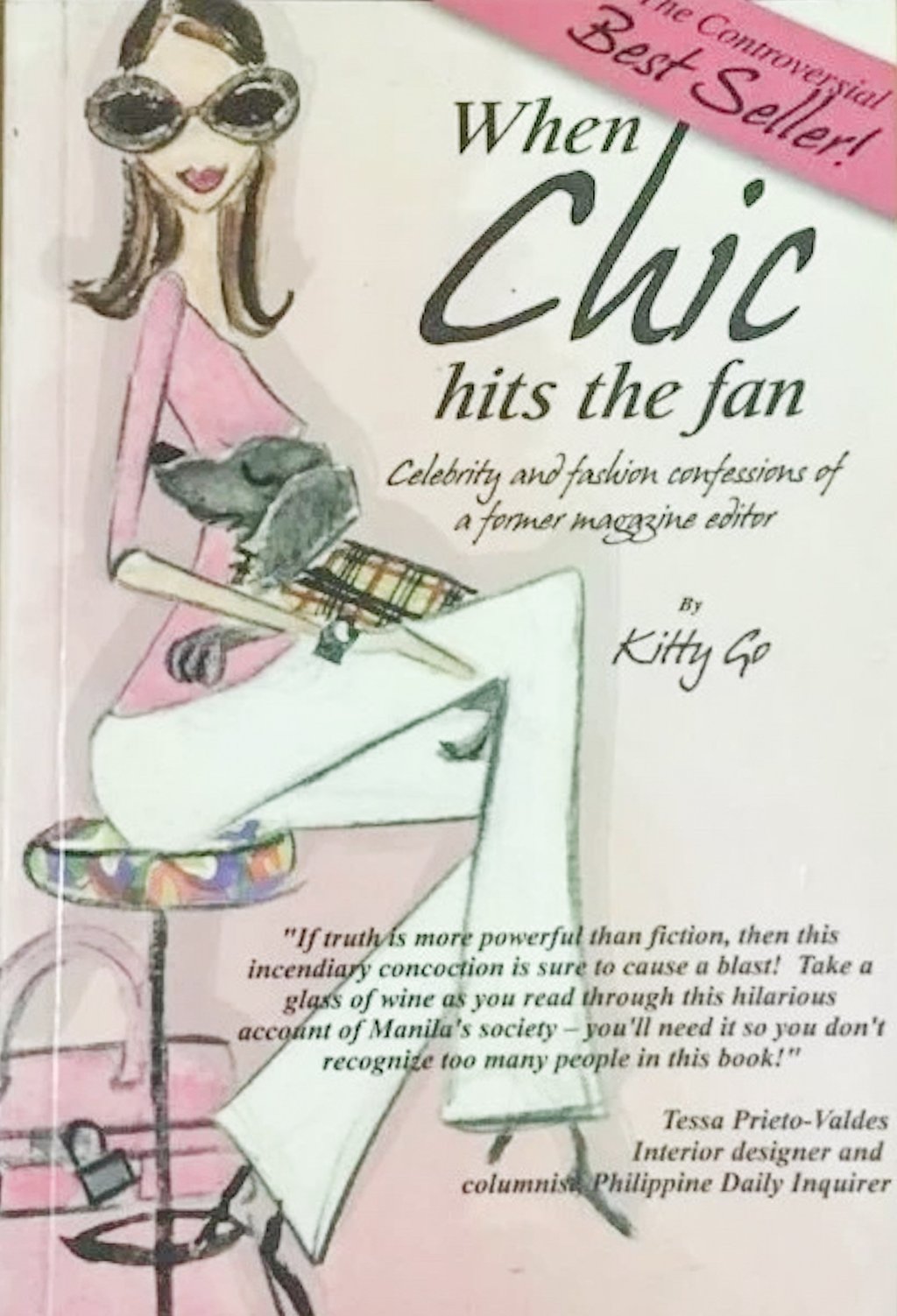
IN 1995, I MOVED BACK to the Philippines because my family wanted me to come back. I worked in our media company and was a society writer. During this time, I met my husband, who was British and in banking. In 2000, we moved to Hong Kong because he got a job here. During our marriage, we also lived in Tokyo, London, France and Taiwan. While we were in Taiwan, I wrote two novels, When Chic Hits The Fan (2005) and Chic Happens (also 2005). They were about the celebrity, fashion and society scene in the Philippines. I got into a lot of trouble because I was dishing dirt. But I didn’t name names. I wrote them for fun and I thought I was away from the Philippines long enough to not get incriminated. People were angry but I really didn’t care – I didn’t like those people anyway. A lot of Filipinos still ask me about those books. Filipino high society has drama, but Hong Kong has money. I remember certain major feuds in the Philippines and I was like, “How much are they fighting over?” It turns out the amount was equivalent to the price of a car.
WHEN MY MARRIAGE ENDED, I decided to stay in Hong Kong. I continued in media, writing for the Financial Times, The Wall Street Journal, the South China Morning Post and some local glossies. I mostly covered fashion but the art scene was getting started. Chinese buyers were starting to pay a lot for art so I paid attention to those stories. I did have an interest in art but it wasn’t serious.
I LEFT WRITING because I thought I couldn’t keep up with new media. I don’t TikTok. I can’t even do a Reel. I’m technologically inept. The art business is actually perfect for me because I don’t really need to know tech. All you need in the art business is a good eye and connections, and maybe the smarts of knowing when to sell and when to hold.
IN THE LATE 2000s, there were all these art funds, about 50 of them, and they all failed. When I looked into it, it was all driven by finance professionals but nobody put their own money in. It was very institutional. I realised nobody’s going to join because nobody has skin in the game. I was going to be different. I would do it myself, put in my own money. Originally, it was going to be my retirement plan with my husband. When we divorced, I just took it over on my own and continued. That’s when I set up EKCART Asia, an art venture and collection management company.