M+ in Hong Kong rebuilt 9 installations spanning over 7 decades by women artists
These multisensory installations engage the body as well as the mind, while challenging male-dominated art history narratives

M+ is set to transport visitors into the worlds of visionaries with “Dream Rooms: Environments by Women Artists 1950s-Now”. Running from September 20 to January 18, the exhibition casts visitors into a dozen multisensory environments crafted by women trailblazers from Asia, Europe and the Americas, spanning more than seven decades of contemporary art.
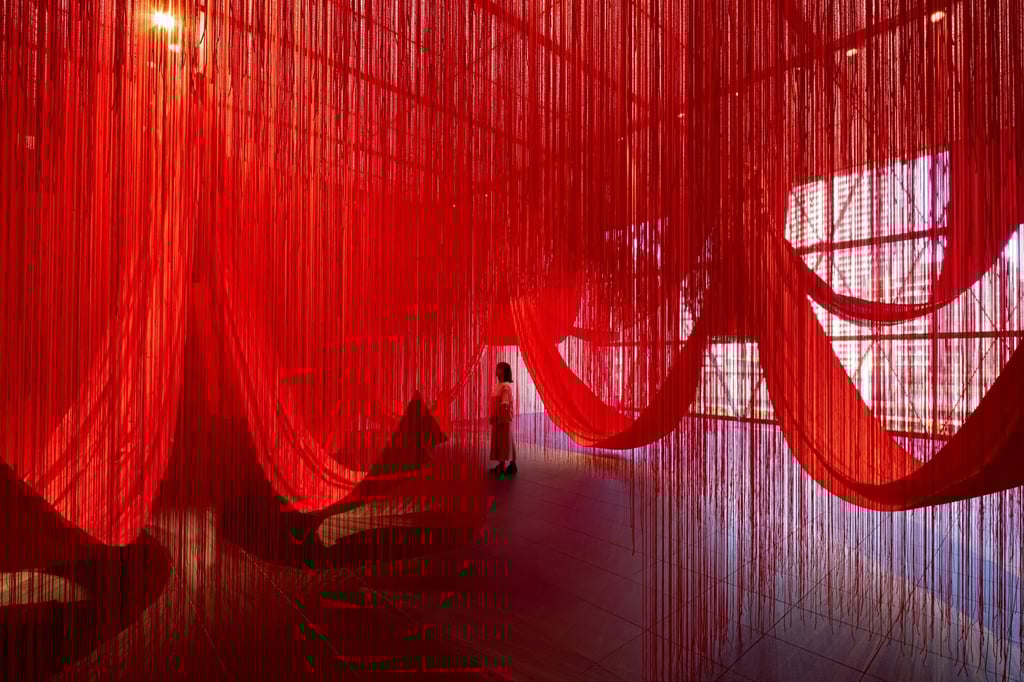
Starting at the advent of installation art in the 1950s and 60s, the works invite visitors to engage the body as much as the mind. Often ephemeral and experimental, the installations blend art, architecture and design, anticipating today’s digital experiences while challenging male-dominated art history narratives.
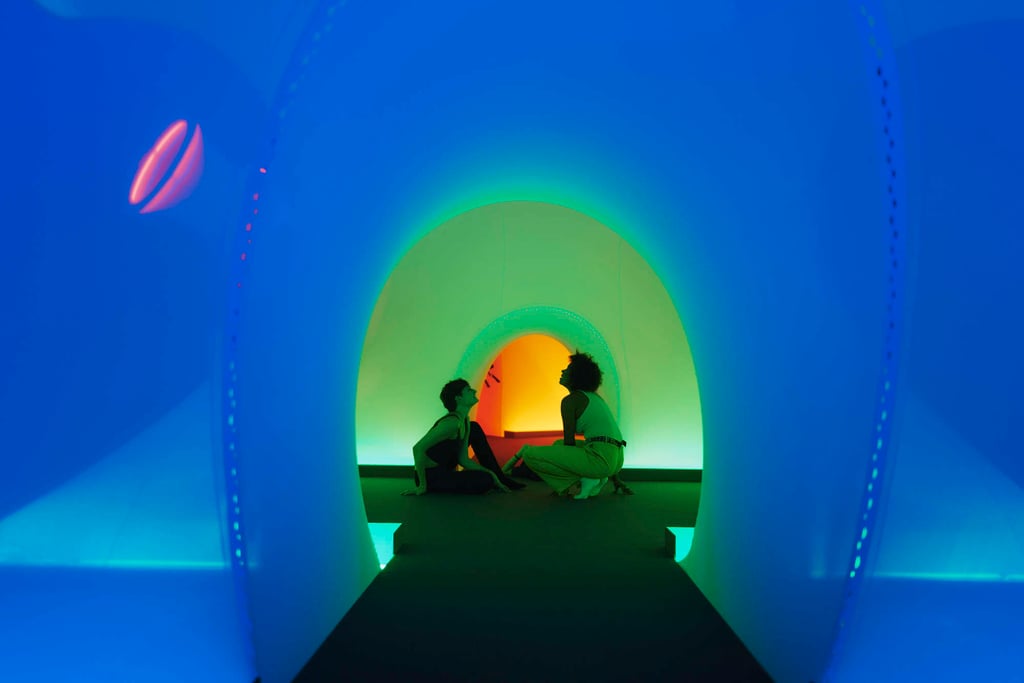
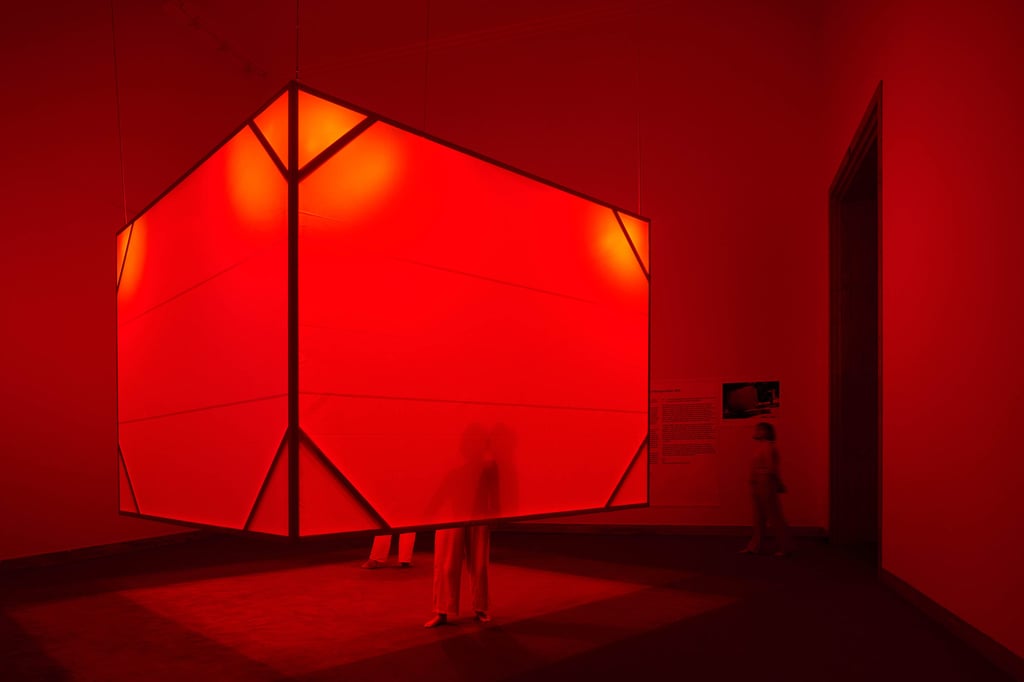
The exhibition, which debuted in 2023 at Germany’s Haus der Kunst München under the title “Inside Other Spaces”, features nine historical works meticulously rebuilt through research and collaboration. These include Laura Grisi’s wind-filled Vento di Sud-Est (Wind Speed 40 Knots) (1968), which subjects visitors to natural phenomena inside a reconstructed black box to highlight the disconnect between indoor and outdoor worlds; Judy Chicago’s ethereal Feather Room (1966), suffused with 135kg of cruelty-free feathers; and Aleksandra Kasuba’s Spectral Passage (1975), a neon-lit rainbow journey accompanied by Gustav Holst’s The Planets orchestral suite that guides visitors through the stages of life and rebirth. One of the earliest works, Yamazaki Tsuruko’s Red, dates back to 1956 and features a luminescent red cube modelled on bedroom mosquito nets in Japan.
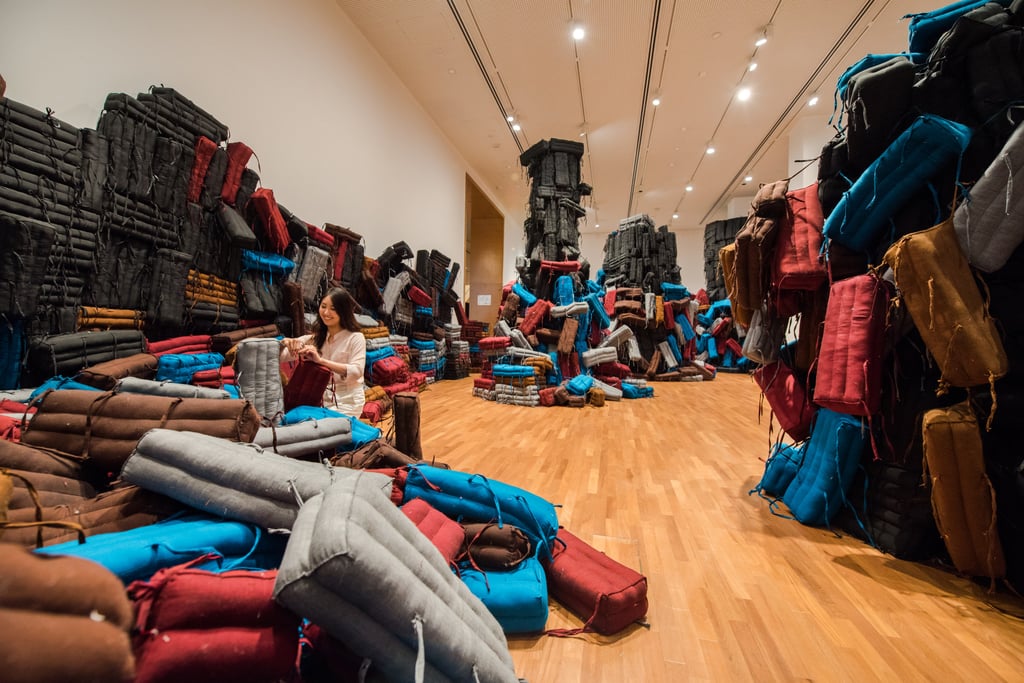
The Asian premiere adds three new commissions by Asians: Thai artist Pinaree Sanpitak’s tactile The House is Crumbling, an ever-changing landscape made from thousands of khid pillows that visitors can reshape; Chiharu Shiota’s Infinite Memory, featuring the Japanese artist’s iconic red threads enveloping towering dresses; and South Korean artist Kimsooja’s To Breathe, which transforms the museum’s architecture with a translucent diffraction film casting iridescent light across the space.
Complementing the show are public programmes including curator talks, artist panels, family days with movement and sound workshops, well-being sessions combining yoga and slow looking, and guided conversations titled “Pillow Talk: Beyond the Dream”.
The exhibition is an invitation “to encounter art as a fully embodied experience, moving beyond visual perception to activate sensory, spatial and emotional awareness”, says Russell Storer, associate director of curatorial affairs at M+. “It fosters a deeper understanding of how art shapes our perception of space, time and the self.”