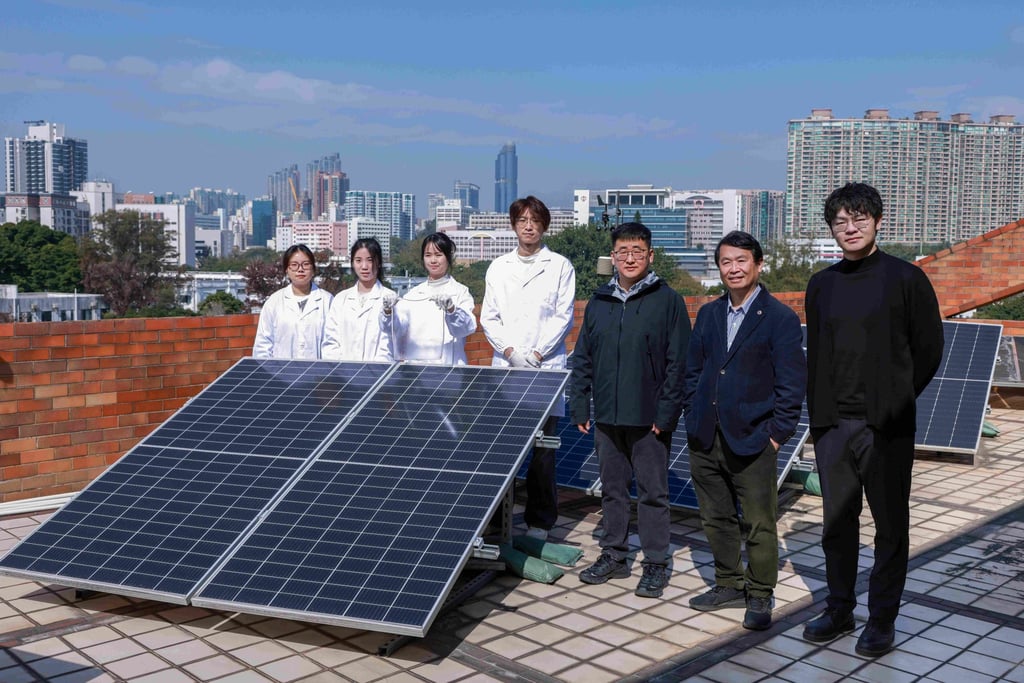
Chinese team’s hydrogel coating boosts solar panel power output by 13%, ideal for hot regions
Researchers say cooling innovation can lower temperature of overheated ‘hotspots’ on solar cells that can cause panel failure and fire risk

The transparent layer can reduce the temperature of “hotspots” – overheated areas on solar cells caused by defects, shading from leaves, bird droppings or dirt – by 16 degrees Celsius (nearly 30 Fahrenheit). Hotspots are a common cause of solar panel failure and fire risk.
Since publishing their findings, the team reported receiving positive feedback and interest from several companies keen to collaborate on commercialising the cooling hydrogel technology.
Lead author Jerry Yan Jinyue, PolyU’s chair professor of energy and buildings, said the team’s “next steps are to launch large-scale deployments and work with industry partners to bring this technology to mainland China and other countries around the world”.
“This coating is especially useful in hot, sunny regions near the equator, such as Southeast Asia and southern China, where solar panels are more likely to overheat.”