How designers in Singapore are applying their skills to solve pressing problems, from tackling the waste crisis to serving marginalised communities
- Individuals and enterprises in the city state’s design scene have been inspired to work on developing solutions for environmental and social issues
- DesignSingapore Council’s Good Design Research initiative provides funding, mentorship and support to encourage innovative ideas that bring positive change
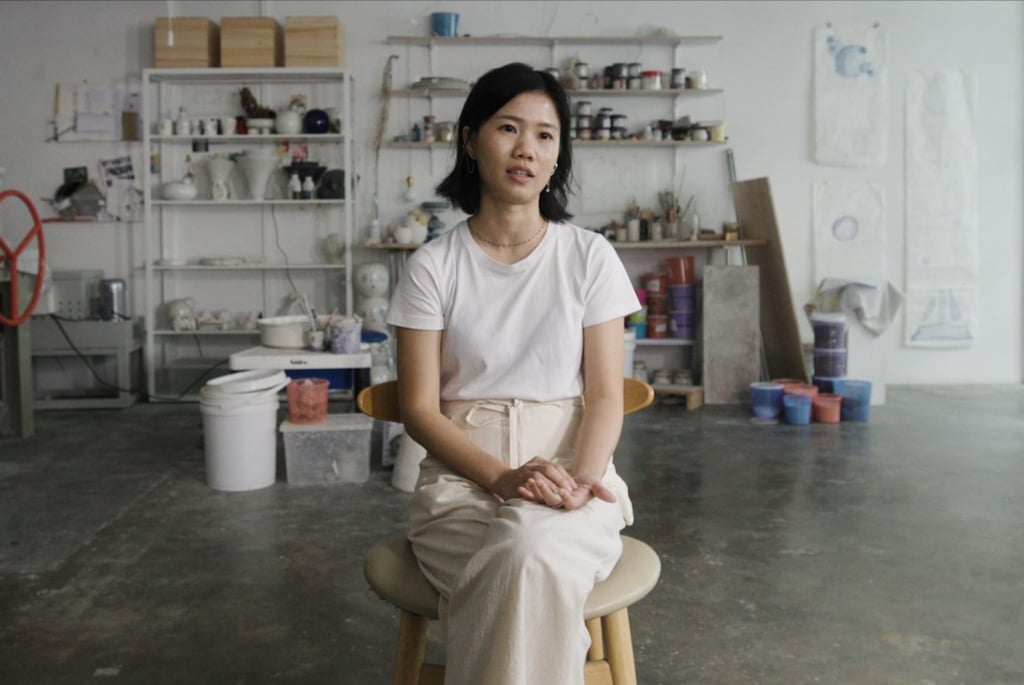
For Singaporean designer Genevieve Ang, design and art have always gone hand in hand. This is reflected in her background, which includes a master’s degree in architecture and work as a ceramicist.
“When I work with clay, I don’t necessarily approach it the same way craftspeople do. I’m more curious about it as a building material,” Ang says. “This is perhaps why I run two parallel practices – design and art.”
As a young designer in what she calls Singapore’s “bustling design scene”, Ang is optimistic about being able to make a mark through her work. “I dream a little further to what kind of impact I can make,” she says.
So it proved to be serendipitous that Ang discovered a challenge statement as part of a grant call by DesignSingapore Council’s Good Design Research (GDR) initiative, which involved recycling products made of glass – a material commonly used in glaze finishes for clay.
First launched in March 2020, the GDR initiative seeks to encourage and empower designers in Singapore to develop work that addresses global and societal challenges by providing funding, mentorship and support. Terra Sol, a Singapore-based technology firm that focuses on sustainability, was invited by DesignSingapore Council to sponsor a challenge statement as part of this initiative.
Terra Sol CEO Joe Tan saw this as a golden opportunity to tackle an issue that had been on his mind for several years: glass waste. “In Singapore, we generate about 60,000 tonnes of glass waste annually, and only 12 to 13 per cent of that is being recycled,” he says. “How can we tackle the remaining 40-odd thousand tonnes of waste?”
A big part of the problem is that glass requires an exceptionally high temperature in order to melt. “Glass melts at about 1,600 degrees Celsius (2,912 degrees Fahrenheit), and a lot of incinerators typically go up to only about 1,100 degrees Celsius,” Tan explains. “There is a lot of energy expended trying to burn a material that does not burn, so we thought it might be a better idea to recycle glass by first crushing it into sand.”
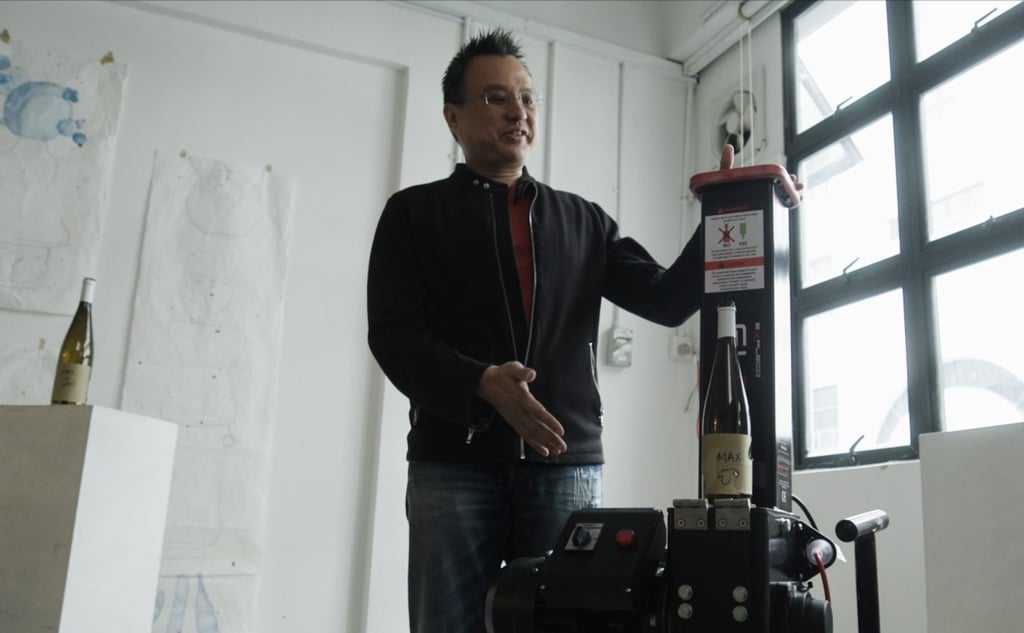
This glass sand can be repurposed in many different ways, such as industrial sandblasting, or as a material used in road surfacing or landscaping. It can also be used creatively in the realm of the built environment, as seen with Ang’s idea to turn crushed glass into glazes that may be used for ceramic tiles, which is being developed through a collaborative project with Terra Sol and the backing of a GDR grant.
Age-old practice transformed by technology
Ang, who has been working with clay since she was 10 years old, immediately thought of repurposing glass into glaze in response to Terra Sol’s challenge statement.
“Ceramics is a practice that dates back thousands of years,” she says, adding that this collaboration allows her to explore how long-established techniques can be enhanced using technology, such as the use of colour imaging and glass-crushing machines.
Traditionally, ceramic glaze – a glassy coating that adds colour, opacity and other desired finishes – is applied to a pottery piece and then fused onto the clay by firing it in a kiln. Ang’s project with Tan seeks to research and experiment with ways in which glass sand made from recycled glass could be incorporated into the glazing process.
For Tan, the project has given Terra Sol the novel experience of working directly alongside a designer. His company is primarily known in Singapore for introducing solar-powered smart waste bins, which have sensors that indicate when they are getting full.
“We were very happy to put forward the challenge statement to designers, which is not something that we typically do because our clients are mostly commercial industrial customers,” Tan says. “It’s the first time that we can reach out to the community and hear ideas from a new group of designers.”
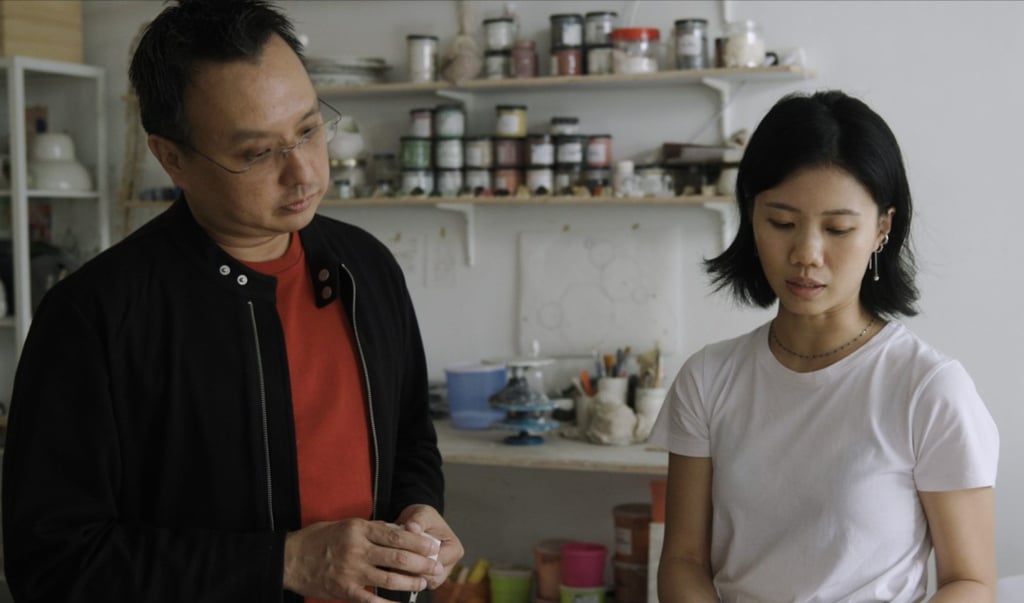
Tan says the collaboration with Ang has also helped refresh his perspective on the work that Terra Sol does. “To be able to see how a piece of a waste [can be] transformed into something beautiful – that is something we are very excited about.”
In the same vein, working with a commercial entity like Terra Sol has led Ang to start thinking about her glass waste solution as a more extensive and long-term effort. Through their discussions, Ang and Tan have realised that in order for the project to really take off, there needs to be scalability.
“It only makes sense if it can be done on a bigger scale … but in terms of research, it always has to start small, which is what I’m working on at the moment,” Ang explains. She is currently categorising different types of glass to determine which are suitable for the project – while it is a tedious process, it forms a big part of her research.
Design can make the world a better place. We work to infuse design into every aspect of our society and economy
“There are so many layers to this project, and this research is just phase one,” Ang adds. “I think both tiles and glazes can be made out of waste glass, but it will take time before we reach the next phase of our project.”
Tan is optimistic about the direction that their project is taking. He believes the greatest impact it could make is opening up people’s minds so that they may be inspired to “do their own little tinkering and experimentation to solve the problem” of waste.
Dawn Lim, executive director of DesignSingapore Council, says: “Design can make the world a better place. It’s wonderful to see Terra Sol recognising the significance of designers in addressing their business hurdles and acknowledging their valuable contributions.
“As Singapore’s national agency for design, we work to infuse design into every aspect of our society and economy. The GDR initiative brings into focus how design backed by deep research can make a real and positive impact by responding to myriad issues faced by societies and cities.”
Better and more inclusive by design
The GDR initiative is aimed not only at individual designers in Singapore, but at local design enterprises as well, calling on both groups to enact change through innovative and meaningful designs that benefit society across a spectrum of issues.
GDR grant recipients have designed clothes for the mobility-challenged such as stroke patients, proposed better mental health systems for workplaces, attempted to preserve Singapore’s rich hawker heritage through an understanding of the coloured crockery used, conceptualised a sustainable new retail model that reduces wastage, and looked to revive ageing malls.

And among the design enterprises answering this call to action are two that have examined particular needs within segments of society that can be overlooked.
WeCreate Studio, a Singapore-based design and architectural consultancy that focuses on social good, saw its founder and principal architect, Trecia Lim, embark on a research and product design project centred on autism in Singapore, with the support of the GDR initiative.
“In Singapore, when we talk about designing for special needs, most will [come up with] solutions for persons with physical disabilities,” Lim says. “However, there is insufficient research or knowledge on designing for persons with cognitive or sensory needs, probably because the topic is much harder to grasp.”
In order to foster a greater understanding of people with autism as well as their challenges and needs, the WeCreate Studio team came up with a card game called Hello Empathy. The cards feature conversation starters based on real-life scenarios, and have been designed to provide insight into the experiences of people with autism while also encouraging deeper empathy for them.
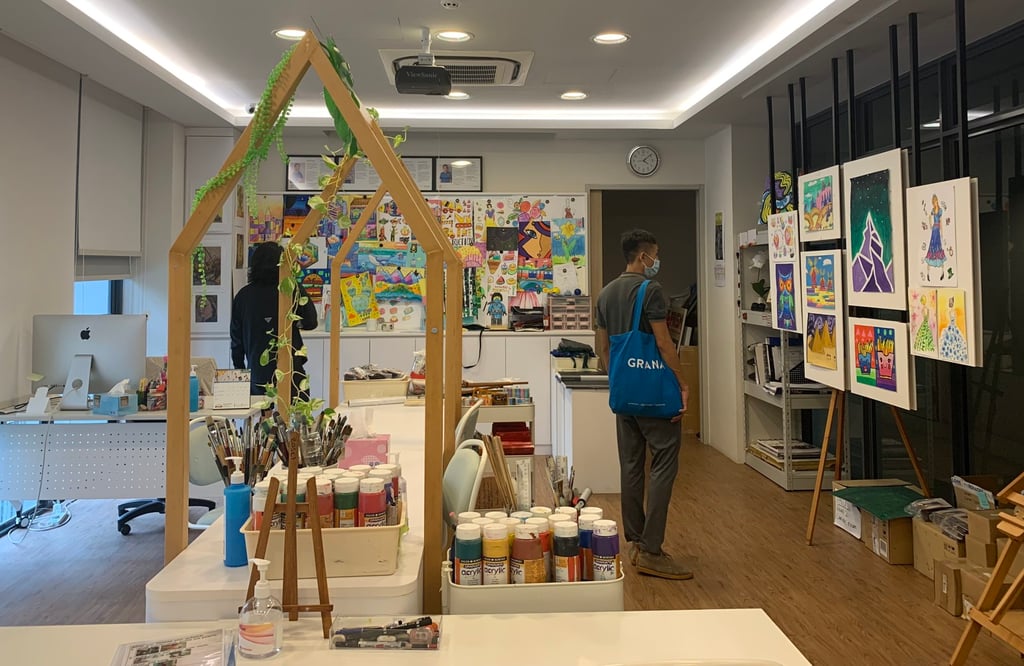
“Persons with special needs are not necessarily disabled by their medical condition, but instead are disabled by their environment,” Lim says. “It is crucial to recognise that we live in a global society of diverse needs and should thus embrace diverse opportunities and perspectives.”
Another organisation recognising the need for more inclusivity in design is WOHA, a Singapore-based interdisciplinary architectural firm that is behind landmark buildings in the city state such as the Parkroyal Collection Pickering Hotel. With backing from the GDR grant, it has been creating grab bars for Singapore’s ageing population that are functional yet also aesthetically pleasing.
WOHA’s designs integrate the assistive functions of grab bars – which help people maintain balance and avoid falls – into common bathroom accessories such as a toilet roll holder or a towel rack.
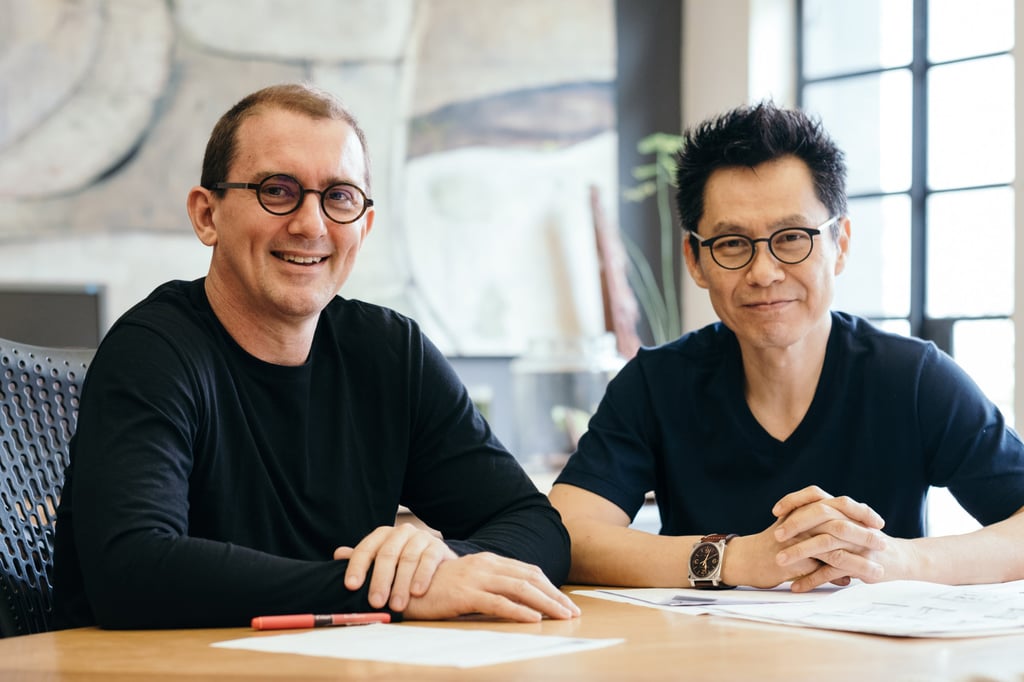
Wong Mun Summ, co-founding director of WOHA, says: “Being a recipient of the GDR grant has helped us to venture further in research-based projects, which we usually have little bandwidth for. The funding also allows for a more impactful kick-start to the project, as it enables initial prototyping to take place.”
Lim echoes these sentiments, noting that she is particularly proud of the journey taken by her WeCreate Studio team during their GDR-backed project. “We didn’t just come up with a card game; this process allowed us to see how design can elevate marginalised groups like the autism community,” she says.
“We look forward to a future where there wouldn’t be a need to discuss empathy in the design process, as this would have been ingrained in each of us.”