Feng shui, redefined: Dear Modern creator Cliff Tan plays down the superstitious and emphasises the common sense behind the practice – an approach that’s earned him followers worldwide

The Singaporean former architect reinterprets the Chinese practice to offer practical solutions for modern living, transforming spaces into sanctuaries of comfort and clarity

“Every Asian knows not to point your feet to the door,” says Singapore-born Tan, now based in London, where he first launched his design studio Dear Modern back in 2016 – long before he started sharing feng shui tips like this on TikTok under that same moniker. “That’s common sense,” he laughs. “Apparently it was not so obvious.”
As Dear Modern’s name suggests, Tan frequently addresses his dear viewers’ design concerns directly on camera, using miniature models of furniture and core principles found in feng shui – the openness of a space, the natural flow of a room – to illustrate how their homes can look more organised and actually feel like home. It’s a digitally native, distinctly modern twist on an ancient Chinese practice which I, like many others, had previously dismissed as little more than myth – and it has since brought him more than four million followers across TikTok and Instagram combined at the time of writing.
Feng shui, as Tan likes to describe it, is really just the art of being practical: “My channel made it lighthearted, funny and more approachable, less stigmatised.” Setting the superstitious undertones aside, he adds, “people started to understand that it actually makes sense”.
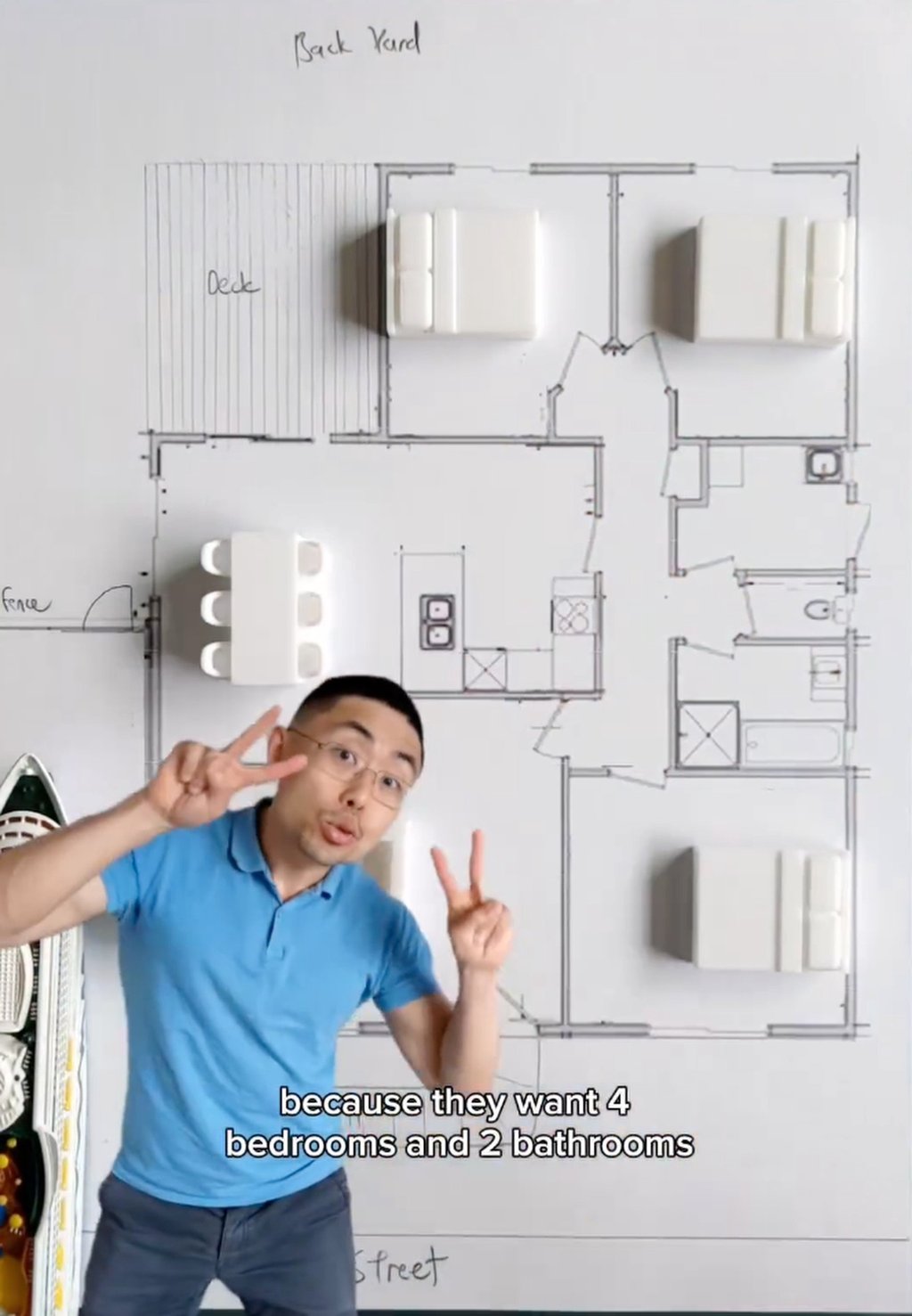
Having since moved away from what he calls “normal” architecture and design projects to focus solely on delivering feng shui consultations, Tan muses that even with over 5,000 clients (and counting) around the world, he’s still learning something new every day. “You get insight [into] how people live everywhere,” he says, from managing massive suburban garages in the United States to navigating bathroom washing machines across Europe. “I thought I knew stuff back then, but how wrong was I?”
In many ways adapting to his own life abroad is what helped Tan, who now also works with corporate clients ranging from McDonald’s to Ikea, lay the foundation for what Dear Modern would eventually become. “I hated it so much,” he recalls of moving to London, not yet having found his niche and struggling to find his path in a foreign country. Being used to Asian working culture, “where your managers are always right”, he says, won him little favour in Western environments where higher value was placed on “good thoughts and ideas” – the ability to deliver results rather than respect.