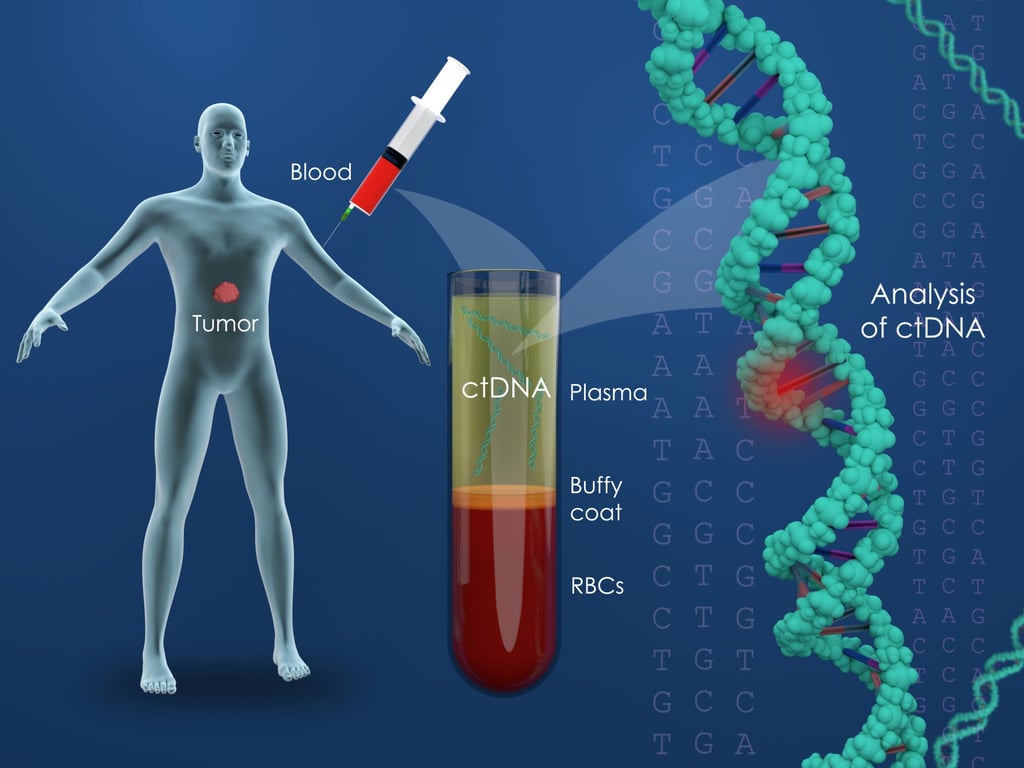
How tests that detect cancer DNA fragments in blood can kickstart earlier treatment
A study shows that ctDNA tests can detect tumours up to three years before before traditional testing methods would have picked them up

Cancer doctor and researcher Siddhartha Mukherjee describes how surprised scientists were to discover DNA drifting freely in blood plasma almost 80 years ago.
“The finding defied biological orthodoxy,” he writes in his Pulitzer Prize-winning 2010 book, The Emperor of All Maladies: A Biography of Cancer.
“DNA was thought to remain locked inside the nuclei of cells, and not float around on its own. Stranger still, these weren’t whole genomes but broken pieces – genetic flotsam cast adrift from an unknown source.”
That unknown source, it was later discovered, are genetic mutations and tumours, the fragments of which are known as circulating tumour DNA (ctDNA).
CtDNA is seen in healthy individuals’ blood too – due to normal cellular processes – but only at low levels. Higher ctDNA levels flag the likely presence of a tumour. This is why ctDNA tests are potentially so valuable as a diagnostic tool for cancer.
A study published in May by Johns Hopkins University in the US found that a new laboratory test in trial – multi-cancer early detection (MCED) – was able to identify ctDNA up to three years before traditional testing methods would have picked them up.