What is Dongba script? The only hieroglyphic system still used today is found in China
Over 1,000 years old, Dongba script is associated with the Naxi ethnic minority and is a common sight in Yunnan province’s Lijiang city

Stepping into the Old Town of Lijiang, a city in China’s Yunnan province, feels like entering the set of a Chinese period drama. Passing timber homes dotted with red lanterns, you walk on slick, rain-polished cobblestones worn down by centuries of Himalayan traders’ footsteps.
The 800-year-old network of timber-framed architecture – often associated with Naxi ethnic minority culture – and the town’s alpine canal system earned Unesco World Heritage status in 1997 for exceptional preservation of multi-ethnic urban design harmonised with a dramatic natural backdrop.
Today the Old Town is a thriving shopping district. And if you pay attention to the signage, you will see drawings underneath almost all of them.
This is not graffiti – it is Dongba script, the only hieroglyphic script still in use today.
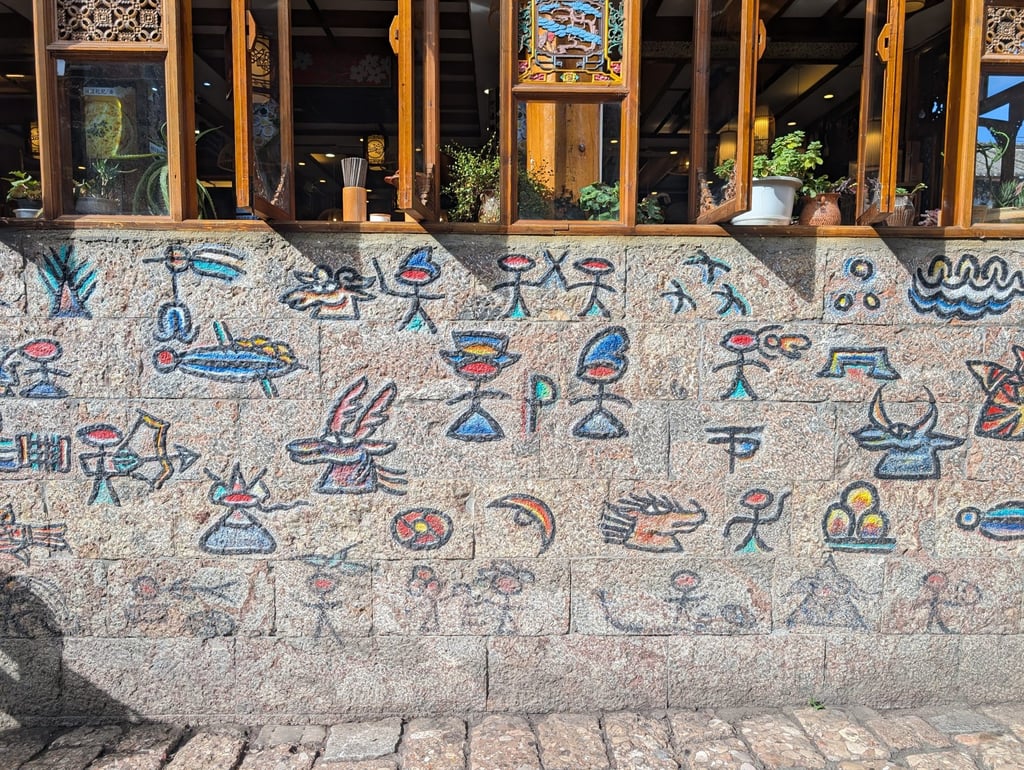
Dongba is the traditional religion, culture and priestly class of the Naxi ethnic group, most of whom live in Lijiang, with others spread across parts of Yunnan, Sichuan and Tibet.