The culinary science behind baked stuffed crab shell at Hong Kong’s T’ang Court
Executive chef Wong Chi Fai turns local blue and Alaskan king crab into a crisp-topped, creamy shellfish classic, stripping away the mess of whole crab

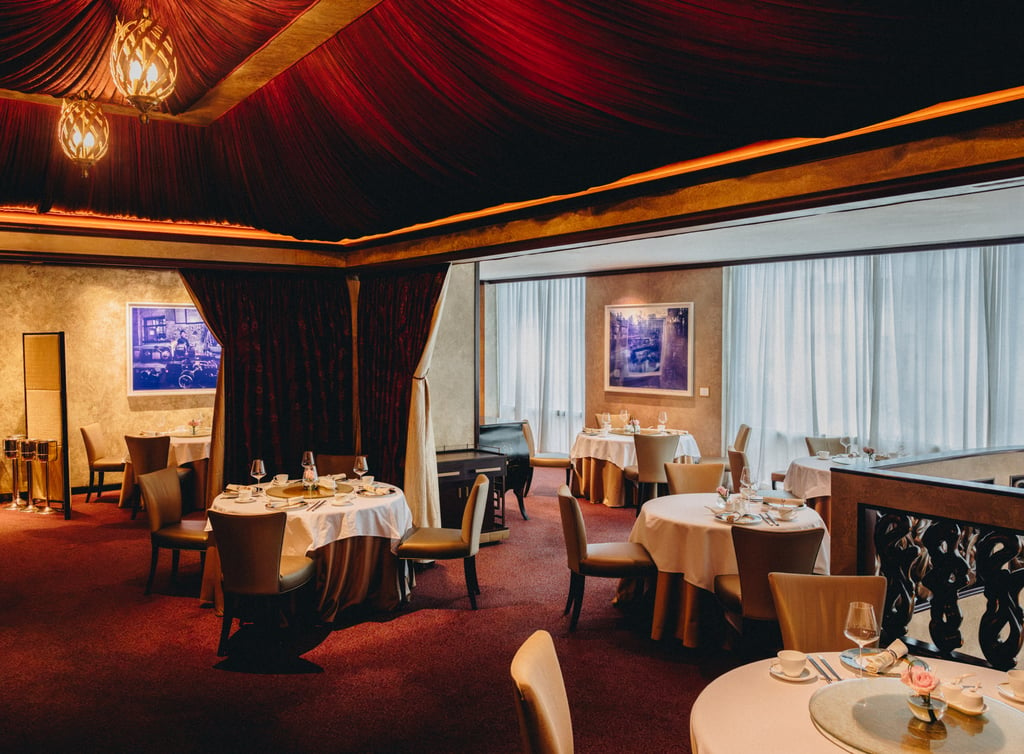
Rather than serve the crab whole, the kitchen picks the meat, folds it through a cream sauce, returns it to the shell and bakes it. Diners still get the visual of the crab shell, but none of the mess with claws, legs or shell.
“Every night after service, our culinary team hand-picks the sweet, succulent meat from both fresh local blue crabs and Alaskan king crabs,” says Wong. Local blue crab contributes delicate sweetness, while Alaskan king crab brings a richer, robust texture. Wild seafood also shifts day by day. The two variations of crab vary in moisture content and sweetness depending on season, weather and ocean conditions, requiring the chefs to adjust seasoning and cooking time in response. Wong says maintaining a consistent result “requires decades of culinary intuition”.
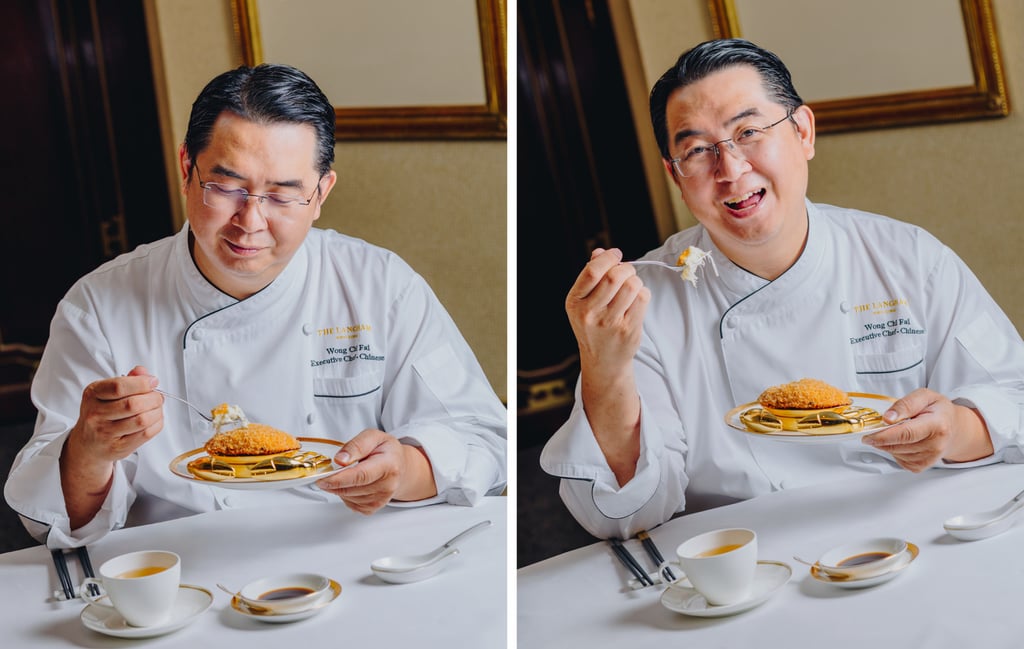
Hand-picking is one of the dish’s most time-consuming stages. The meat has to be removed cleanly without breaking it down too much. “A single fragment of shell ruins the guest’s experience,” Wong says, which is why every portion is inspected by hand. It is a small detail that underpins the whole point of the dish.