Hong Kong stocks fall on disappointing ‘golden week’ retail sales in China
Hang Seng Bank’s shares jump as much as 41 per cent in early trading on a buyout proposal from parent HSBC

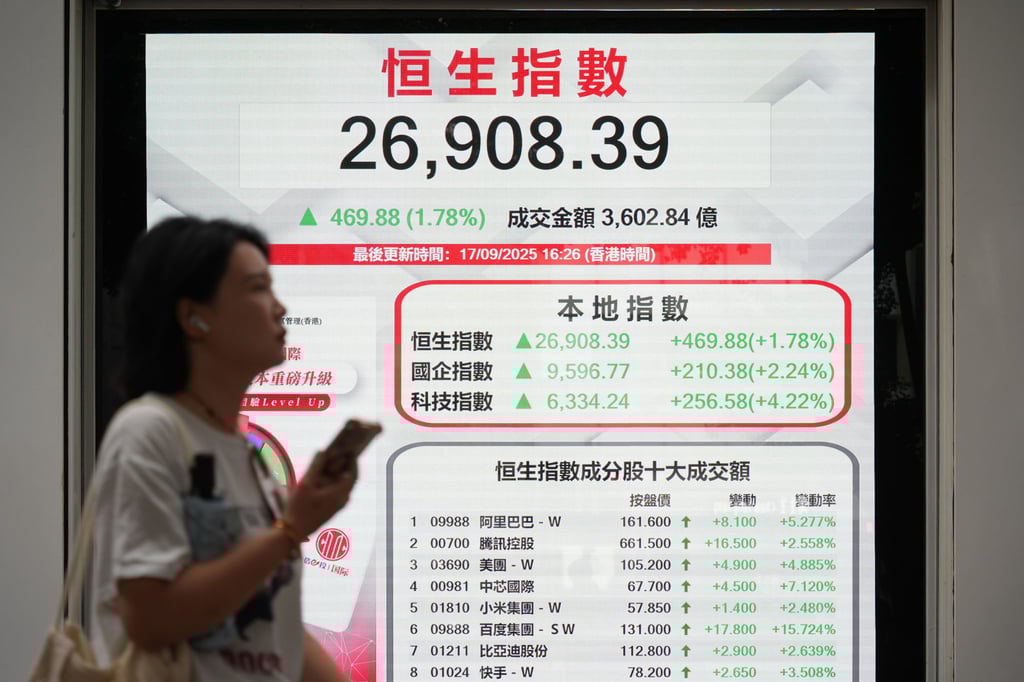
The Hang Seng Index eventually closed 0.3 per cent lower at 26,752.59, after dropping as much as 1.3 per cent earlier. The Hang Seng Tech Index lost 0.7 per cent. Markets on the mainland reopened on Thursday after the “golden week” break, with the CSI 300 Index adding 1.5 per cent and the Shanghai Composite Index gaining 1.3 per cent.
HSBC fell 6 per cent to HK$104 after it proposed to privatise Hang Seng Bank. Chipmaker SMIC lost 6.7 per cent to HK$83.50, and e-commerce giant Alibaba Group Holding retreated 2.4 per cent to HK$173.30.
Logistics firm ZTO Express rose 4.2 per cent to HK$151.50, while short-video platform Kuaishou Technology advanced 3.6 per cent to HK$88.80. Online travel-booking platform Trip.com added 1.8 per cent to HK$561 and blind-box toymaker Pop Mart International strengthened 3 per cent to HK$262.40.
Retail and catering sales at major enterprises on the mainland rose 3.3 per cent year on year during the first four days of the golden week holiday, data from the Ministry of Commerce showed. That pace was slower than the 6.3 per cent increase during the Labour Day break in May and below September’s 3.4 per cent growth in overall retail sales, according to official data.
“China’s stock markets appear to have performed well in the past few months, while we expect the wealth effect to be limited and consumption to remain tepid for the remainder of the year,” Nomura economists Jing Wang and Lu Ting wrote in a Monday note on the golden week consumption data.