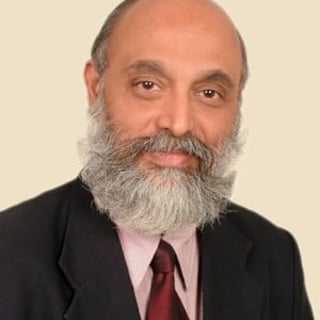
C. Uday Bhaskar
Commodore C. Uday Bhaskar is director of the Society for Policy Studies (SPS), an independent think tank based in New Delhi. He was formerly head of two other major Indian institutions: the Institute for Defence Studies and Analyses (IDSA) and the National Maritime Foundation (NMF).
Commodore C. Uday Bhaskar is director of the Society for Policy Studies (SPS), an independent think tank based in New Delhi. He was formerly head of two other major Indian institutions: the Institute for Defence Studies and Analyses (IDSA) and the National Maritime Foundation (NMF).

With global institutions under attack and Trump’s power politics on the rise, the award is a firm rejection of the ‘might is right’ doctrine.

Beijing’s ICBM test from a nuclear-powered submarine is a win from a defence perspective but comes with greater responsibilities.

Reverting to the long-used name reflects a more traditional maritime focus while prioritising deterring China, as the Quad loses relevance.

The warming of New Delhi’s ties with Washington has implications for Russia, China and the global dynamics of trade and geopolitical power.
Advertisement

Despite Russia’s display of defiance and India’s quest for autonomy, US policy shifts are pushing both into uncharted geopolitical territory.

Nuclear-powered submarines will heighten South Korea’s profile and China’s anxieties about US-led maritime groupings across East Asia.

The context of how Beijing sees its place in the evolving international system was conveyed in a subtle but unambiguous manner in Tianjin.

The cessation of hostilities will only hold if backed by tangible peacekeeping and efforts to forge a mutually agreeable border solution.

By using Iran’s nuclear programme as a pretext for war, American and Israeli leaders have eroded trust in the global nuclear domain.

In reasserting the US in the centre of the Middle East’s strategic calculus, Trump also weakens the leverage and influence of Russia and China.

As the world struggles to send aid to Myanmar, New Delhi and Beijing have a chance to emerge as leaders in humanitarian relief.

The US’ absence from international deliberations on climate change must not be allowed to derail efforts to solve the crisis.

A Modi-Trump summit could weave greater security ties into the India-US relationship and give the Quad a more militaristic aspect.

As the global strategic framework moves on from the uneasy period of US hegemony and China’s rise, a critical quadrilateral is forming.

After Bashar al-Assad’s overthrow, uncertainties remain about the agenda of Syria’s new government and the interests of foreign powers.

Keeping India-China dialogue open could add a slight but welcome bit of malleability to what could otherwise be a brittle strategic triangle.

As the world lurches towards nuclear conflict, we cannot afford to forget the catastrophe unleashed on Hiroshima and Nagasaki.

While Beijing initially dismissed the notion of the Quad, it now sees the grouping as a formidable force to reckon with in the coming years.

Modi’s visit to Kyiv was an extension of India’s deft diplomacy since the war began. China, too, is carefully calibrating its position.

The ousting of the leader marks the end of a period characterised by the kind of oppression her father fought against in Bangladesh’s birth.

The Beijing Declaration reflects China’s aim to project itself as a credible power and peace enabler in West Asia.

Upon electing a reformist as president, Iran’s political system and international pressures complicate the prospects of what can be achieved.

While the BJP’s underperformance shocked supporters and observers, Indian voters have restored hope in the country’s democratic process.

This month’s high-level diplomatic visits offer a glimpse into how world powers are repositioning themselves for the sake of national interests. No matter how intense geopolitical competition might get, great powers must not cross red lines into nuclear confrontation – tactical or otherwise.

Iran’s retaliatory strike on Israel and Hamas’ October 7 surprise attack are reminders that Israel’s deterrence capabilities are not infallible. Major powers must pursue diplomatic solutions to ensure the region does not descend into greater turmoil and bloodshed.

Faced with US ambivalence and Israel’s rejection, the ceasefire demand risks becoming a political footnote. At the least, council members should organise a humanitarian task force and evolve a plan to implement the spirit of the resolution

Political deadlock at the UN Security Council and divisions in major democracies are stonewalling a ceasefire in Gaza as the death toll is expected to reach 30,000. China and other major powers must step up to provide relief and manage contradictions in the world system.

China has a rare opportunity to explore options for lowering the temperature in the Middle East, by first seeking to end the spiral of violence and enable tentative negotiations.

While the lukewarm responses to the US-led counter-attacks are understandable, the major powers must rise above their divisions to protect a global good – safe passage for the world’s ships and their crew.
