Advertisement
Bangladesh
This Week in AsiaPolitics

Bangladesh grapples with political fragmentation ahead of key election

Conflicting demands over proportional representation, which requires constitutional reform, have put the interim government in a dilemma

Reading Time:3 minutes
Why you can trust SCMP
Supporters of Bangladesh’s Jamaat-e-Islami party take part in a protest rally calling for a free and fair election next year, in Dhaka on September 18. Photo: Reuters
Biman Mukherji
Bangladesh is navigating a morass of political hurdles in the lead-up to its election set for early next year, including conflicting demands over proportional representation in parliament.
Both the country’s largest Islamist political party, Jamaat-e-Islami, and the newly formed National Citizen Party (NCP), which draws support from student leaders who toppled the previous regime of former prime minister Sheikh Hasina, have demanded that the coming poll be conducted on the basis of the new system.

Opposed to the proposal are the Bangladesh Nationalist Party (BNP), the only other political group besides Hasina’s Awami League to previously govern the country. It sees the move as an attempt to dilute the chances of securing a majority share required under the existing electoral process.

Advertisement

Bangladesh is a parliamentary democracy in which citizens aged 18 and older elect members to the 350-seat parliament, including 50 seats reserved for women. The leader of the party with a majority of seats as a result of direct elections every five years becomes the prime minister and heads the government.
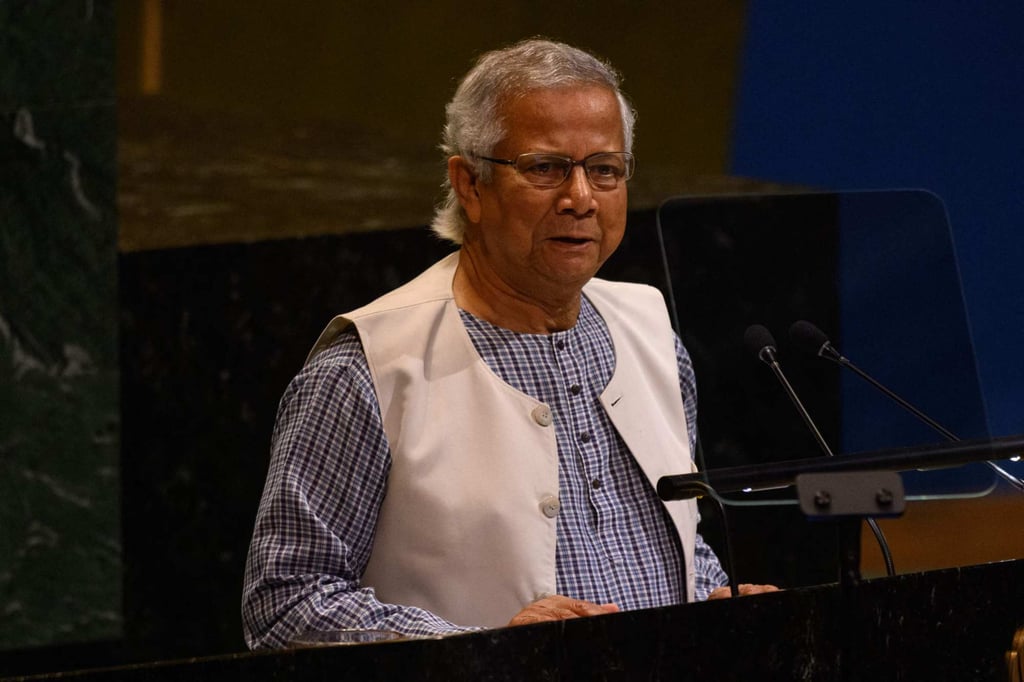
Muhammad Yunus’ interim government has been talking to different political parties about conducting elections based on the proportional representation system. Photo: Getty Images/AFP

Historically, Bangladesh’s political landscape has been dominated by the BNP and the Awami League. After Hasina’s regime was toppled, the BNP is seen as the party with the strongest chance of establishing a new government.

Advertisement
Advertisement
Select Voice
Choose your listening speed
Get through articles 2x faster
1.25x
250 WPM
Slow
Average
Fast
1.25x