Advertisement
OpinionIndonesia’s election riots offer a lesson on the perils of fake news
- The violence in May over President Joko Widodo’s victory was the first time among the world’s democracies that online disinformation led to a poll-related riot
- Anti-Chinese conspiracy theories also spiralled out of control, with some Indonesians believing People’s Liberation Army troops were on the streets of Jakarta
5-MIN READ5-MIN
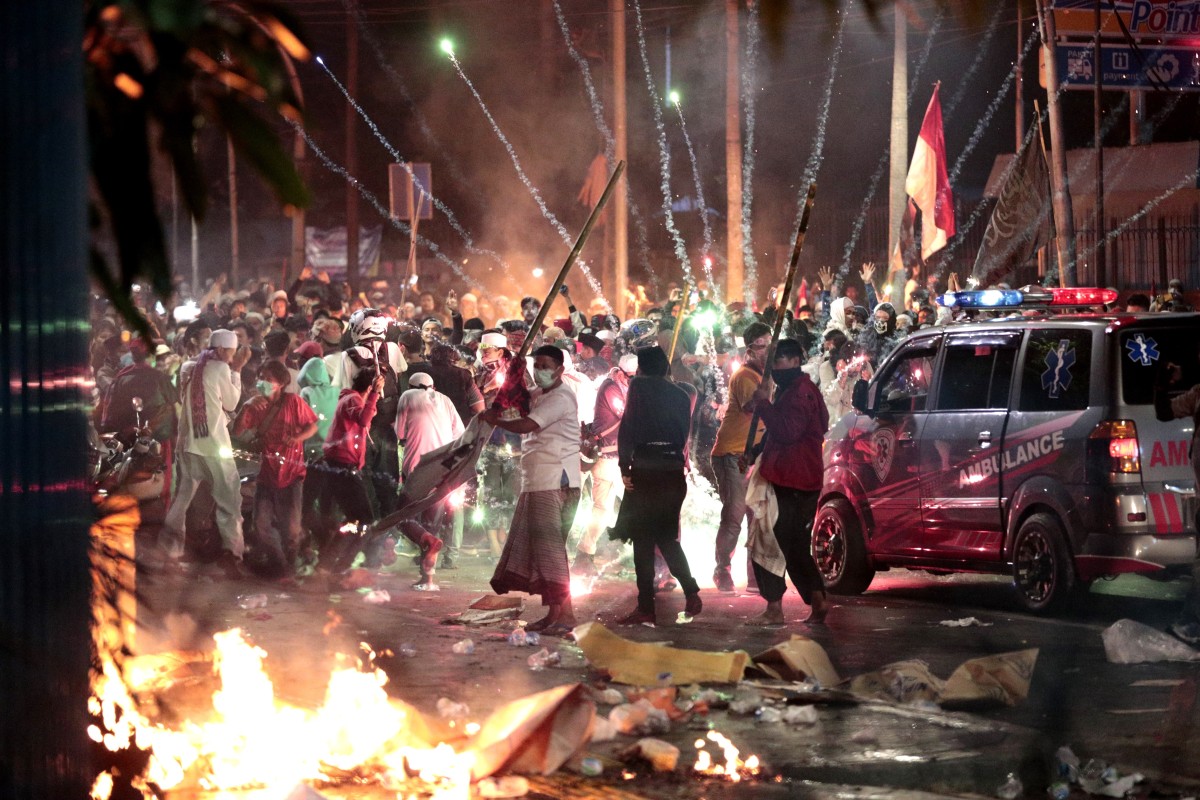
Indonesia ’s riots in May serve as a warning to all democracies with polarised electorates, high social media penetration and institutions labouring under the strain of populist politics.
The unrest was the first time in a democracy that social media-fuelled fake news and disinformation led to election riots.
Supporters of opposition candidate Prabowo Subianto rejected the results of the presidential election, alleging incumbent Joko Widodo, popularly known as Jokowi, had stolen victory through fraud. Eight people were killed in subsequent clashes with police, and a ninth died later in hospital. Hundreds more were injured.
Many involved in the Jakarta street violence were motivated by misleading or false information. Militant oppositionists were mobilised by a cascade of fake news that culminated in a belief that their community was under attack. With the mainstream media largely sympathetic to the government, those provoking the unrest relied on social media platforms – notably encrypted chat applications such as WhatsApp and Telegram.

FROM PROTESTS TO RIOTS
Advertisement
Select Voice
Select Speed
1.00x