Advertisement
Will Tibetans’ ‘middle way’ China approach preserve peace in Himalayan region?
- The Dalai Lama’s ‘middle way’– not going to extremes – does not demand independence from Chinese rule but urges a high degree of autonomy
- The 87-year-old Tibetan spiritual leader is regarded as a separatist by Beijing, which strongly opposes international engagement with him
4-MIN READ4-MIN
27

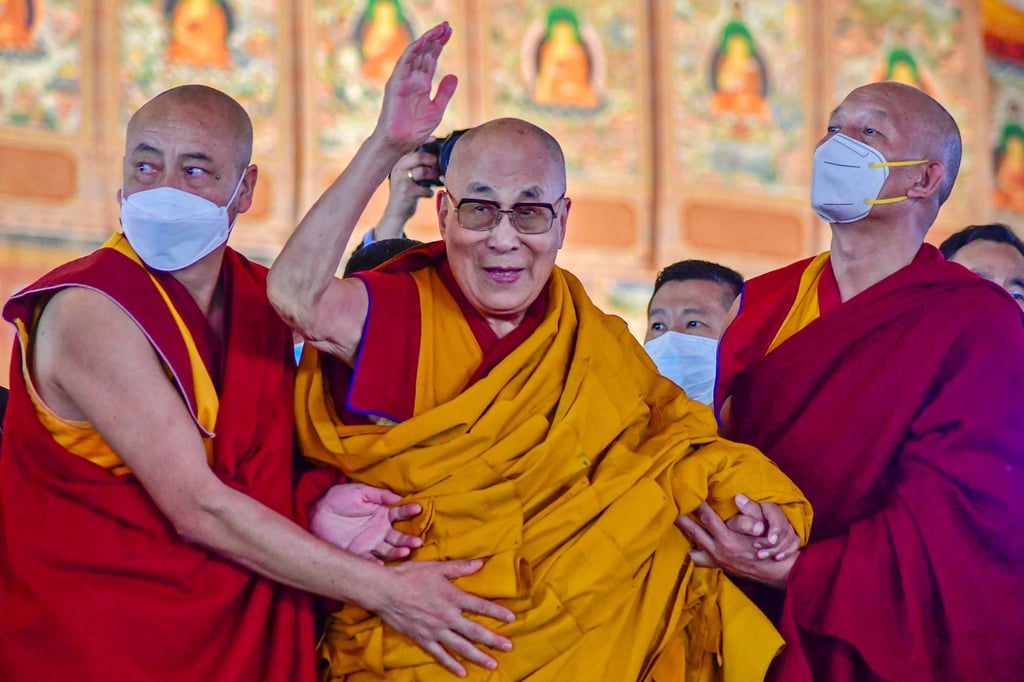
About 100,000 ethnic Tibetans gathered at the Buddhist holy site of Bodhgaya in India’s Bihar state at the end of 2022 to listen to the teachings of the Dalai Lama.
The 87-year-old Buddhist leader needed help to ascend the stage, but his mind was sharp and he spoke without hesitancy during his hour-long sessions.
Uppermost in the minds of many Tibetans is the legacy he will leave behind and how that could preserve peace in Asia.
In a 2019 book published just before the border flare-up between Indian and Chinese troops in the Himalayas, former Indian diplomat Phunchok Stobdan warned that the mountainous region – which includes India, China, Nepal and Bhutan – could become a new geopolitical hotspot.
He called it the “Buddhist Himalayas” and pointed out that the Hemis monastery in Ladakh was an essential node of Himalayan Buddhism, as was the Drepung monastery in Lhasa, Tibet, a fact overlooked in India.
Select Voice
Select Speed
1x
AI-generated voice