Advertisement
Japan
This Week in AsiaOpinion

Asian AngleWhy Japan-China ties can benefit from promoting people-to-people exchanges

Filling the information gap through direct contact between the two peoples can help improve both countries’ public images and ease tensions

4-MIN READ4-MIN
Listen
Japanese Prime Minister Sanae Takaichi (left) shakes hands with Chinese President Xi Jinping ahead of their talks in Gyeongju, South Korea, on October 31, 2025. Photo: Kyodo
Akio Takahara
Japan and China are Asian powerhouses that should collaborate responsibly for the peace and prosperity of the region. However, bilateral relations have experienced ups and downs since the start of the century and are now at their lowest point after normalisation in 1972. A major cause of this is the widening perception and information gap between the two nations that needs to be addressed through direct people-to-people contact.

Some, perhaps many, misunderstand that Japan and China are always quarrelling with each other. This is not the case. Most of the time, cooperation and exchange go on in the fields of business and economy, environment, entertainment, academia, sister city ties and so on, providing resilience in the bilateral relationship. An example is the advanced “green” fertiliser plant in Bangladesh that was jointly constructed by Mitsubishi Heavy Industries and China National Chemical Engineering and Construction Corporation Seven Ltd, and completed in November 2023.

This case signifies the compatibility of China’s Belt and Road Initiative and Japan’s Free and Open Indo-Pacific in collaborating on a good project, akin to two constellations sharing a bright star.

Advertisement

On the other hand, areas of vulnerability include security, territory, values, history and, most importantly, huge perception gaps between the Japanese and Chinese regarding how they view and interact with each other. There are various factors at play.
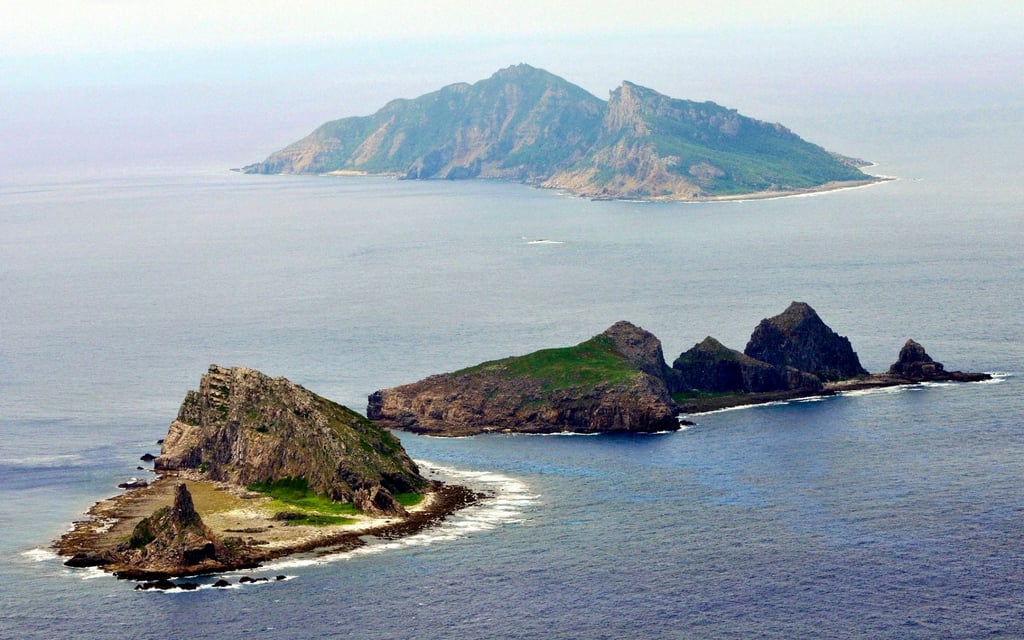
A part of the disputed islands in the East China Sea, known as the Diaoyu in China and Senkaku in Japan, is seen in the East China Sea. Photo: Reuters/Kyodo
First, their political systems are so different that misunderstandings can easily occur. In 2012, for example, the Japanese government nationalised the Senkaku Islands, also known in China as the Diaoyu Islands. The government bought the islands from a private Japanese landlord to prevent the Tokyo metropolitan authorities from building a port and stationing their police force there. In short, the Japanese government made this move to avoid provoking China. Instead, it ended up angering Beijing, which could not understand why the Japanese central government couldn’t just stop the local Tokyo authorities from purchasing the islands. Apparently, some decision makers in China were unaware that this was not possible under Japan’s political system, which grants local autonomy to the Tokyo government. This misunderstanding still lingers today.
Advertisement

Second, media reports sometimes mislead people out of political and/or commercial motives. One day after the collision between a Chinese fishing trawler and two Japanese coastguard vessels in 2010, Chinese official media published a drawing depicting big Japanese boats ramming into the belly of a small Chinese trawler. Later, the video recording of the collision taken by the Japanese side showed that it actually was the Chinese trawler that rammed into the coastguard boats.

Advertisement
Select Voice
Select Speed
1.00x