-
Advertisement
Thailand
This Week in AsiaOpinion
Treethep Srisa-nga

Asian Angle | Thailand’s election will pass verdict on the architecture of elite control

After court rulings removed successive PMs, this election tests whether a popular mandate can finally survive the state’s veto traps

Reading Time:4 minutes
Why you can trust SCMP
Pedestrians walk past campaign posters in Bangkok on Tuesday ahead of Thailand’s general election. Photo: AFP

On Sunday, Thai voters will do two things at once: elect a new House of Representatives and decide, via referendum, whether to begin drafting a new constitution.

Yet Thailand’s recent politics rarely run in a straight line from ballots to a functioning government. The question is whether the next administration can loosen the unelected constraints that shape who governs and what elected leaders can do.

Despite two elections since the 2019 transition from military rule, the pattern remains worrisome for the state of democracy in Thailand.
Advertisement
V-Dem’s 2025 Democracy Report classified the country as an electoral autocracy in 2024. Freedom House, in its 2025 assessment, rated Thailand “Not Free”, citing major setbacks including the dissolution of the Move Forward Party and the constitutional court-ordered removal of then prime minister Srettha Thavisin from the Pheu Thai Party in August 2024. The same court removed then prime minister Paetongtarn Shinawatra, also from Pheu Thai, in August 2025.
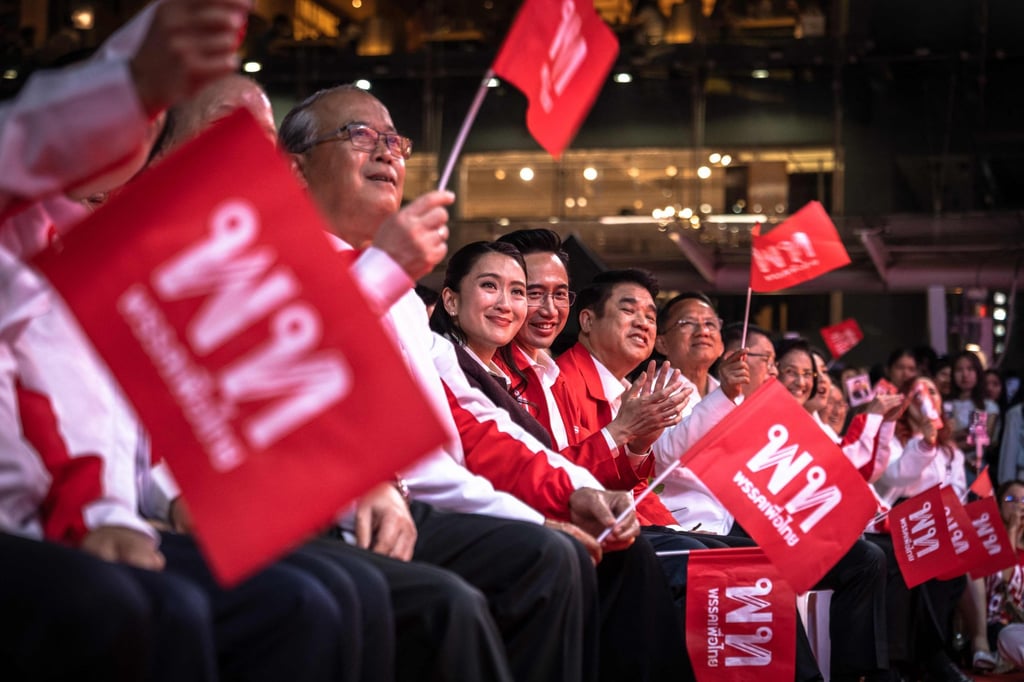
Pheu Thai Party’s prime ministerial candidate Yodchanan Wongsawat sits beside former Thai prime minister Paetongtarn Shinawatra while campaigning in Bangkok on January 23. Photo: AFP

Indeed, these episodes reflect the reach of Thailand’s veto architecture under the military-drafted 2017 constitution. The charter embeds unelected controls across the political arena, which in turn shape government formation, constrain elected officials and raise hurdles for constitutional changes. For the first five years after 2019, for instance, an appointed Senate voted alongside the House to select the prime minister.

Advertisement
Advertisement
Select Voice
Select Speed
1.00x