Advertisement
US-China relations
This Week in AsiaOpinion
Joseph Chinyong Liow
Khong Yuen Foong
Joseph Chinyong LiowandKhong Yuen Foong

Asian Angle | Anatomy of choice: why Southeast Asia is aligning with China

The US-China rivalry is forcing difficult choices, with the results of a 30-year study suggesting Southeast Asia is drifting towards Beijing

Reading Time:4 minutes
Why you can trust SCMP
5
China’s Foreign Minister Wang Yi (centre) joins hands with his Southeast Asian counterparts at an Asean meeting in July. Photo: AFP
As the gulf between China and the United States hardens into strategic rivalry, the question of choice looms large over Southeast Asia.
When Singapore’s Lawrence Wong said in 2023 that his country was not “pro‑China or pro‑America” but simply “pro‑Singapore”, he captured the essence of the region’s predicament.

Southeast Asian leaders have long repeated the familiar refrain: they do not wish to choose sides between the two great powers. Both Washington and Beijing, for their part, have often claimed they do not intend to force such a choice. But that attitude appears to be changing.
Advertisement
Against the backdrop of his “Liberation Day” tariff regime, US President Donald Trump has made clear that any country seeking a trade deal with Washington must pivot away from reliance on China. He has threatened further tariffs on members of the Brics grouping, which he disparages as “anti‑US”.
Chinese President Xi Jinping, meanwhile, has warned against any trade arrangements that sideline China.
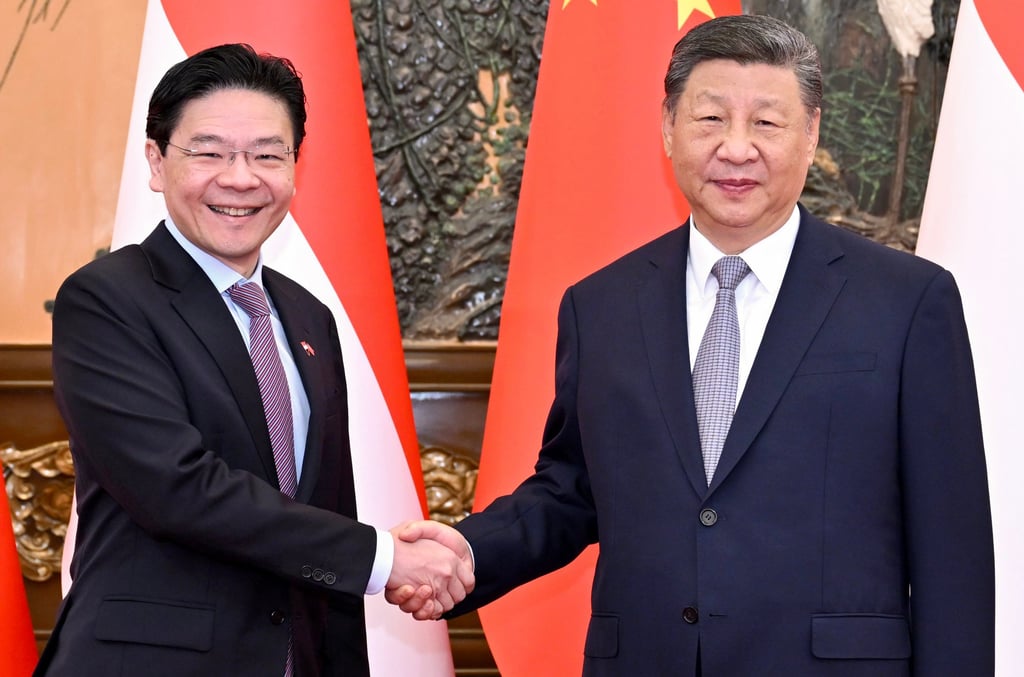
Chinese President Xi Jinping (right) meets Singapore’s Prime Minister Lawrence Wong during an official visit to Beijing in June. Photo: Xinhua

Such ultimatums create a strategic dilemma for Southeast Asia. But in truth, states make choices constantly: whether to sign an economic pact, join a multilateral organisation or purchase military hardware, for example. The question is not whether choices are made, but why they are made in the context of great‑power competition – and what the pattern of those choices reveals about regional alignments.

Advertisement
Select Voice
Choose your listening speed
Get through articles 2x faster
1.25x
250 WPM
Slow
Average
Fast
1.25x