Advertisement
Asian AngleIndia’s Modi forgot as he beat the religious drum – Hindu pride cannot be eaten
- The Indian PM failed to appreciate what matters most to India’s poorest. Expect him to learn and adapt from his electoral setback
4-MIN READ4-MIN

Narendra Modi, India’s two-time prime minister, was elected again on Wednesday as the leader of the National Democratic Alliance, a coalition of political parties that won with a slim majority in the recently concluded parliamentary election. Modi was expected to be sworn in for his third term as prime minister on Saturday.
His BJP had hoped for a landslide victory in the country’s six-week general election – the largest display of democracy, by far, in a year of voting around the world. But the party scored only 240 parliamentary seats in the final tally and needs coalition partners to secure a majority of 272.
Here, Sumit Ganguly, a distinguished professor of political science and the Tagore chair in Indian Cultures and Civilisations at Indiana University in the US, explains more about the election results and what they mean for Indian democracy.
Modi’s BJP talked up a landslide. Why didn’t it get one?
Part of the answer lies in the Modi government’s failure to realise that while economic benefits have been substantial, their distribution has been uneven. India has seen a growth in inequality and persistent unemployment, both in rural and urban areas. Unemployment of those aged 20 to 24 years is at a high of 44.49 per cent. And that is the overall national number; that data does not tell us that it may be much worse in certain regions.
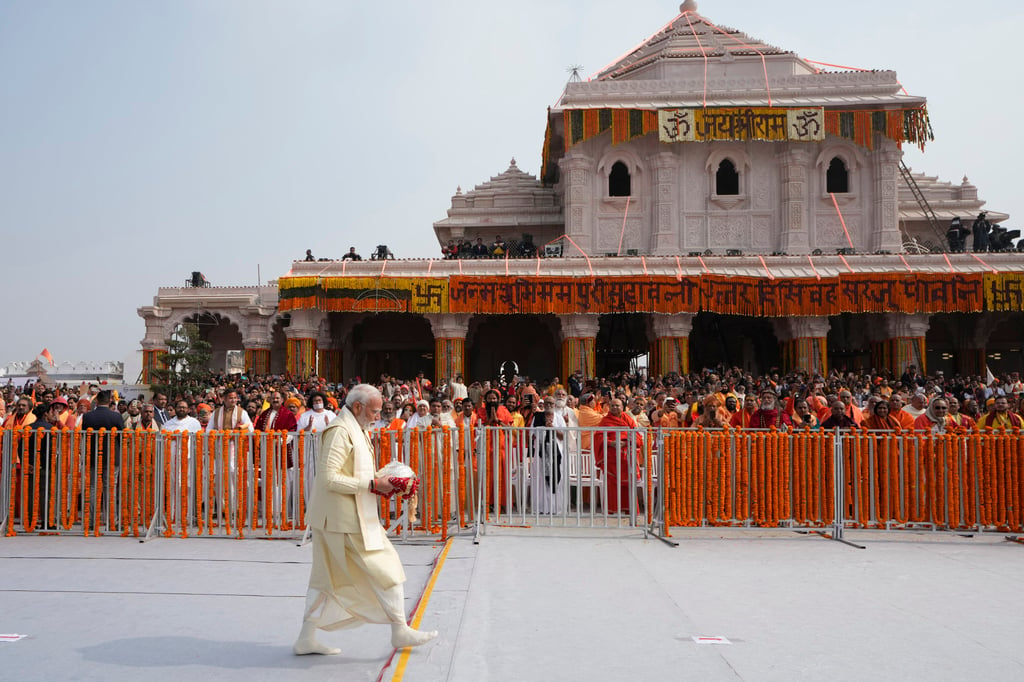
The other explanation is that Modi’s exploitation of historic Hindu-Muslim tensions seems to have run its natural course. You can beat the religious drum – and Modi did with rhetoric including calling Muslims “infiltrators” – but then the day-to-day issues of jobs, housing and other such necessities take over, and these are the things people care about the most.
BJP made a miscalculation, in my analysis. It failed to realise that in a country where only 11.3 per cent of children get adequate nutrition, Hindu pride cannot be eaten – ultimately, it’s the price of potatoes and other essentials that matter.
What happened in Uttar Pradesh, with its 80 crucial seats?
It’s another example of the same miscalculation we are seeing nationally by the BJP. The chief minister of the state, Yogi Adityanath, saw himself as a firebrand Hindu nationalist leader and likely a successor of Modi.
Advertisement
Select Voice
Select Speed
1.00x