Advertisement
OpinionWill Yemen’s Houthis derail China’s plans to be global diplomatic power broker?
- Greater uncertainty on maritime routes could heighten China’s concerns, especially since the Middle East meets over 40 per cent of China’s energy needs
- Escalating provocations by the Iran-backed Houthis threaten trade and energy security, and also weigh on China’s credibility as a mediator in the region and globally
3-MIN READ3-MIN

Last month, China hosted representatives from Arab and Muslim-majority countries, boosting its bid as a major diplomatic power broker to defuse the Israel-Gaza conflict.
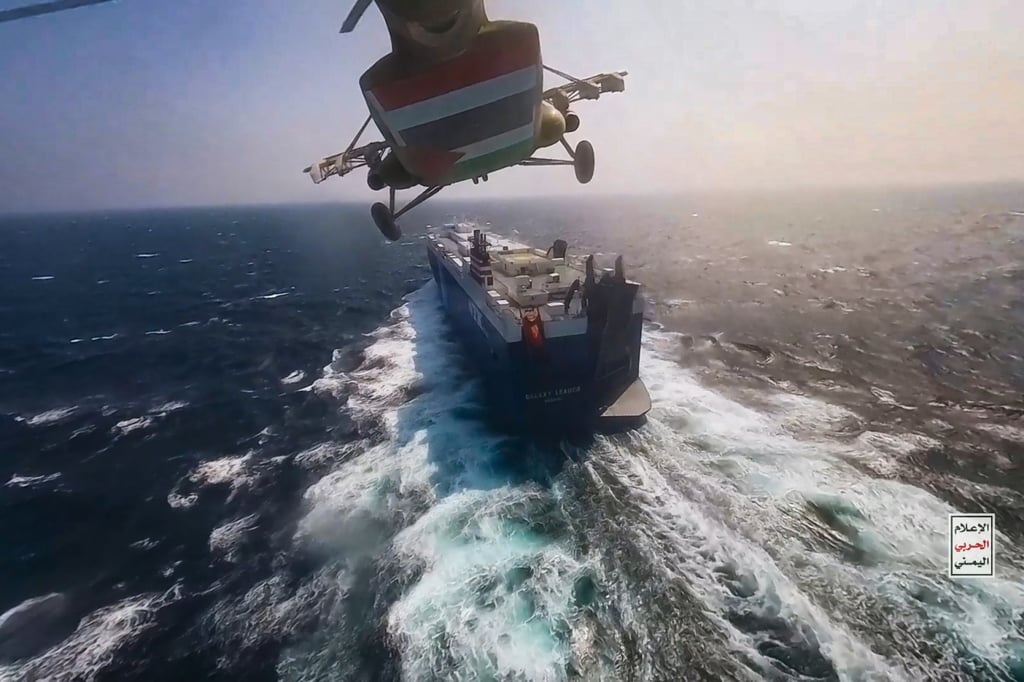
Not long before Beijing’s call for an immediate Gaza ceasefire, Yemen’s Iran-backed Houthi rebels escalated the threat of a conflict expansion by hijacking an Israel-linked commercial vessel in the Red Sea.
The Houthis, an ally of Tehran, on November 20 captured the Galaxy Leader, a Bahamian-flagged, Japanese-chartered British ship linked to Israeli business interests, in the proximity of the Yemeni coast. Part of the “Axis of Resistance” backed by Iran, the Houthis have rallied behind Palestinians in Gaza.
In 2021, an Israeli-owned commercial vessel was targeted by the Houthis, pushing Israel’s Benjamin Netanyahu to accuse Iran, even though Tehran had denied any involvement. Again, this time, Israel quickly blamed Tehran. Iran, claiming no direct control over Houthi actions, used similar wording in its response after the Hamas attack against Israel on October 7.
Though there are proxy connections between Iran and various groups like Hamas in Gaza, Hezbollah in Lebanon, Shia popular mobilisation units in Iraq, and the Houthis in Yemen, the degree of ideological alignment and willingness to strictly follow direct orders from Tehran vary among these militant organisations.
Select Voice
Select Speed
1x
AI-generated voice