For Malaysia’s Orang Asli villagers, forest-clearing for plantations is devastating their way of life
- Authorities have supported forest plantations as a source of sustainable timber supply, but increasingly need to deal with non-compliant planters
- Indigenous villagers in Kelantan state say they are deprived of what they need for their daily lives and are seeking to defend their customary land rights

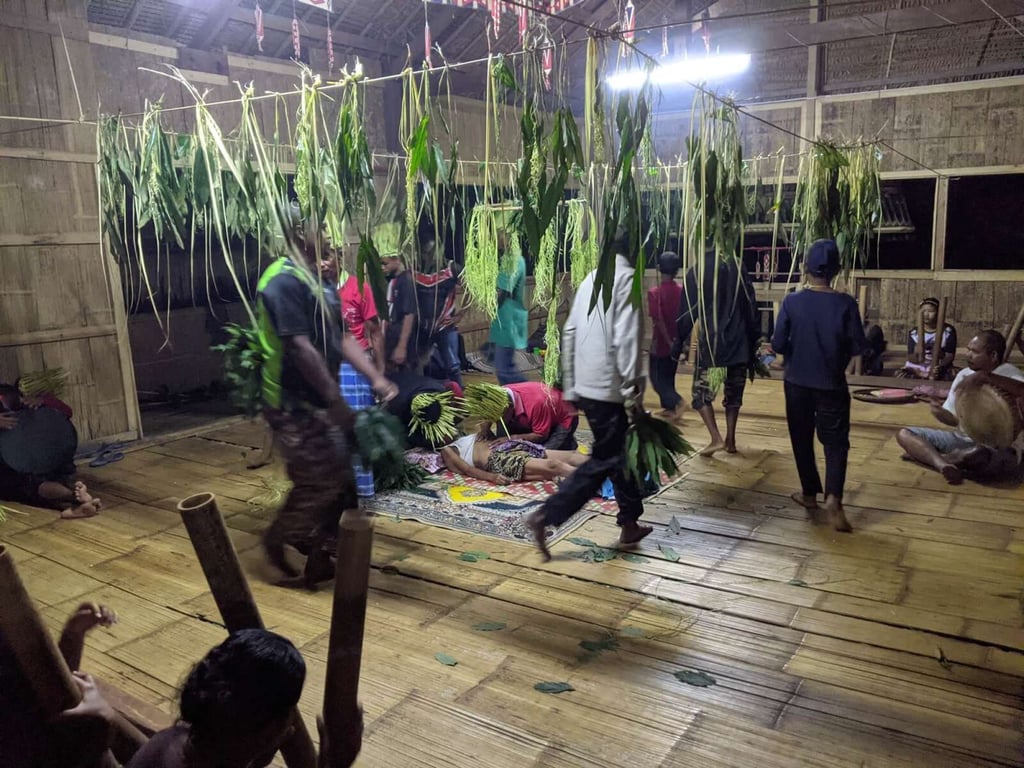
His wife Muna Angah lay behind him. She had been coughing for months. Doctors at the nearest hospital, about 55km away, could not diagnose her illness.
Along was about to do what his ancestors have done for generations – conduct a ritual called sewang to consult superhuman beings for guidance.
The 13 households of Kampung Kaloi are indigenous peoples, or Orang Asli, of the Temiar tribe. They had moved here in 2016 from a larger settlement called Kampung Wook. Temiars believe spirits live in the earth, rivers, and trees.
But sewangs are harder to do these days. For these rituals, indigenous people usually forage for plants once commonly found in virgin or selectively-logged forests.
‘We can’t even plant tapioca’
In recent years, the lush swathes of forest reserves around Kampung Kaloi have been turned into forest plantations, after developers cut the natural forests and replanted single species of fast-growing trees such as rubber, eucalyptus and acacia.