Advertisement
From Singapore’s ban mian to Malaysia’s roti canai: soaring wheat prices hit Southeast Asia’s street-food favourites
- A looming global shortage of wheat amid the war in Ukraine has sent the cost of the flour used in ‘ban mian’, ‘roti canai’ and other popular snacks shooting up
- Some vendors have tried to absorb the costs, while others have simply stayed closed. But with more pain ahead, there’s only one direction prices are heading
4-MIN READ4-MIN

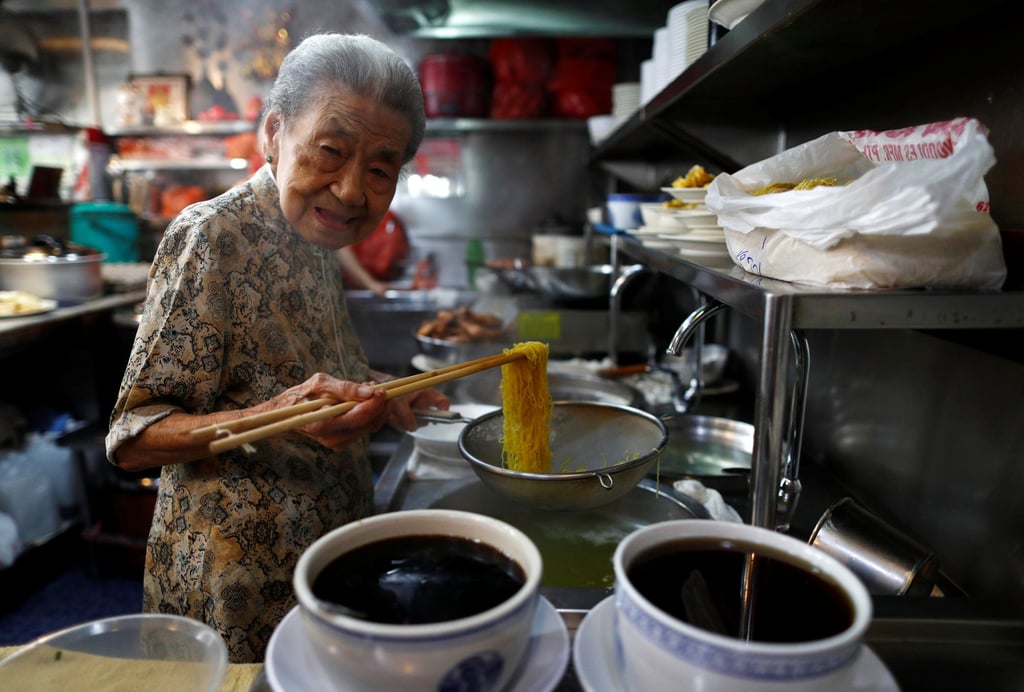
For the first time in six years, Leong Poh Yee had to raise the price of the ban mian she sells from a hawker stall in Singapore by 10 per cent in January, as the soaring cost of wheat, oil and electricity ate into her profits.
Leong makes the noodles for her ban mian – a popular Chinese dish typically topped with minced meat and anchovies – by hand with wheat flour every day. But that flour now costs nearly 15 per cent more than it did last year, forcing Leong to pass some of the increase onto her customers. Today, a bowl of her steaming hot ban mian will set you back S$5 (US$3.60).
Global food prices started to rise in mid-2020 when businesses shut down due to the Covid-19 pandemic, straining supply chains. Since then, there have been problems with key crops in many parts of the world.
Russia’s invasion of Ukraine in late February dramatically worsened the outlook. Food prices hit an all-time record in February and again in March, according to the UN food agency. Russia and Ukraine account for nearly one-third of global wheat and barley, and two-thirds of the world’s export of sunflower oil used for cooking.
The conflict has damaged Ukraine’s ports and agricultural infrastructure, likely limiting the country’s output for years. Kyiv has also banned the export of certain grains to preserve food supplies. Earlier this month, President Volodymyr Zelensky pleaded for international help to end a Russian blockade and “unblock Ukrainian ports for wheat exports”, further warning that “without our agricultural exports, dozens of countries in different parts of the world are already on the brink of food shortages”.
‘We don’t have a choice’
Leong, 47, is no stranger to price increases. She just hopes for a roaring trade at her noodle stall in central Singapore so she can absorb any additional costs without having to raise her prices again.
Advertisement
Select Voice
Select Speed
1.00x