AI start-up offers local alternative to Google’s TPU as China seeks to cut Nvidia reliance
Zhonghao Xinying was founded in 2018 by Yanggong Yifan, a Stanford and University of Michigan-trained electrical engineer

Chinese AI chip start-up Zhonghao Xinying has emerged as a home-grown alternative to Nvidia with a new tensor processing unit (TPU), just as Google shakes up Nvidia’s lock on the market by selling its in-house tensor chips directly to major tech firms.
The Hangzhou-based firm, also known as CL Tech, said its self-developed general-purpose tensor processing unit (GPTPU) went into mass production as early as 2023. Its flagship chip, dubbed Chana, delivers up to “1.5 times the compute performance” of Nvidia’s A100 tensor core graphics processing unit (GPU), while “cutting energy consumption by 30 per cent for equivalent large-model workloads and reducing per-unit compute cost to 42 per cent of Nvidia’s”, according to the company.
GPUs are flexible, general-purpose parallel processors originally built for graphics applications but now widely used for AI training and inference. TPUs, a type of application-specific integrated circuit, developed by Google for neural-network training and inference, offer higher efficiency and throughput for certain deep learning workloads.
Nvidia’s GPUs are considered the backbone of the global AI boom, making the firm the world’s most valuable company, yet many customers are keen to reduce their dependence on the US chip giant.
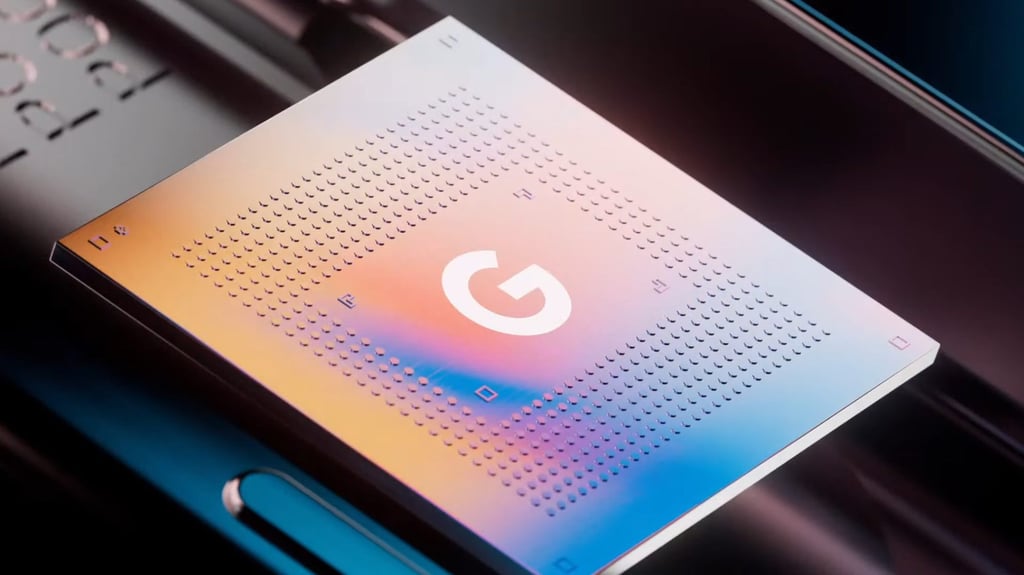
Google’s recent decision to supply TPUs directly to Anthropic and Meta Platforms, instead of only providing access through its cloud services, has positioned it more as a direct rival to Nvidia. The move even rattled market confidence in Nvidia’s long-term grip on the sector.