Tesla challenger Nio, Intel’s Mobileye to bring autonomous vehicles to China, other major markets
- The two companies are developing a self-driving system targeted for initial release in China from 2022
- The system will be integrated in Nio’s electric cars and Mobileye’s own driverless ride-hailing services
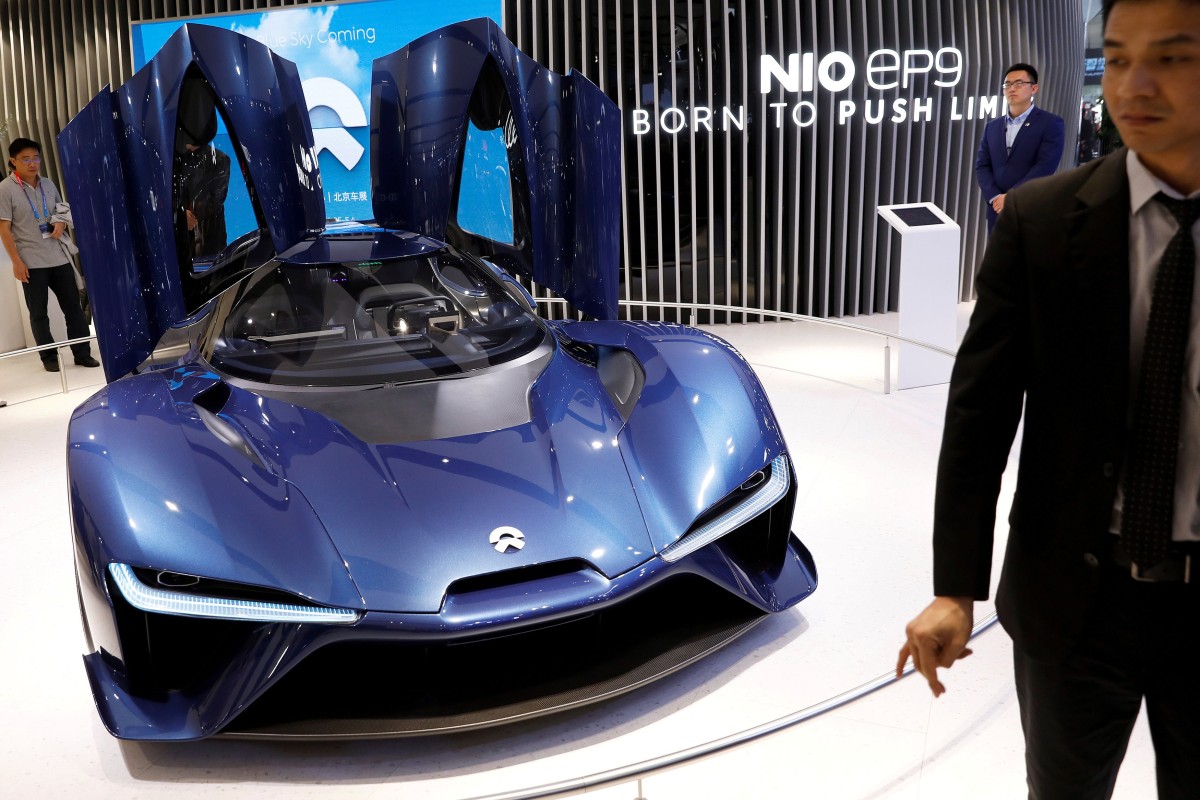
Electric car maker Nio has teamed up with Mobileye, a subsidiary of Intel Corp, to accelerate the commercial development of highly automated and autonomous vehicles for China and other major markets worldwide.
Shanghai-based Nio will engineer and mass-produce a self-driving system, designed by Mobileye, that will enable so-called Level 4 category autonomous operation, according to a joint announcement by the two companies on Tuesday. Level 4 autonomous driving means a vehicle can run without a human driver’s attention in specific areas, such as roads designated for driverless cars.
This self-driving system, described as “the first of its kind” by the two companies, is targeted for initial release from 2022 in China, where it will be integrated in Nio’s electric cars. Mobileye, headquartered in Jerusalem, will use the system on its own driverless ride-hailing services.
“We value the opportunity to bring greater road safety to China and other markets through our efforts,” said Amnon Shashua, the president and chief executive of Mobileye, in a statement. The collaboration with Nio will also enable Mobileye to collect data in compliance with Chinese regulations, according to Shashua in a Reuters report.
The pact with Mobileye comes after Nio was named last year among the first batch of Chinese companies authorised by the Shanghai government to conduct road tests for autonomous cars in the city. In 2016, Nio received a licence to test self-driving vehicles in California.
Its latest initiative may provide a much-needed boost to the company, considered China’s Tesla challenger, as it pursues further job cuts and new funding amid mounting losses.