From dancing to fetching water: Unitree CEO outlines future of humanoid robots
It will take ‘another few years’ for robots to be able to perform more intricate tasks such as dismantling and reassembling a mobile phone, Wang says

But Wang also identified critical hurdles that the entire industry must overcome to make these scenarios a reality, including how to cool overheating high-performance chips, battery life issues and complex cable layouts within the machine that can lead to malfunctions.
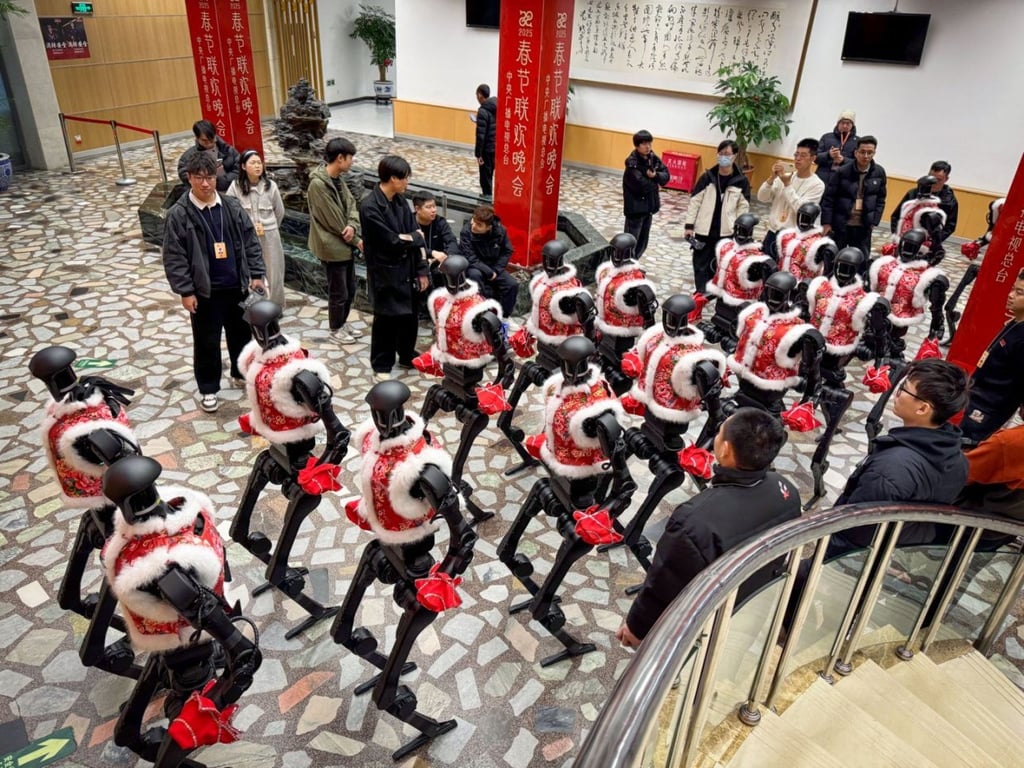
Wang, who is also chief technology officer at Unitree, laid out a clear and ambitious three-stage road map for humanoid robots. First was to perform programmed actions like dancing or martial arts, which Unitree achieved last year; second was to generate actions in real time based on any given instruction – which Wang said could be realised by the end of the year if progress was speedy; and third was fulfilling the “I’m thirsty” scenario.
This final stage would happen when “we bring a robot into [an unknown setting] and it can do anything – such as fetching a glass of water or tidying the table – based on our command”, Wang said at a Qualcomm event in Beijing on Wednesday, adding that “this could be achieved as soon as next year”.
But it would take “another few years” to achieve a 99 per cent success rate in such movements, or for robots to “be able to perform more intricate” tasks such as dismantling and reassembling a mobile phone, he added.