Digital Silk Road: Hong Kong acts as financial bridge between China and MENA
As the Middle East seeks economic diversification, Hong Kong acts as the financial gateway for investment

The start and end points of the Silk Road at its historical peak are crucial to its significance. Land routes wound for thousands of miles from China over mountains and deserts, concluding in the Middle East, connecting the age’s two world leaders in scientific and economic power: the Tang dynasty and the Abbasid Caliphate. While systems of trade have radically changed in the centuries since, the modern iteration of this link, the Belt and Road Initiative (BRI), has firmly established a new intercontinental network. What was cross-continental then is now intercontinental, with myriad trails connecting China to nations worldwide. Yet, while no longer the network terminus, the Middle East remains a key part of Hong Kong’s BRI investment road map.
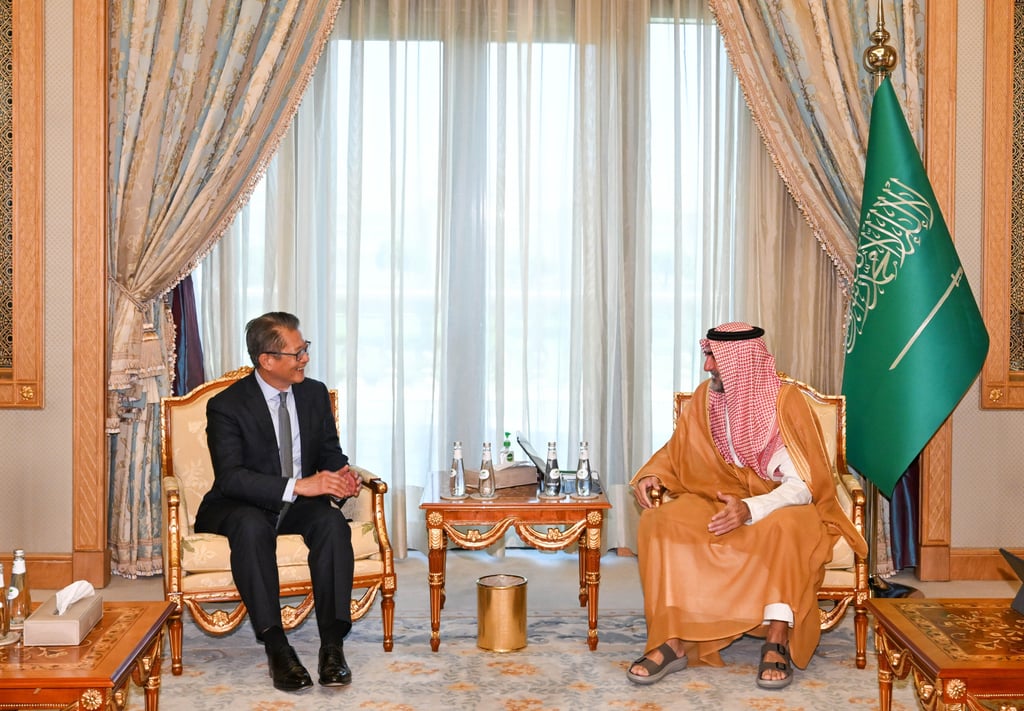
Since the start of this decade, Hong Kong’s government and industry leaders have eagerly ramped up engagement with the Middle East and North Africa (MENA). Multiple delegations from Hong Kong’s education, technology, finance, and government sectors have been deployed. Chief Executive John Lee personally visited Saudi Arabia and the UAE in February 2023, followed by Qatar and Kuwait in 2025, while Financial Secretary Paul Chan journeyed to Saudi Arabia in October 2025. These excursions amassed 77 memorandums of understanding and agreements spanning trade, finance, technology, and sustainable development.
These grand foundations are already yielding tangible commercial results. Alpha Lau, Director-General of Investment Promotion at InvestHK, notes, “The commercial base is already meaningful. In 2025, the Middle East was Hong Kong’s 10th largest trading partner, with bilateral trade in goods of HK$192.8 billion (US$24.7 billion), 1.8 per cent of Hong Kong’s global merchandise trade, and an average annual growth rate of 5.8 per cent over the past five years.”

Diversifying the Gulf
Beyond sheer trade volume, the nature of Hong Kong’s outbound investment in MENA is evolving. The early years of the BRI’s push into the region were defined by physical infrastructure like ports, industrial zones and railways. Today, investors are tapping into a much broader ecosystem.
Financial professional Matteo Giovannini says, “The most significant story is not simply the number of traditional Belt and Road infrastructure projects in the Middle East. Rather, we are seeing an evolution of China-Middle East engagement towards a broader ecosystem of energy, infrastructure, industrial investment, technology, finance and logistics.”