Hong Kong’s Belt and Road cultural exchange builds ties beyond railways and ports
Beyond physical trade routes, the city’s museums, universities and orchestras are cultivating the personal relationships needed to sustain international cooperation

When the Belt and Road Initiative is discussed, the imagery is often concrete: ports, railways, motorways and transmission lines. But across Hong Kong, a parallel form of connectivity is playing out in galleries, concert halls, classrooms and studios.
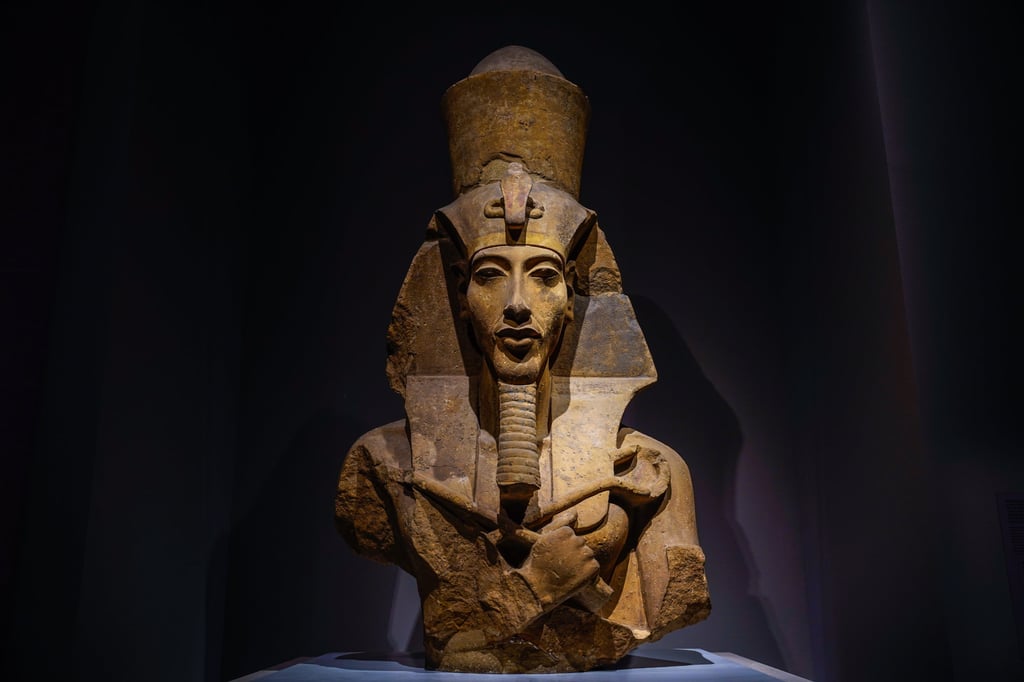
At the Hong Kong Palace Museum, visitors have been encountering thousands of years of Chinese art and history alongside “Ancient Egypt Unveiled: Treasures from Egyptian Museums”, which brought 250 objects from Africa to West Kowloon. In September, the Hong Kong Philharmonic Orchestra will present “Belt & Road: Zitong Wang Plays Chopin” – billed as “a river of sound flowing across Asia and Europe”. Meanwhile, in November 2025, 35 designers and professionals from 30 regions took part in “Threads of Unity: Belt and Road Fashion Show” at Hong Kong Polytechnic University (PolyU).
These are not just exercises in soft-power projection or cultural window dressing for a programme focused mainly on hard infrastructure. They create personal, professional and institutional relationships – the less tangible links that can determine whether cross-border cooperation endures.
“Hard infrastructure gets you a port or a railway. Cultural exchange gets you trusted people – the kind who pick up the phone five years later when a deal hits a snag,” says Professor Michael Jinghan Zeng, head of the Department of Public and International Affairs at City University of Hong Kong.
Zeng argues that the benefit of such exchange is dependent on it being more than propaganda or soft-power projection. “The healthier frame is mutual intelligibility,” he notes. “If you treat cultural institutions as instruments, you kill the very thing that makes them attractive abroad – their credibility.”