IBM Solutions Help Organisations to Navigate the Hybrid Multi-Cloud Environment

[Sponsored Article]
As organisations of all sizes navigate different stages of their digital transformation journey, hybrid multi-cloud platforms increasingly play larger role across their business operations. The combination of on-premise, private, hosted servers and public cloud services offered by different providers — referred to as a hybrid multi-cloud environment, presents the challenge of managing operations and delivery of services in an ecosystem where platforms are connected, but operate in different environments. Despite the challenge, the speed at which enterprises must deliver value is becoming more important than ever.
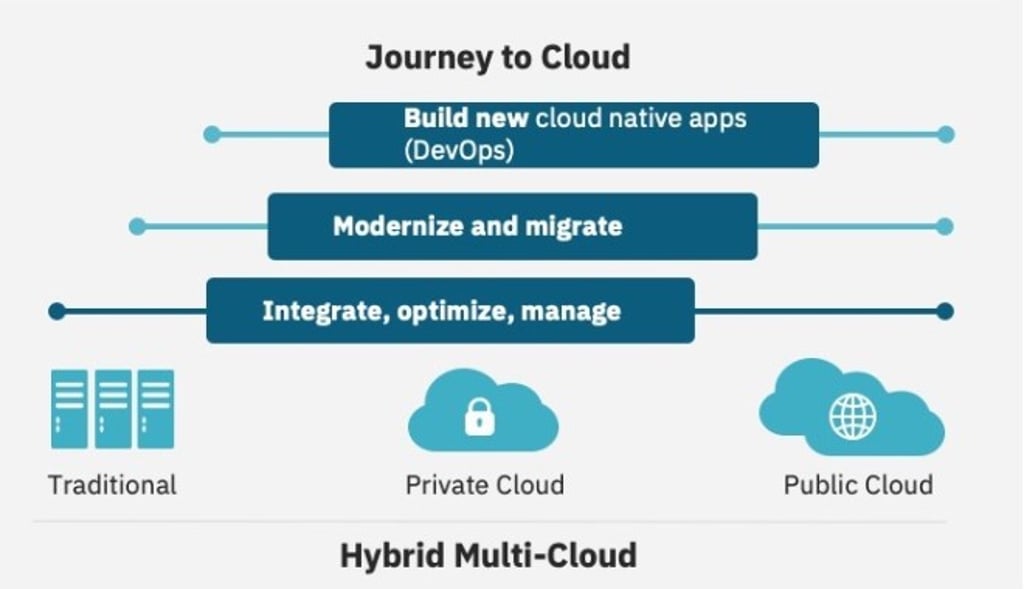
"The challenge that organisations are looking to overcome is how to integrate and manage different areas of their business so they are able to operate reliably, smoothly and securely at anytime and anywhere on any platform," explains Matthew Glitzer, General Manager, Global Technology Services at IBM Hong Kong. Reflecting global trends, Glitzer says as Hong Kong organisations shift their business platforms from legacy infrastructure to unlock the full value of the cloud for their businesses, their efforts are often hindered by the heterogenous nature of the different cloud environments. There is also the added issue of meeting regulatory requirements and mitigating cybersecurity risks.
"Operating in a hybrid multi-cloud environment is a reality for most Hong Kong organisations today, though too often it happens in silos," notes Glitzer. Simply put, he explains that, by offering hybrid multi-cloud management solutions and services, IBM is able to provide organisations with the capabilities to maximise business value from their digital transformation journey through integrating their diverse IT environment into a single system that bridges the management of resources across multiple cloud providers, legacy environments and private clouds. Importantly, Glitzer stresses, hybrid multi-cloud management solutions are applicable for any industry sector. "Whether planning to start their digital transformation journey or already on the journey, it is inevitable organisations will need to navigate the management of multiple cloud platforms," explains Glitzer.
Globally, an IBM report highlights that by 2021, 98 per cent of organisations plan to adopt multi-cloud architectures, but only 41 per cent have a multi-cloud management strategy and just 38 per cent have procedures and tools in place to operate a multi-cloud environment. While cloud adoption is clearly gaining traction, enterprises are still in the early phases of their journey. For example, while 20 per cent of enterprise workloads and applications today have moved to the cloud, there is still 80 per cent is yet to move, in large part because of regulatory or data requirements and application challenges.
With more than 100,000 digital migrations completed and managing over 30,000 clients worldwide, IBM is a well-established pioneer in the cloud management environment. To help organisations to fully utilise and manage their hybrid multi-cloud platforms, IBM Hybrid Multi-cloud Management Services optimises the infrastructures of different hybrid multi-cloud platforms into a single management and operations system. "It's all about making computer platforms more solid, resilient and scalable," says Glitzer who explains as organisations look to innovate business models and processes in the next phase of their digital transformation journey, they need to be able to manage their hybrid multi-cloud environments without losing visibility, governance or operational control — a process he describes as looking at the business through a "single pane of glass".
Meanwhile, adding further strength and dimensions to IBM's Hybrid Multi-cloud Management Services offerings, Artificial Intelligence (AI) is infused into daily IT operations.

Today, the hybrid infrastructure is becoming more complex and interconnected. A problem in one area can affect others. It is difficult for the IT operations team to gain meaningful and actionable insights into the infrastructure. While operation costs rise, it cannot ensure availability and optimized performance. "The vast and complex quantities of data generated these days is too much for people alone to analyse in a timely and cost-effective manner," Glitzer says.
“With technological advances, we can now collect and classify all types of data and put them in a data lake to build a solid and reliable foundation for insights. We can construct a real-time dynamic cognitive knowledge map by using a deep learning model. We can therefore transform the current IT environment by making it more intelligent and empowers autonomous operations to resolve issues,” Glitzer says. “What it means is enterprises can now significantly improve operational efficiency and achieve what we called ‘predictive IT’ to provide a reliable IT infrastructure to support their business. In addition, in a talent squeezed market like Hong Kong, AI operations solutions can also reduce the pressure on sourcing talent with specific skills.”
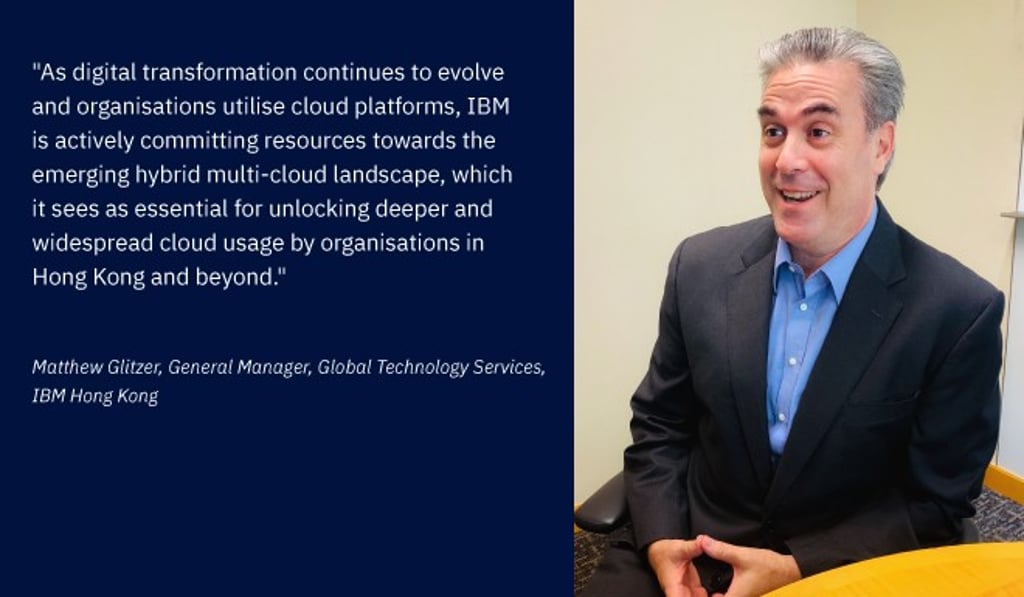
Glitzer says as digital transformation continues to evolve and organisations utilise cloud platforms, IBM is actively committing resources towards the emerging hybrid multi-cloud landscape, which it sees as essential for unlocking deeper and widespread cloud usage by organisations in Hong Kong and beyond.
To understand more on how IBM Services can help accelerate your cloud journey, please visit https://ibm.biz/BdzfK5 or contact us at 2825-7936.