AWS bets big on agentic AI and supercharged compute
Amazon Web Services signals a new phase for cloud computing at re:Invent 2025, building infrastructure and tools for an era of autonomous, reasoning systems

[The content of this article has been produced by our advertising partner.]
A new direction for cloud computing
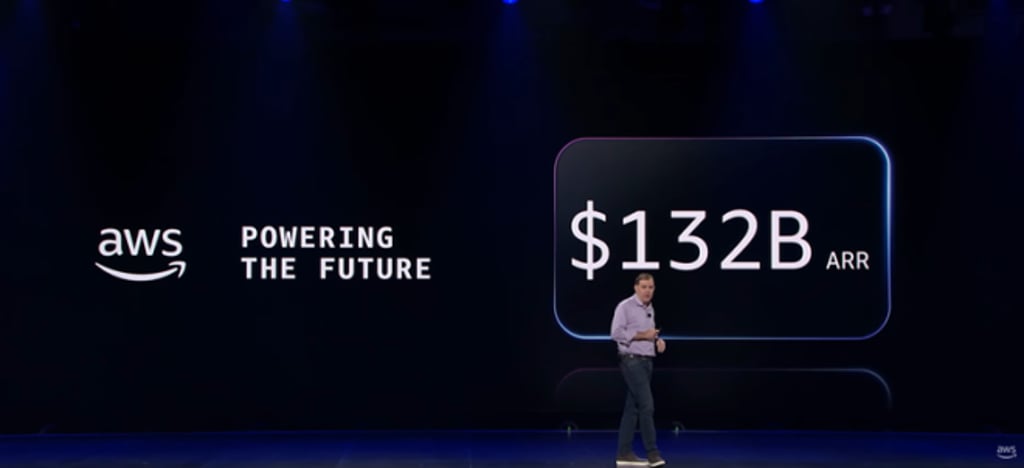
At re:Invent 2025 in Las Vegas, Amazon Web Services (AWS) outlined a bold new chapter in its evolution. Matt Garman, CEO of AWS and Dr. Swami Sivasubramanian, Vice President of Agentic AI at AWS, described how the company is reshaping its platform to enable a world of autonomous, reasoning systems. The event focused on AI agents able to analyse data, take action, and collaborate with humans to improve how software and organisations operate.
New silicon to power the AI boom
One major highlight was the AWS Trainium 3 chip, powering Amazon EC2 Trn3 UltraServer instances. The chip’s 3-nanometre architecture provides higher performance and greater energy efficiency than its predecessors. More than a million Trainium chips are now used across AWS platforms, including Amazon Bedrock. The company also introduced AWS Ocelot, its first quantum-computing prototype, which cuts error-correction costs by roughly 90 per cent.
AI factories and data sovereignty
To meet government and industry requirements for local data control, AWS launched AI Factories—private, dedicated AWS regions that operate within customers’ data centres. These facilities grant access to leading AI infrastructure such as Amazon SageMaker and Amazon Bedrock while ensuring that sensitive data remains under domestic oversight. The concept targets sectors such as banking, healthcare, and the public sector.
Expanding the Bedrock ecosystem
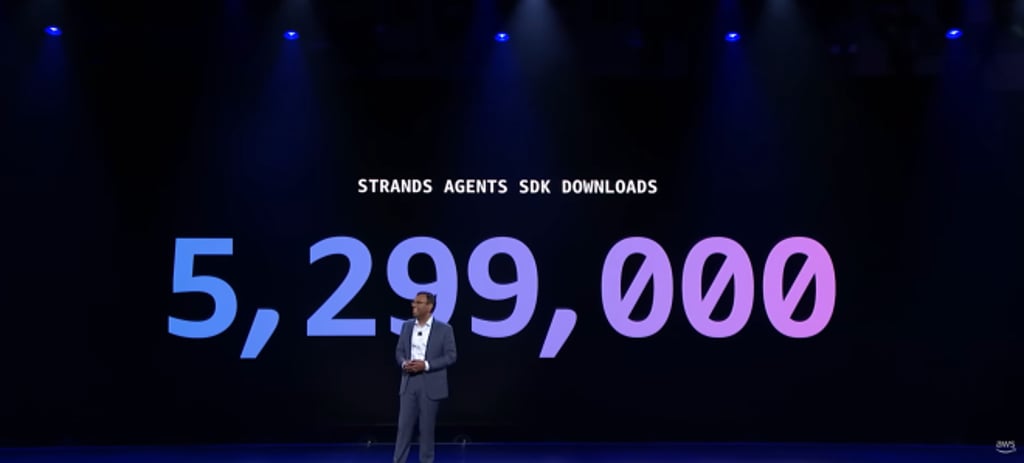
Amazon Bedrock, AWS’s fully managed AI platform, now supports more than 100,000 organisations worldwide. Its new Nova 2 family of models—Lite, Pro and Omni—covers tasks from cost-efficient text generation to advanced reasoning and multimodal analysis across text, image, audio, and video. Garman emphasised that AWS is committed to providing a wide selection of models so customers can prioritise cost, speed, or capability according to their needs.
Customising models for every enterprise
AWS launched Amazon Bedrock Reinforcement Fine-Tuning (RFT) to simplify model optimisation. The new system enables customers to improve accuracy through guided feedback rather than manual retraining. For deeper personalisation, Amazon Nova Forge lets businesses combine proprietary data with AWS datasets to produce domain-specific “Novella” models. These private models capture institutional knowledge while protecting sensitive information.
Building trust through verification
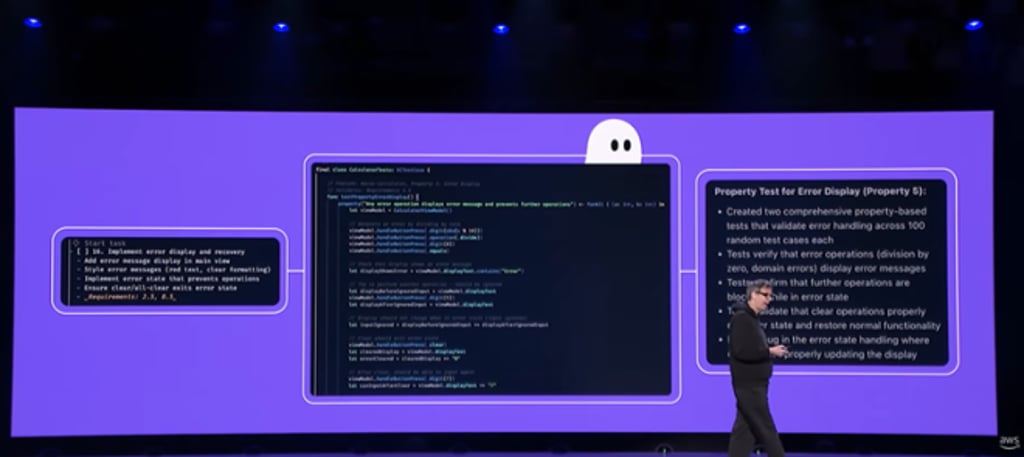
Security and reliability featured heavily throughout the event. AWS showcased its work in automated reasoning, which uses mathematical logic to verify that systems behave as expected. The approach will extend to AI agents, ensuring they act predictably and remain within enterprise policies. Sivasubramanian said these capabilities will make it easier for companies to adopt autonomous systems responsibly.
Asia’s momentum in AI adoption
AWS expects strong regional demand for its new agentic offerings. AI Factories help Asia-Pacific governments and corporations meet local compliance while maintaining access to global-scale resources. Nova Forge supports the development of local-language models and culturally specific applications. Garman highlighted Asia’s rapid digital transformation and said the region’s appetite for secure cloud innovation positions it as one of AWS’s fastest-growing AI markets.
A platform evolving with intelligence
re:Invent 2025 marked AWS’s transition from a traditional infrastructure supplier to a fully integrated AI platform.
With Amazon Bedrock orchestrating models, AgentCore managing agents, and Amazon SageMaker training new systems, the company is building a foundation for self-learning software. The Las Vegas event made clear that the cloud is no longer just a place to run applications—it is becoming an active participant in creating them. For enterprises, the challenge ahead is how quickly they can let their agents start building on their behalf.