[The content of this article has been produced by our advertising partner.]
It is now harder than ever to catch customers’ attention, with one-size-fits-all products replaced by ultra-personalised customer experiences. Today’s retail landscape goes beyond the brick and mortar, trickling into the digital realm to curate an all-encompassing customer journey. This shift is no doubt fueled by artificial intelligence (AI) and other transformative technologies, which have altered the way people shop and interact with brands and products. With AI in the retail industry projected to reach
US$62.64 billion by 2034, going online for retailers no longer translates into publishing products on an e-shop, because customers simply expect brands to deliver more.
According to
Capgemini, up to 71% consumers now demand generative AI (GenAI) integrated into their shopping experience. However, despite the proliferation of said technology over the past decade, customer satisfaction with AI implementation has in fact gone down from 41% in 2023 to 37% in 2024. In this day and age, ignoring AI would be shortsighted, but it seems that
most retailers still lack access to understandable and explainable AI tools, resulting in a detrimental gap between customer expectation and service delivery.
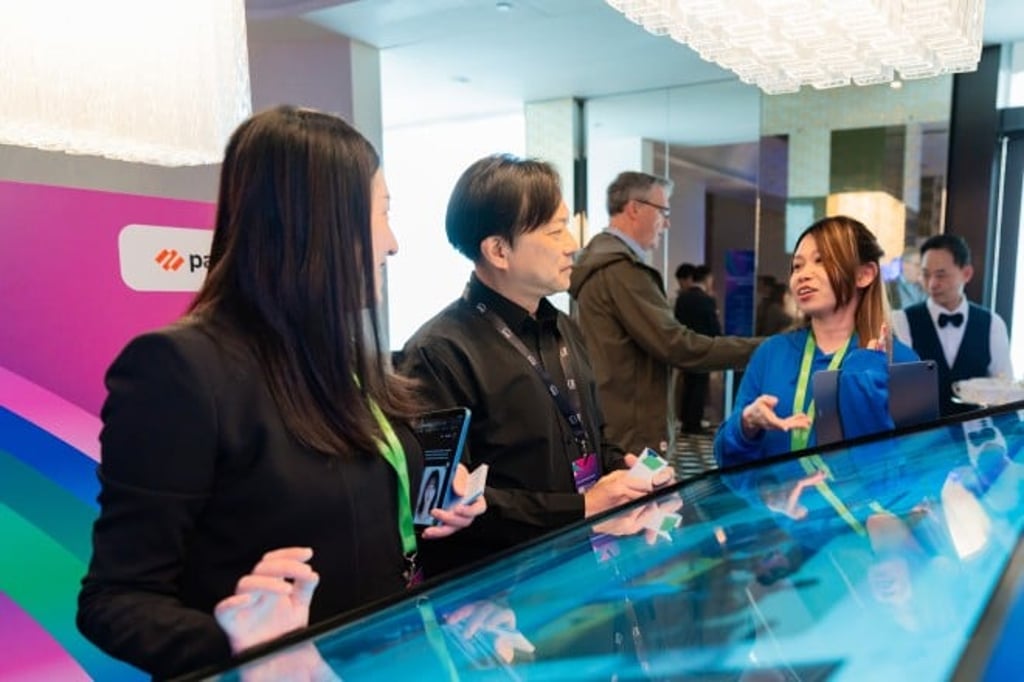
In order to empower businesses to leverage innovative technologies and satisfy this change in consumer preferences, Amazon Web Services (AWS) hosted the Retail and Consumer Goods Executive Forum in March 2025, bringing together retail innovators and technology experts to share case studies across every segment in the market. Through inspiring keynotes, in-depth panel discussions and real-life demonstrations, both AI novices and veterans were challenged to realise the full potential of the cloud.
From Legacy to Modernity: An Evolving Success Story
Named by
Gartner as a magic quadrant leader for fourteen consecutive years, AWS is undeniably born from retail and built for retail. Robert Wang, Managing Director of AWS Hong Kong and Taiwan, opened the forum by highlighting AWS's long-standing pedigree in AI, noting that over 750,000 robots now work with Amazon employees to power almost everything. It is clear that the global retail sector has undergone a period of unprecedented change, but with the transformative potential of AI in inventory management, robotics and drone deliveries, there lies the opportunity to adopt transformative technology in streamlining internal operations and maximising external customer services.
In fact, against this backdrop of a technology renaissance,
over 50% of retailers have already integrated AI in more than six different use cases of operations. Wang emphasised the untapped potential of AI solutions, introducing ground-breaking consumer-facing innovations such as the Just Walk Out Technology, which uses sensor fusion, computer vision and radio frequency identification to eliminate traditional queues. Given Hong Kong’s land shortage, the grab-and-go technology would allow retailers to abolish check-out counters to save space. As for customers, automated payment would entail extra convenience, freeing their hands for shopping with no need to stop and check out.
Furthermore, Rufus – Amazon's GenAI shopping assistant – is another widely accepted method to increase customer interaction, with
60% of consumers reporting past encounters with virtual assistants when making purchases. More importantly, Rufus has been trained extensively on the product catalog, reviews and community Q&As, thus able to provide personalised recommendations and direct shoppers to better deals instantly. The launch is designed to make shopping more intuitive, boasting real-time support and accurate search results to do the heavy lifting for busy shoppers.
From Security to Creativity: The Retail Value Proposition
Despite the increasing willingness to explore automation and innovative tools,
only 24% of consumers reported to be comfortable sharing data with an AI shopping tool, which explains Wang’s call for retailers to treat “security as job zero”. As consumer trust is critical to AI adoption and brand success, even though the same report concluded that 81% of retailers had trust in AI to act autonomously, it would be frivolous to attempt digital transformation without security guardrails in place. Through Amazon Bedrock, partners have the freedom to experiment with a full stack of foundation models as services, allowing retailers to deploy AI capabilities safely, even without extensive expertise or budget.
With GenAI entering the spotlight over the past few years, Justin Honaman, Head of Worldwide Retail, Restaurants & Consumer Goods Business Development of AWS posed a question to those still on the fence - “if not now then when”? For those who have not been convinced by customer preference for AI-integrated shopping,
McKinsey has gone as far as to forecast an additional US$310 billion of GenAI-driven value for retail, brought through improving digital customer interactions.
Moving from practicality to originality, Honaman suggested ideas that brands could explore to create shopping experiences that stand out for customers. Solutions such as Amazon Beyond take online e-commerce to the next level, where customers can interact with products through 3D technology and virtual reality, all while brands stay true to their identity with custom storefronts.
From Searching to Customising: The Impact on Customer Engagement
Another highlight at the forum was a sharing by Terence Fung, Engineering Director at CASETiFY, a Hong Kong-based company which has shot to fame with customisable phone cases and tech accessories. Indeed, bespoke designs are on the rise, proven by
The Deloitte Consumer Review published in 2024. Over 50% of participants stated interest in purchasing customised products, coupled with an elevated willingness to pay more and wait longer for unique styles.
However, with great power comes great responsibility, which is why CASETiFY has implemented an AI-powered image moderation system to detect problematic content, before printing any user-submitted artwork. Using AWS Bedrock and Amazon Nova Lite, licensed characters, celebrities and brands are identified and flagged. Fung explained that a violation score is produced to drive automated decision-making, with improvements in process efficiency far outweighing occasional cases of false positives.
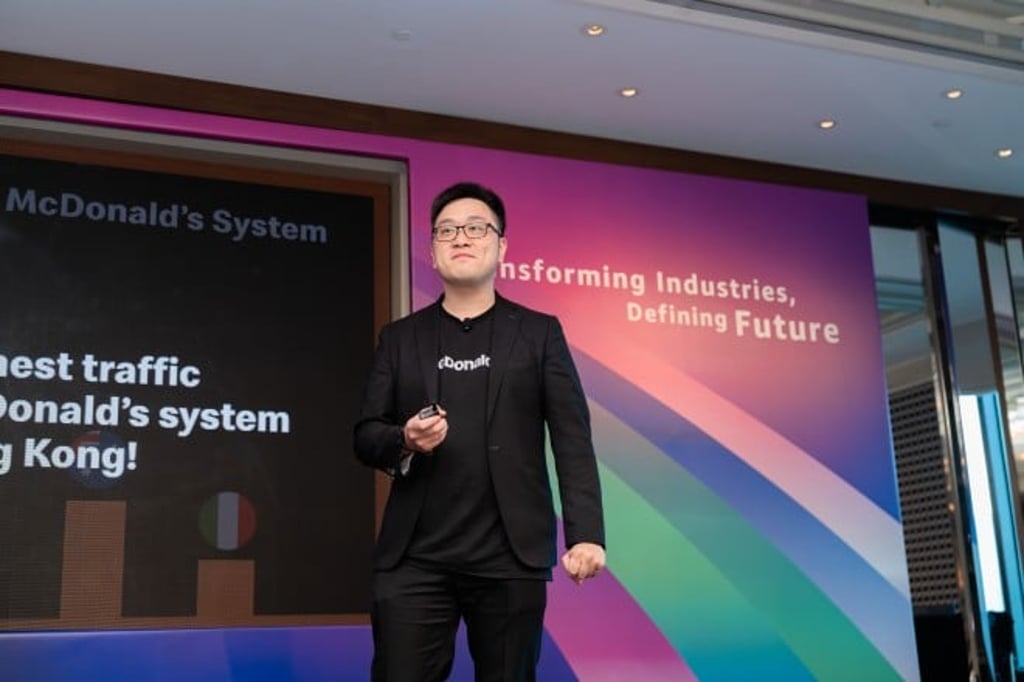
From Internal to External: A Continuous Transformation JourneyOn the other hand, Henry Hui, Senior Director of Technology at McDonald's Hong Kong, gave an overview of how established brands should incorporate digital transformation. Having embarked on this journey since 2015 with the introduction of self-order kiosks, the fast-food giant now serves over 1 million customers everyday across 260 restaurants. Even from a global perspective, four out of five world’s highest traffic McDonald’s restaurants are found in Hong Kong.
In response to the heavy foot traffic, the mobile app was launched in 2018, gradually becoming "the new storefront" to minimise waiting time and magnify customer enjoyment through donation to Ronald McDonald House Charities (RMHC) to gain exclusive experience to join concerts and special events. Achieving an impressive milestone as the number one food and beverage app in Hong Kong, the company has also worked with AWS this year to build a digital treasure hunt game in celebration of its 50th anniversary to further enhance the customer experience.
However, McDonald's journey as a modern F&B retailer does not end here. Facing workforce sustainability and operations difficulties, while having to maintain consistent quality, service, and cleanliness standards, McDonald's has addressed internal challenges with the help of transformative technologies. Launching over ten systems in 2024 alone to support operations, Hui believes most advanced solutions are invisible. By accelerating processes from crew scheduling and attendance, to payroll and recruitment, the management team in Hong Kong is keen to make lives easier for employees, with all roads leading back to superior customer experience.
From Present to Future: Hong Kong’s Retail Outlook
The half-day event showcased how retail innovators have been and should be leveraging AWS's comprehensive suite of cloud and AI services to jumpstart new digital transformation initiatives. From CASETiFY's custom-made phone cases to McDonald's golden jubilee anniversary campaign, it is certain that generative AI brings more to the table than theoretical concepts.
As the retail industry continues to evolve, the insights shared at the forum provide a roadmap for businesses navigating the complexities of a growing landscape. By focusing on practical applications, data strategy and cybersecurity, retailers are well-positioned to lead the next wave of innovation in the global retail industry, laying the grounds for unique and exclusive ways to engage customers.

.jpg?itok=ufn9c63M)