Top AI brains envision what’s next for AI

[The content of this article has been produced by our advertising partner.]
It will take years or decades for the development of artificial intelligence (AI) to reach human-level AI. Robots will not take over the world. “Open source” is the only option.
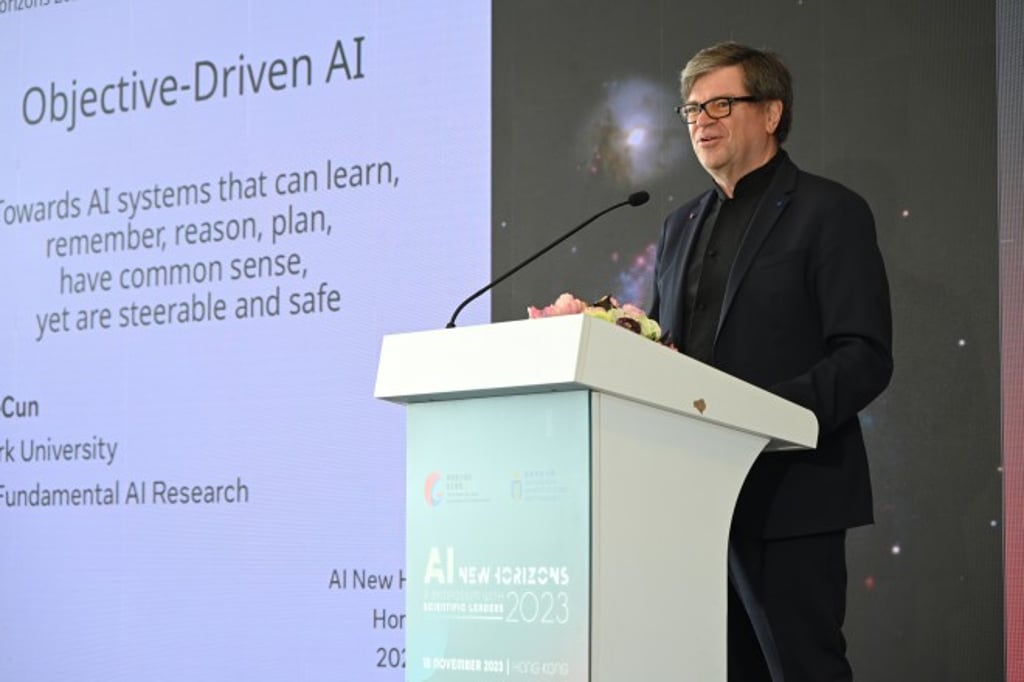
These are among the thought-provoking insights that Turing Prize Winner Prof. Yann LeCun, hailed by the media as one of the “Godfathers of AI,” has shared with AI experts, scholars, industry leaders from around the world and students at a symposium held recently in Hong Kong.
Entitled AI NEW HORIZONS 2023: A Symposium with Scientific Leaders, the symposium was jointly hosted by the Hong Kong University of Science and Technology (HKUST) and the Greater Bay Area Association of Academicians (GBAAA).
In his keynote speech, Prof. LeCun envisioned objective-driven AI will help predict the future, and Joint Embedding Predictive Architecture (JEPA) model will make a paradigm shift in predictive modeling, that JEPA could bring about a “new Renaissance.”
The issue of “open source” AI platform was further discussed at a “Fireside Chat” among Prof. LeCun, HKUST Council Chairman and AI expert Prof. Harry Shum and Director of HKUST’s Center for AI Research Prof. Pascal Fung, at the symposium held at the Asia Society Hong Kong Center.
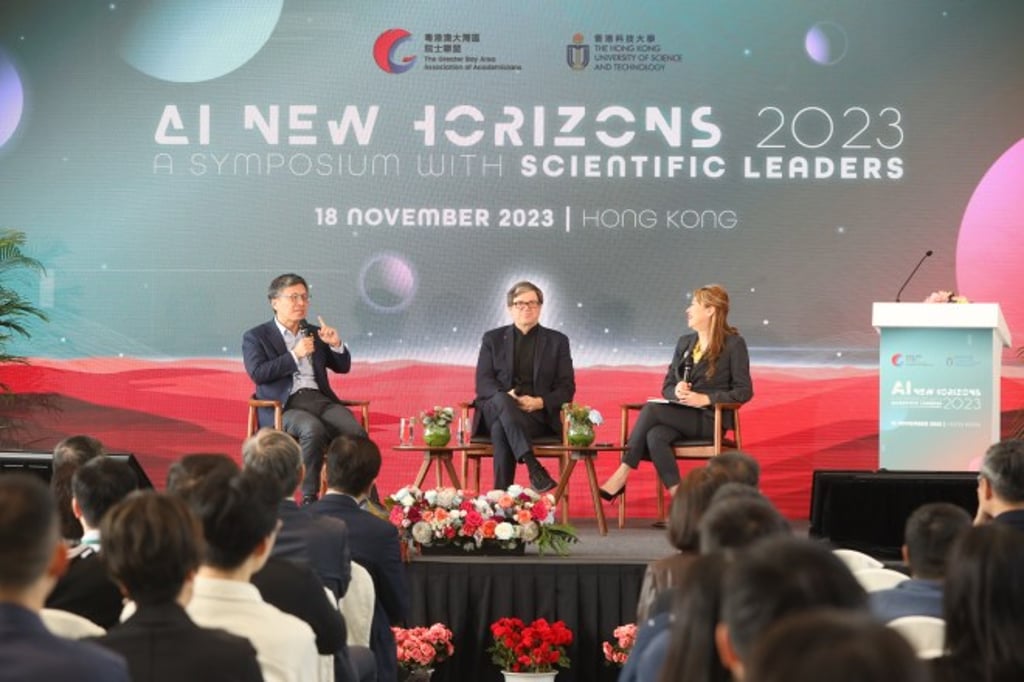
“If you think from a commercial point of view, whoever is Number One (in the industry) would not want to go open source for financial reasons. If you are Number Two, you will then struggle (and ask) should I open source or compete with (Number One)?” Prof Shum said.
“Like many new technologies, it would take time to formulate the relevant laws and regulatory mechanisms to tackle the problems that may arise,” he added.
Responding to the question by Prof. Fung about universities and industry co-operations, both Prof. LeCun and Prof. Shum underlined the importance of greater collaborations between the industry and the academia in AI. Prof. Shum said resources were important to research development, “we will continue to encourage faculties and students to get more fundings and do start-ups… This is what HKUST has been doing.”
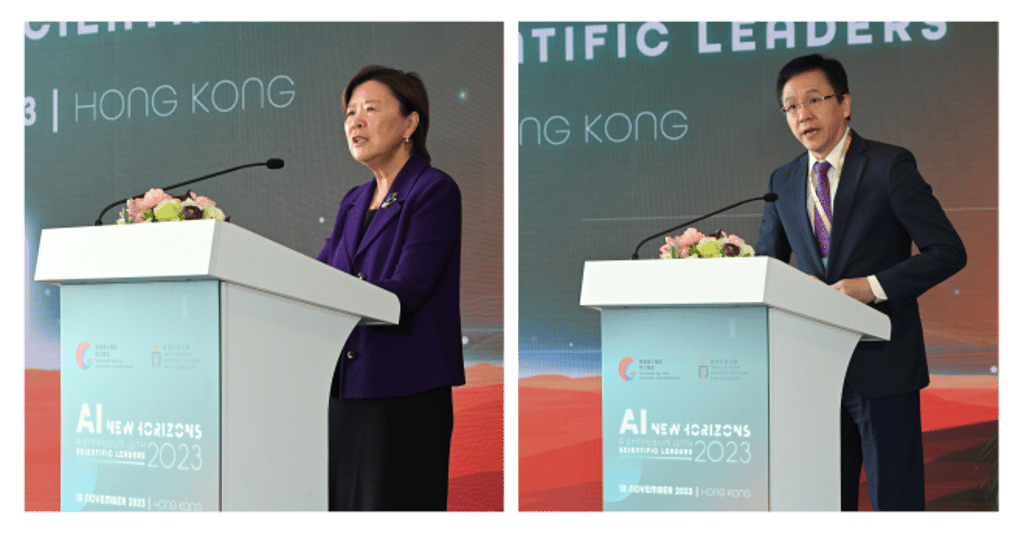
“The launch of Open AI’s ChatGPT and other generative AI tools early this year has suddenly thrusted AI into the forefront of our life and imagination,” she said. “As AI research progresses, we can anticipate even more transformative advancements that will redefine the way we work and live.”
As an officiating guest of the event, Secretary for Innovation, Technology and Industry Prof. Sun Dong, said Hong Kong possesses distinct competitive advantages to be developed into an international I&T center. He outlined the Government’s I&T strategy and plans to digitalize public services set out in the 2023 Policy Address, which include the establishment of a supercomputer center to foster AI development.
The symposium was the first large-scale academic conference held by the GBAAA since its establishment in 2021, and also one of the series of conferences recently organized by HKUST with a focus on AI.
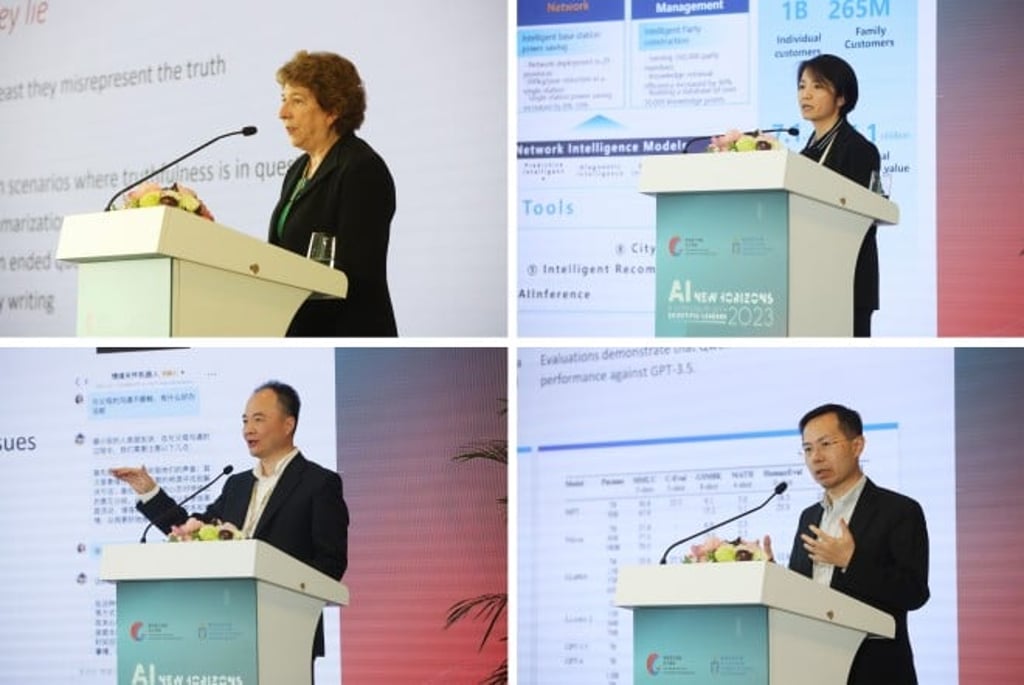
Representatives from the Chinese Academy of Sciences and eight local tertiary institutions including the City University of Hong Kong, Hong Kong Baptist University, Lingnan University, The Chinese University of Hong Kong, The Education University of Hong Kong, The Hong Kong Polytechnic University, HKUST and The University of Hong Kong, took part in the full-day symposium and shared with participants their AI research achievements.