Cyberport enterprises scale from infrastructure to impact
- Enterprise-focused tech firms backed by Cyberport are using Hong Kong as a launchpad to deliver banking, retail, AI and cybersecurity solutions to global markets
_1.jpg?itok=qpRVfS5W)
[The content of this article has been produced by our advertising partner.]
Backed by Cyberport, a new generation of enterprise solution providers is building the digital foundations for finance, cloud, retail and cybersecurity. These capabilities are now reaching new markets, such as Asia, Middle East, and etc.
FORMS Syntron, DAS-Security, Inspur Cloud and Dmall are creating the systems and platforms that banks, retailers and governments depend on.
Each of them is building scalable solutions that have been tested in Hong Kong and prepared for international deployment. Cyberport supports this expansion by connecting them and many others with regulators, partners and funding networks.
Building financial infrastructure
FORMS Syntron, through its Hong Kong-based entity FORMS HK, offers core digital platforms for banks and financial institutions. Its two flagship products are FINNOSafe and FINNOSmart.
FINNOSafe is a compliance-led Web3 technology platform for digital asset issuance, custody and settlement. It enables financial institutions to bridge traditional and decentralised finance by using distributed ledger technology.
FINNOSafe supports cross-border payment settlement and asset tokenisation. It has already been used in the Hong Kong Monetary Authority’s Project Ensemble.
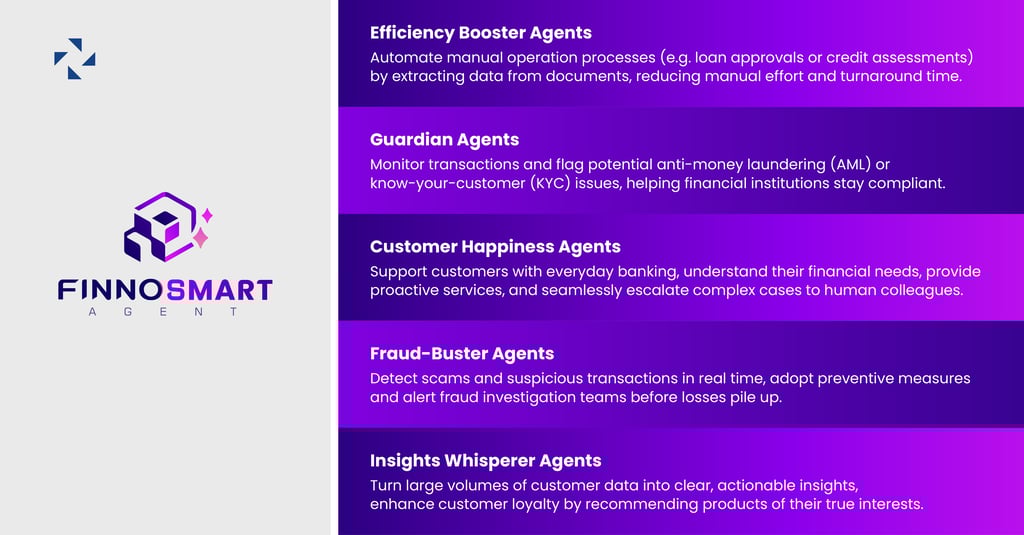
FINNOSmart is a GenAI platform tailored for financial institutions, allowing banks to build and govern their own AI agents across operational functions and compliance scenarios. FORMS HK has partnered with the Hong Kong Monetary Authority for both Cohort 1 and Cohort 2 of the GenAI Sandbox.
“We want to export technology made in Hong Kong to the world,” said a spokesperson from FORMS HK. “Our products are designed for compliance and scalability. If they work in Hong Kong, they can work in most regulated markets.”
Cyberport has helped FORMS connect with central banks, regulators and international investors, particularly through events and its overseas networks in Southeast Asia and the Middle East.
FORMS Syntron established a regional office in Thailand in 2019 to support its ASEAN expansion. Since then, the company has delivered major fintech infrastructure projects in the region.
These include a blockchain-based securities borrowing and lending platform for Bursa Malaysia Berhad, contributions to the mBridge cross-border central bank digital currency project (with central banks from Thailand, the UAE and others) and an ongoing “build-the-bank” initiative with a virtual bank in Thailand.
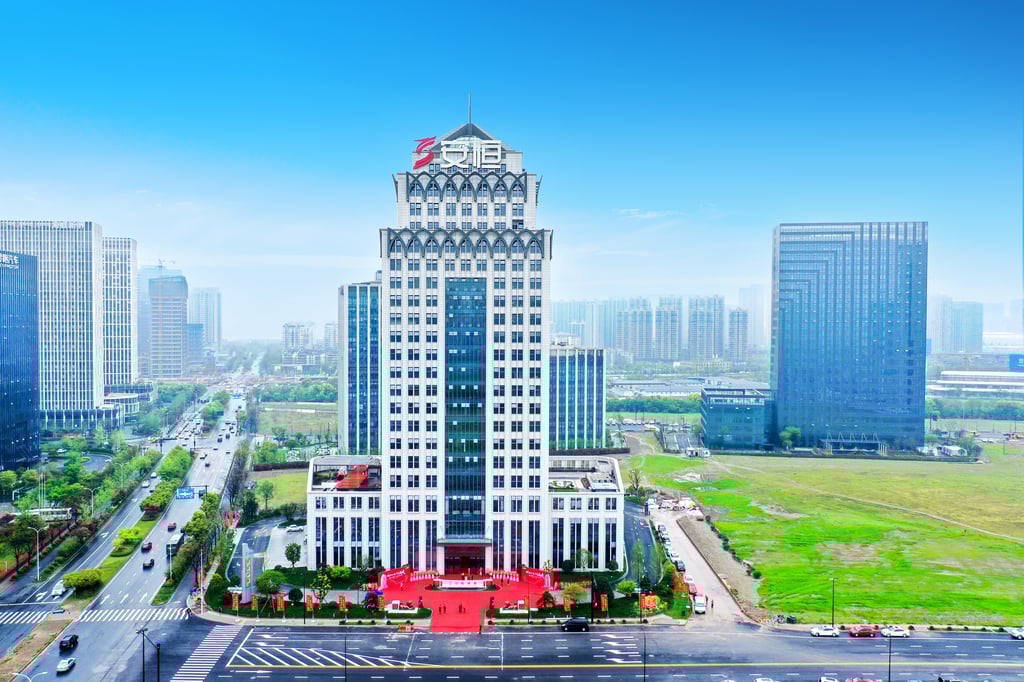
DAS-Security, a cybersecurity firm that serves enterprise and government clients, has built a modular system that includes SIEM, WAF, NDR, PAM, database auditing and managed services.
Their products have been integrated with AI at their core, enabling more adaptive, automated and scalable security capabilities. These platforms support detection, prevention and response across digital infrastructure.
The company ensures global applicability through multi-lingual product interfaces, regulatory templates for GDPR and PCI-DSS and flexible deployment models. It collaborates with local cloud providers to meet data sovereignty rules and adapt to technical conditions in target markets.
DAS-Security said that its overseas expansion strategy is built on a thorough understanding of local client needs and regulatory requirements.
With the Hong Kong Critical Infrastructure Bill coming into effect on January 1, 2026, the company’s spokesperson said it is continuing to align its solutions with updated compliance standards. Its detection logic, user interface and deployment frameworks are fine tuned to meet the specific requirements of each market.
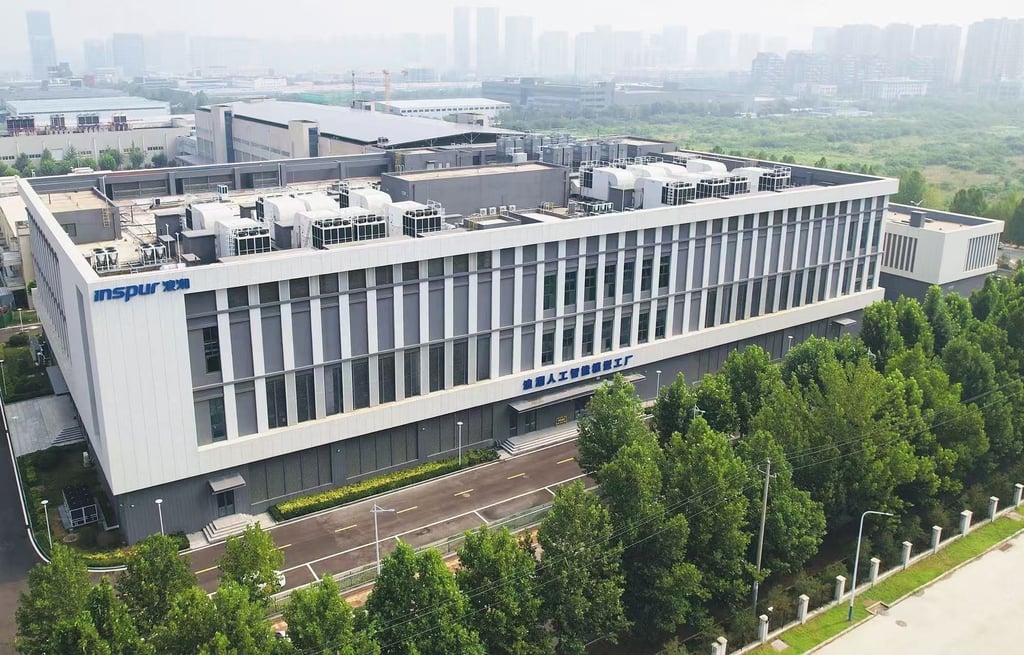
Inspur Cloud has developed an infrastructure model known as the “AI Factory”. Unlike traditional data centres, this model is designed to produce AI models, agents and terminals through repeatable, industrial processes. It supports open-source models and serves various industries through regional, enterprise and sector-specific deployment options.
The company’s AI Forward strategy brings together governance, data, infrastructure and partnerships to support responsible AI development.
“Our objective is to build a sustainable and people-centred AI industry through modular infrastructure and global partnerships. Our AI Factory helps transform AI development from isolated projects into structured production lines,” said the company’s spokesperson.
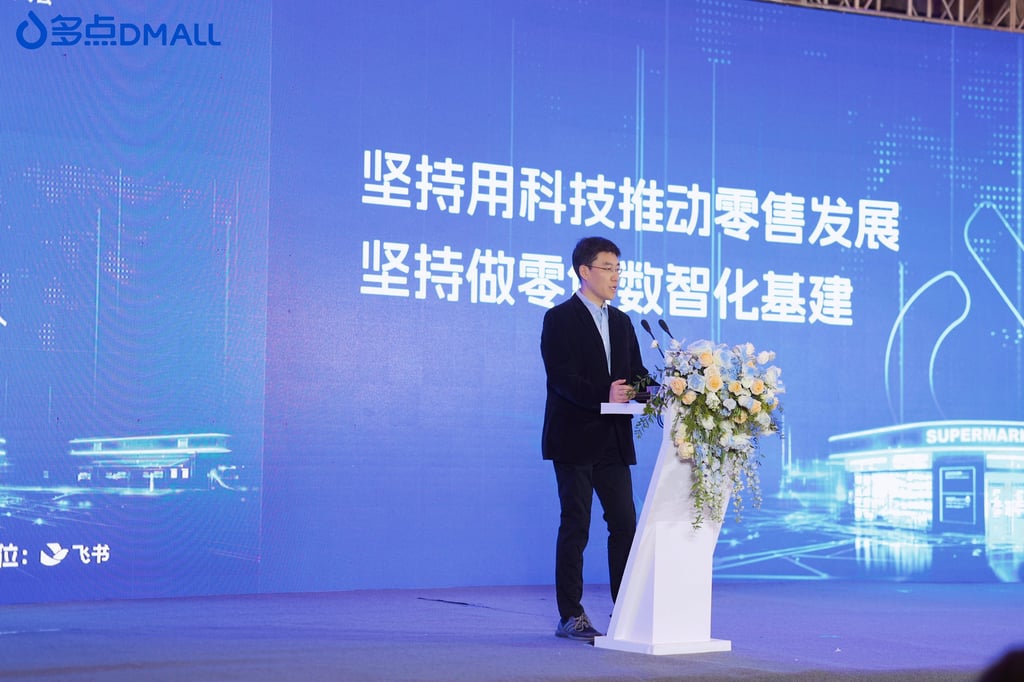
Dmall provides AI-powered systems for retail businesses, covering supply chain planning, smart pricing, store operations and inspection. Its technology has been applied to improve fresh food procurement, increase in-store efficiency and support omnichannel integration.
The company said its platform is suitable for overseas expansion through multi-lingual support, region-specific product adjustments and collaborations with local infrastructure providers. In Southeast Asia, for example, its systems have been adapted for local languages and consumer habits.
Sam Zhang, CEO of Dmall, said the company supports retailers in shifting from manual operations to intelligent, data-driven decision-making. By combining AI with proven systems, he noted, Dmall has helped clients reduce costs and improve overall performance.
Cyberport and the Hong Kong government demonstrate a strong commitment to innovation, he said, adding that Hong Kong offers access to talent, research partnerships and global networks.
As exemplified by these companies, Cyberport actively serves as a "super-connector" and "super value-adder" by expanding its domestic and international networks.
As Hong Kong's digital technology hub, AI accelerator and start-up incubator, Cyberport now hosts over 2,300 start-ups and tech companies.
It has supported 15 listed firms and 10 unicorns to date. Companies from its community have raised more than HK$46.2 billion in cumulative funding and expanded into over 35 global markets, including the emerging Middle East and ASEAN along the Belt and Road.
In the past two years alone, about 30 listed companies, unicorns and soonicorns have moved into the Cyberport campus. The market cap of listed companies reached HK$ 336.3 billion while valuation of unicorns and soonicorns surpassed HK$ 87.3 billion. They have set up international headquarters at Cyberport to expand overseas markets.
One third of companies based on-site have founders from 26 countries and regions. This shows how Cyberport has developed into a base for cross-border innovation and expansion.