Success factors for scaling – from start-up to global enterprise
● Founders determine a start-up’s initial mission and vision, but in-house talent can help ensure plans become reality
● Corporate leaders can help to bolster progress and culture of start-ups

[Sponsored Article]
In the past, they were seen only within the technology sector. But they have since expanded to other industries to meet the needs of consumers and enterprises.
Today’s start-ups also have no single formula for evolution and expansion. They can scale through acquisitions, fundraising through numerous private and public financing options, rapid expansion or diversification of offerings.
Increasingly, we have seen affirmations that the number of fundraising rounds and funds raised do not directly equate to success.
For sustainable growth and success, three factors have consistently played a critical role: leadership, in-house talent and management structure.
While leadership and management have greater flexibility for change, it is talent that will always form the backbone of a company and the bulk of the organisation’s workforce.
When a maturing start-up eventually moves from a founder-led to talent-led business, what will that shift mean for the company, the people who work for it and the customers it serves?
Founder and post-founder start-up era
Founder-led start-ups
The founder’s identity seeps into the start-up and the company becomes a significant extension of the founder.
As more new business hopefuls model their own enterprises around these start-ups-turned-brand names, the major founders become the “face” or “persona” of these enterprises, whether they want to be or not.
However, early on, founder-led start-ups will see founders playing a critical role in their success, wearing many hats and filling in organisational gaps to set up a strong momentum for growth.
This also signals the need for founders to be versatile, adaptable and nimble so they can step in wherever they are needed until resources permit otherwise.
Evolved roles for founders of mature start-ups
The second type of start-up involves founders who have turned them into well-known and highly regarded brands with a proper product-market fit.
Essentially, they have ceded control and let experienced and/or specialised professionals participate in expanding the business, or perhaps taking over that task completely.
The founder's former roles would be shared either by the company's in-house management, the board, or external parties such as venture capitalists.
However, founders can also stay on and concentrate on matters that have a more strategic, long-term focus, rather than day-to-day measures. This option can help to ensure that the start-up becomes a profitable, sustainable enterprise.
Alibaba
WordPress
Entire businesses have also sprung up around its ecosystem of plug-ins, themes and hosting services.
Matt Mullenweg, co-creator of WordPress and founder of Automattic and the WordPress Foundation, also has a trait that is common among start-up founders.
Xero
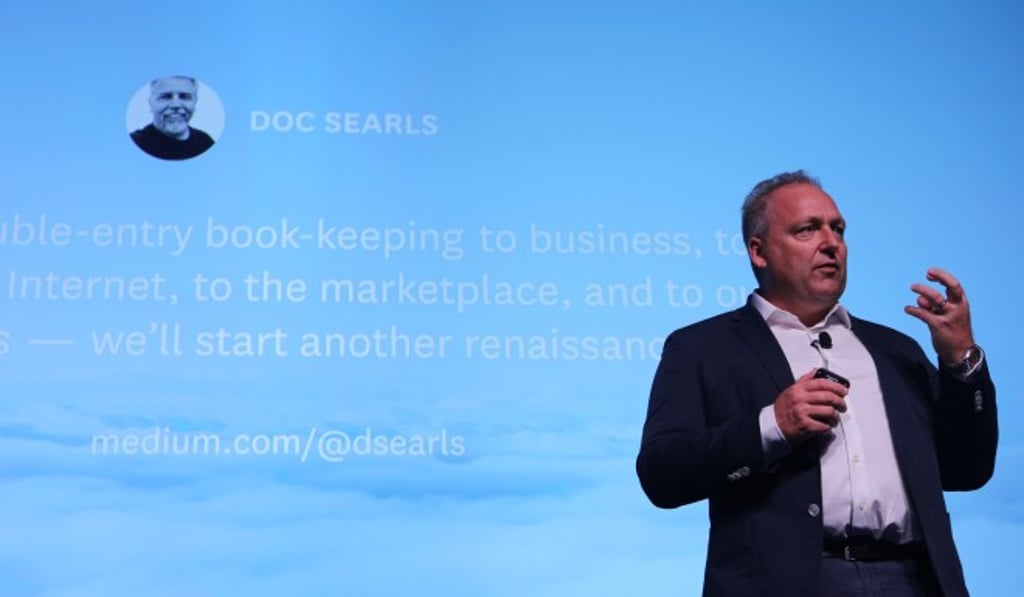
Xero, the cloud accounting platform, has also transitioned from being led by Rod Drury, its founder and former CEO, to a executive-led company with the same drive and enthusiasm as the professionals it serves.
Drury stepped down last year after 11 years in charge. But he continues to make appearances at Xerocon events worldwide and remains a non-executive director on the company’s board.
Xero is now in the capable hands of its new CEO, Steve Vamos, a tech industry veteran, who helped the company secure more than 2 million subscribers, as announced in November 2019.
How to make post-founder era succeed
Once the founder’s role changes and the management structure has been set up, what happens next?
Change in viewpoints and strategies
As the founder carries out succession planning before the eventual exit, start-ups should see this as an opportunity to establish stronger frameworks and long-term strategies to take it to the next level.
The new corporate leaders – particularly those who come from other companies and industries – could be more objective when reviewing current policies and processes and make more strategic decisions.
Vamos said during the Xero on Air podcast at Xerocon Brisbane 2019 that start-ups that are transitioning should stay focused on ambition, a future-centric view and, most importantly, care for others.
This change in perspective must extend to the founder as well, whether or not he or she stays on at the company. From being the one person making the final decisions, the founder must become comfortable with the idea of reaching a consensus as a team.
Drury talked about “switching hats” at this year’s Xerocon. “From a career point of view, it’s thinking about ‘How am I supporting the Xero team?’,” he said.
Face all problems
At the conference Vamos also touched on two other concerns facing post-founder start-ups: dealing with difficult issues and decreasing their overall reliance on one or more people.
He highlighted the following questions that must be asked, regardless of company size or stage:
● Do you create an environment that’s safe for people to challenge?
“Tell me if you think what we’re doing is rubbish,” Vamos said. “I want to know that, because I need 2,500 people leading this company, not just me.”
● Do you make tough choices?
“Every organisation on the planet would benefit by doing 25 per cent [fewer] things than they are [doing] today.” Sometimes it is about picking the right battles or simply doing more by doing less, and asking tough questions along the way.
● Do you know what you want to happen, and how?
“How clear are you about your purpose and your priorities? And if you're not, then are you trying to be?”
● Do you review your company’s performance and pivot when needed?
“The only way you’re going to attack effectively is if you’re looking out there and are really honest about how you are doing today.”
He also said that a start-up is ready to change and evolve with the times if it meets these criteria.
“If not, you’re in trouble,” he said.
Consider human aspect of business
Xero executives also highlighted the importance of companies shifting to a focus on people, in line with one of its core values of being human.
This matters whether you are meeting client requirements, ensuring cash flow – particularly for small businesses – or encouraging employees’ work performance.
Anna Curzon, chief product officer, said that it’s all tied to a company’s purpose.
“We are a human organisation,” she said. “I think [that’s] where our conversations start and end: about the people we’re serving. And that all comes back to small businesses.”
As start-ups become more data-centric, Curzon also questioned how Xero’s customers will be affected by how data is handled.
“It is incumbent on us to extract value from [data] for our small business, but do it in a way that’s hugely respectful,” she said.
“We've got guidelines in place internally to say, ‘If we’re going to use this data, how is it benefiting small businesses?’. And if it’s not, why are we doing it?’.
“While we are keeping up with technology and business trends, it is essential not to lose sight of the actual customers we are serving and have a deep appreciation of how our decisions will impact [on] them in the near and long term.”
Follow ‘inside-out’ philosophy
Kevin Fitzgerald, Xero Asia’s managing director, redirects this human focus on start-up talents themselves.
“I think people that are building online businesses are very focused on scale,” he said. “[They say], ‘When can we scale, and when can we grow?’. Well, [they have] got to keep the ‘people side’ of it.”
This is tied to Xero’s goal of “creating an environment where people do the best work of their lives”, according to Vamos and Rachael Powell, chief customer officer.
The company has implemented what it calls an “inside-out” philosophy, where employees and partners fully believe in the company’s purpose and solutions – and work according to their strengths and interests – to better serve customers.
Powell has repurposed the acronym EBITDA from financial performance to one embodying Xero’s philosophy and culture: it now stands for “Engagement and Belonging, and Innovation and Trust and Dreaming and setting goals and Accomplishing things”.
She also said people are “six times more likely to be productive doing what [they’re] doing than somebody who’s not energised”.
Productivity, Powell adds, increases by 36 per cent if employees are allowed to do what they do really well, or do what they are truly interested in. Their work then takes on a greater, more personal meaning.
Making this culture shift systemic in post-founder start-ups relies on clear, two-way communication, and hiring people aligned with the company’s core values and purpose.
“If you can get that right on the inside, they are your brand,” Powell said.
Trent Innes, Xero Australia’s managing director, said the inside-out culture can be supported and scaled, but should never be forced on company talent.
“If you have to talk about culture, it only means it’s gone,” he said. “Culture is an output of purpose, values, and behaviours.
“Innovation comes from within. [It] is a mindset. It’s not a department.”