Impacts of universities onto society and mankind should be captured in global rankings
[Sponsored article] The latest Times Higher Education (THE) World University Rankings shows that, in many ways, especially in research and teaching excellence, Hong Kong universities are continuing to punch well above their weight.

[Sponsored article] The latest Times Higher Education (THE) World University Rankings shows that, in many ways, especially in research and teaching excellence, Hong Kong universities are continuing to punch well above their weight.
Speaking in the midst of the THE Innovation & Impact Summit, Dr Alison Lloyd, Director of Institutional Research and Planning, at The Hong Kong Polytechnic University (PolyU), said besides research and teaching, it was significant for the rankings to capture the diverse activities undertaken by universities, as well as the economic and social impacts of these activities. PolyU is thus glad to co-host the Summit to kick start the very important conversation in this regard among various stakeholders across the world.
Mr Phil Baty, Editorial Director, Global Rankings of THE, said the Summit has provided a useful forum to help develop and shape new metrics for providing meaningful and trusted data of universities’ impact performances in the future.
He explained that at present, THE global rankings contain 13 performance indicators, covering the whole range of a university’s activities: teaching, research, interaction with business, international outlook and reputation. The indicator of research funding a university attracts from business is a reflection of its research impact onto the society. “But we want to do better … though many of the most important aspects of universities’ impact performance, especially beyond immediate economic impact, are very difficult to capture.”
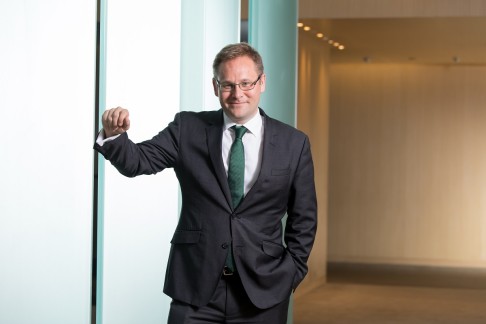
Citing PolyU as a very good example of an interconnected institution, with innovations it developed having clear applications in supporting business growth or societal developments, Mr Baty acknowledged that these might not be all captured in the current ranking mechanism.
In THE rankings, in 2017, PolyU ranks 17th in Asia University Rankings and 20th in Young University Rankings -- five and seven places up from the respective rankings of last year.
“For us, ranking is a good reference as to how we’re doing in certain areas but we would not use the rankings to drive what we do,” said Dr Lloyd, who is adamant that PolyU would not distort investments or policy decisions for the sake of ranking-boosting.
Mr Baty noted that sometimes it was a concern that institutions in emerging economies can get too fixated on rankings and rankings metrics, and that universities that do this risk losing their distinctive characters.
“We very much hope that the ranking methodology means if you’re true to your own mission, success comes and the ranking follows, rather than the other way around,” he said.
On the impactful roles of universities, both Mr Baty and Dr Lloyd agreed that the range can be quite wide, ranging from tackling the grand challenges of our time for mankind, such as undertaking research on the issues of climate change and food security; to assisting local small businesses in improving their processes, or providing life-long learning opportunities to the local community.

Dr Lloyd said she would like to see the rankings criteria expanded to include more of such wide range of activities and the social impacts they have.
Since its launch in 2004, THE World University Rankings has been dominated by traditional Western powers, such as the US and the UK. However, Mr Baty said there are indications of a shift in the balance of power towards East Asia in recent years. In the THE rankings of 2016/17, 79 countries/regions have universities in the top 1,000 list – Mainland China now has 52 world-ranked universities, Japan has 69, South Korea 25 and Taiwan 26.
“Hong Kong’s status on the world stage is incredibly strong, with three universities in the top 100, and six in the top 500. Taking the six world-ranked universities of Hong Kong together, only two countries (Singapore and the Netherlands) have higher average overall score than Hong Kong,” said Mr Baty.
Similarly, the average scores for research, citations and teaching of the six local universities are all at a top-four level or higher. But Mr Baty pointed out that in terms of industry income, Hong Kong ranked 14th on average, which might call for the need to look into ways for enhancing support for research and innovation – be it from the government or industry.
Dr Lloyd said Hong Kong should be very proud of the ranking results. “Though Hong Kong is very small, representing something like one tenth of a per cent of the world’s population, we have three per cent of the world’s top-ranked universities.”