RGC funding fuels innovation and nurtures young research talents in Hong Kong
Two of the Research Grants Council (RGC)’s key funding schemes - RGC Senior Research Fellow Scheme (SRFS) and RGC Research Fellow Scheme (RFS) - are instrumental in shaping the careers of Hong Kong’s emerging researchers. This article explores the experiences of young research talents mentored by the RGC (Senior) Research Fellows and illustrates how both schemes cultivate future leaders in innovation.

[The content of this article has been produced by our advertising partner.]
The University Grants Committee (UGC) and its RGC are the driving forces behind this transformation, providing vital support to exceptional researchers to groom young research talents through a range of research funding and fellowship schemes, including the RGC Senior Research Fellow Scheme (SRFS) and the RGC Research Fellow Scheme (RFS).
Launched in 2019, the SRFS and RFS offer 10 annual awards each, aimed at full professors and associate professors respectively. These schemes provide significant support, allowing recipients to focus fully on research and development by relieving them of teaching and administrative burdens. They emphasise the mentoring of the next generation of postgraduate, doctoral and postdoctoral researchers in Hong Kong through advanced research programmes. Three SRFS and RFS research teams will share their development through the support of the schemes.
How mentorship shapes academic journeys
The SRFS research project led by Professor Hong Ying-yi, Choh-Ming Li Professor of Management at The Chinese University of Hong Kong (CUHK), focuses on understanding the psychological underpinnings of identities and intergroup relations during socio-political transitions in Hong Kong. Her work aims to identify core features of social identities and their psychological consequences, particularly in relation to intra- and intergroup relations.
Professor Hong’s team uses a variety of research methods to uncover how these identities manifest and influence intergroup relations.
Letitia Lee, a PhD student supervised by Professor Hong, has worked with her teammates to utilise a range of sophisticated methodologies, including telephone surveys, in-depth interviews and epistemic network analysis, to explore the complex dynamics of HongKonger and Chinese identities.
Growing up in Hong Kong, Lee experienced first-hand the rich tapestry of cultural influences that shape identity. This background gives her a deep understanding of the overlapping and sometimes conflicting aspects of Hong Kong and Chinese cultures.
She explains that the research shows how dual identities coexist and evolve within individuals and communities, revealing the fluid and subjective nature of identity, which varies even within groups. This insight is crucial for promoting mutual understanding in diverse societies.
Lee has benefited greatly from the supportive and interdisciplinary research environment fostered by Professor Hong. She particularly values the emphasis on empathy and perspective-taking, which are central to her approach to research.
“Professor Hong’s mentorship has taught me the importance of empathy and perspective-taking in research. This is crucial to understanding our participants’ experiences and unravelling the psychological underpinnings of their identities,” says Lee.
Gemma Salazar, another member of Professor Hong’s team, discussed the implementation of interviews and the initial challenges of transcription. She also praises Professor Hong’s mentorship, “She encourages a lot of autonomy and creativity, which allows me to explore and develop my ideas while providing valuable guidance.”
Salazar is grateful to be part of the SRFS project. “Overall, Professor Hong’s mentorship has contributed significantly to my growth, both in terms of technical skills and personal development as a researcher,” she says.
As well as contributing to Professor Hong’s ongoing research on social identities in Hong Kong, Dr Andrea Matos, a postdoctoral researcher at CUHK and an awardee of the RGC Postdoctoral Fellowship Scheme (PDFS, recently renamed as RGC Junior Research Fellow Scheme), is also undertaking other research projects focused on understanding intergroup relations and radicalism, examining how political agendas influence perceptions of radicalism.
Originally from Venezuela and of Spanish descent, Dr Matos has lived in various parts of Asia, including Malaysia and now Hong Kong. This diverse experience has given her both an outsider’s and an insider’s perspective on the identity of Hongkongers.
Dr Matos also stresses the importance of empathy and perspective-taking in her research. “To truly understand the complexities of identity and intergroup relations, we need to put ourselves in the shoes of others. This approach enriches our research substantially,” she says.
She praises the supportive research environment, the mentoring from Professor Hong and the opportunities provided by the RGC fellowship scheme. “The independence and open-mindedness in Professor Hong’s lab have been invaluable. The opportunities and support I’ve received, such as grant writing, have been instrumental in my development,” adds Dr Matos.
Guided insights to young talents on cracking cancer codes
Professor Alice Sze-tsai Wong, Chair Professor in the School of Biological Sciences at The University of Hong Kong (HKU), conducts her SRFS project focusing on using glycosylation in metastatic cancer cells to develop new theranostics. Her project aims to understand cell-cell recognition in tumour metastasis and the role of glycosylation in cancer cell colonisation. She is investigating the unsolved mystery of cell-cell interaction in tumour metastasis, with a particular focus on glycosylation and its role in cancer cell colonisation.
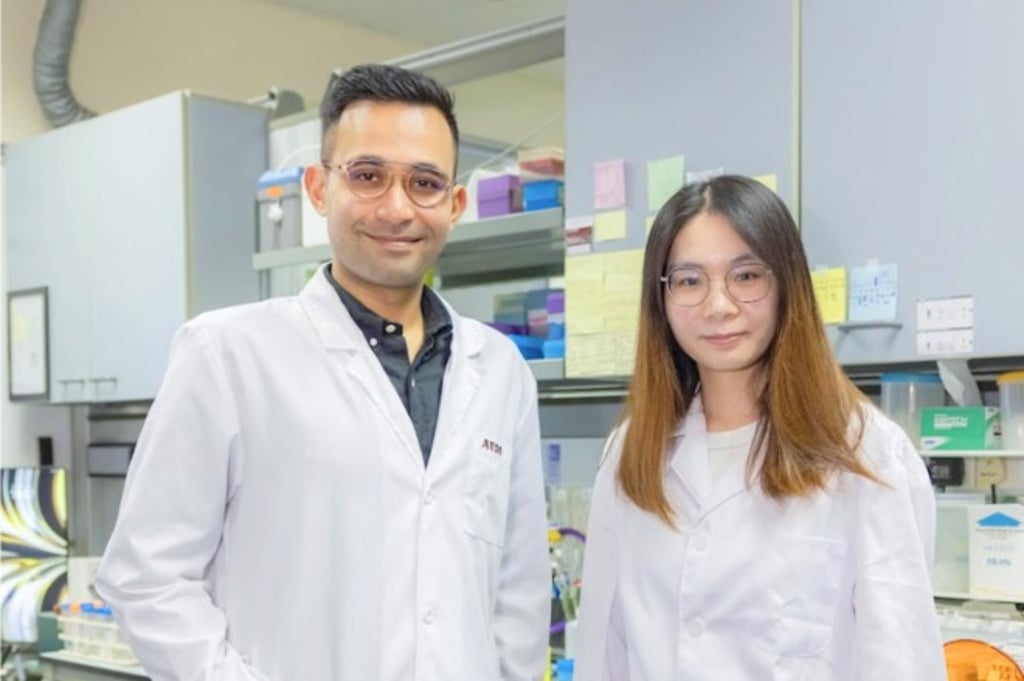
Dr Ayon Ahmed Hassan, a postdoctoral researcher in Professor Wong’s team, explains in layman’s terms that the research aims to understand how changes in sugar molecules attached to proteins affect cancer progression and metastasis.
“In cells, sugar molecules do much more than provide energy; they decorate many proteins and fats, and changes in these can be critical in cancer development,” he explains.
Dr Hassan acknowledges the challenge of translating this complex research into practical, marketable products. However, he notes that there is a growing commercialisation support system in Hong Kong that provides a conducive environment for bridging the gap between research and application.
Macy Yuen, also a member of Professor Wong’s research team, appreciates the personal guidance and mentorship she receives from Professor Wong, which has been instrumental in her development as a researcher. In this regard, Dr Hassan agrees that Professor Wong is a good mentor and a good listener.
“Professor Wong is incredibly supportive and tailors her guidance to each student’s goals, encouraging us to learn entrepreneurship and how to turn a project into a translational product,” says Yuen, adding that the work is not only about scientific discovery, but also understanding the broader implications of the research.
In addition to her research work, she is actively involved in entrepreneurship training to learn how to bring research innovations to market, which is crucial to translating scientific findings into tangible health benefits.
“Hong Kong provides a conducive environment for researchers, with opportunities for funding and entrepreneurship training through collaborations with organisations,” she concludes.
Advancing quantum frontiers with stellar young researchers
Professor Law Kam-tuen, Chair Professor in the Department of Physics at The Hong Kong University of Science and Technology (HKUST), is at the forefront of pioneering research on quantum materials, which has the potential to revolutionise quantum computing and lead to the development of advanced electronic, magnetic and optical devices.
Professor Law is a theoretical physicist. His RFS-funded research focuses on understanding novel quantum phenomena in materials and on exploring their applications. For example, Professor Law is studying new types of superconductors, which can conduct electricity without resistance, and investigating how new superconducting materials can lead to new designs of quantum bits (qubits) for quantum computers. The RFS also allows Professor Law to explore new mechanisms of second and higher harmonic generations in quantum materials which have important applications in telecommunications and other electronic devices.
Professor Law emphasises that material development has been crucial to the advancement of human civilisation. For example, the deeper understanding of semiconductors had led to the invention of solid-state transistors which subsequently facilitated the emergence of our current information age. He believes that the discovery and understanding of new quantum materials will result in technological breakthroughs.
Professor Law is thankful for the support of RFS which allows him to lead a group of bright young researchers to explore a wide range of topics related to quantum material research. “My research team consists of promising young talents. After leaving the group, many of them continued their academic training at top institutions such as MIT (Massachusetts Institute of Technology),” says Professor Law. “With the support of the RGC, I am honoured that I can manage an internationally competitive research group and nurture these stellar young researchers.”
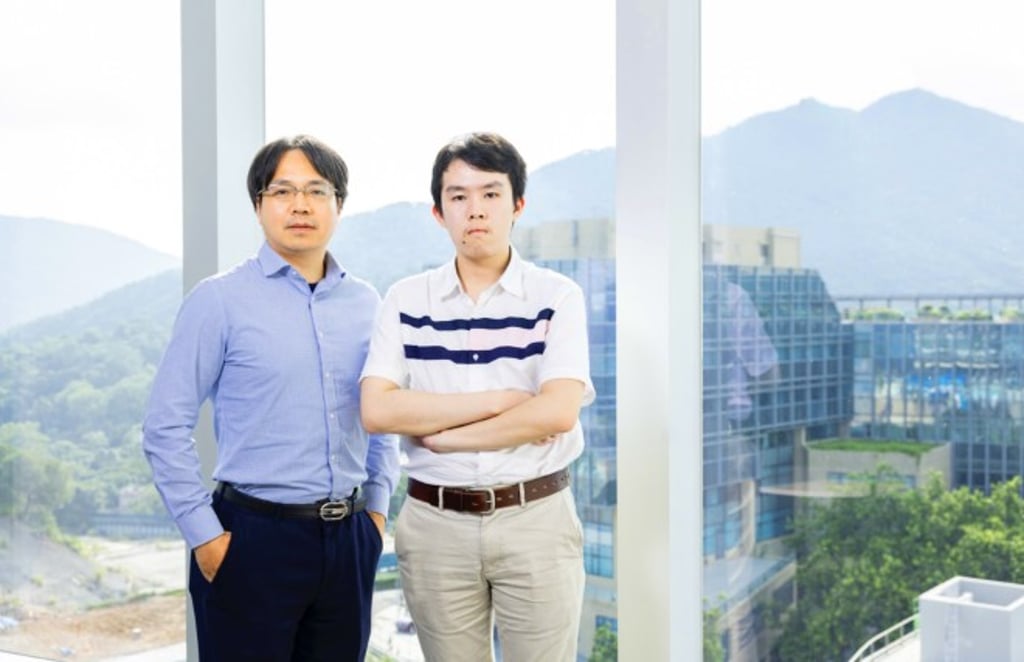
Tommy Chau, who joined Professor Law’s research group at HKUST after completing his undergraduate and master’s degree at the University of Oxford, is driven by curiosity and a passion for understanding scientific phenomena.
Chau appreciates the opportunities provided by Professor Law and RFS, as well as the supportive research environment at HKUST. “I joined Professor Law’s team because of my interest in quantum materials and the opportunity to learn from one of my former professors who taught me quantum physics when I was a high-school student. The experience has been incredibly enriching,” says Chau.
“At Professor Law’s group, I am able to explore some of the frontier and most important topics in quantum material research. We believe that some of the theories we have developed can greatly deepen our understanding about quantum materials,” says Chau. “HKUST offers ample research opportunities for PhD and even undergraduate students, providing a strong foundation for those interested in pursuing a career in science.”
When asked about his vision concerning the future of Hong Kong, Professor Law commented that Hong Kong has great potential to develop into an education and innovation hub like Boston. “Due to the strong support of the government in higher education and research, we have developed many world-class universities in Hong Kong. Building on this firm foundation, the universities in Hong Kong can attract many top young talents and financial resources from the Mainland and other parts of Asia. With these extra talents and resources, we can easily double the research and education capacities of the universities without imposing a financial burden on the government.”
Professor Law is very positive about the future research and education development in Hong Kong and he believes that there are a lot of opportunities ahead for the younger generation.
The SRFS and RFS cover all academic disciplines. Awardees will receive substantial funding via their supporting universities - about HK$8 million for the SRFS and HK$5 million for the RFS over a five-year fellowship period. This funding covers the cost of teaching relief and various research-related expenses, including research staff, equipment, travel, subsistence and dissemination.