HKSTP and Roche forge strategic collaboration to spur life science innovation and build hub
- Hong Kong Science and Technology Parks (HKSTP) and global pharmaceutical and diagnostic giant Roche join hands to promote life science innovation.
- The goal is to build an enhanced platform supporting biomedical innovation startups and develop the Greater Bay Area (GBA) into a life science hub.
.JPG?itok=INHsT8vx)
[The content of this article has been produced by our advertising partner.]
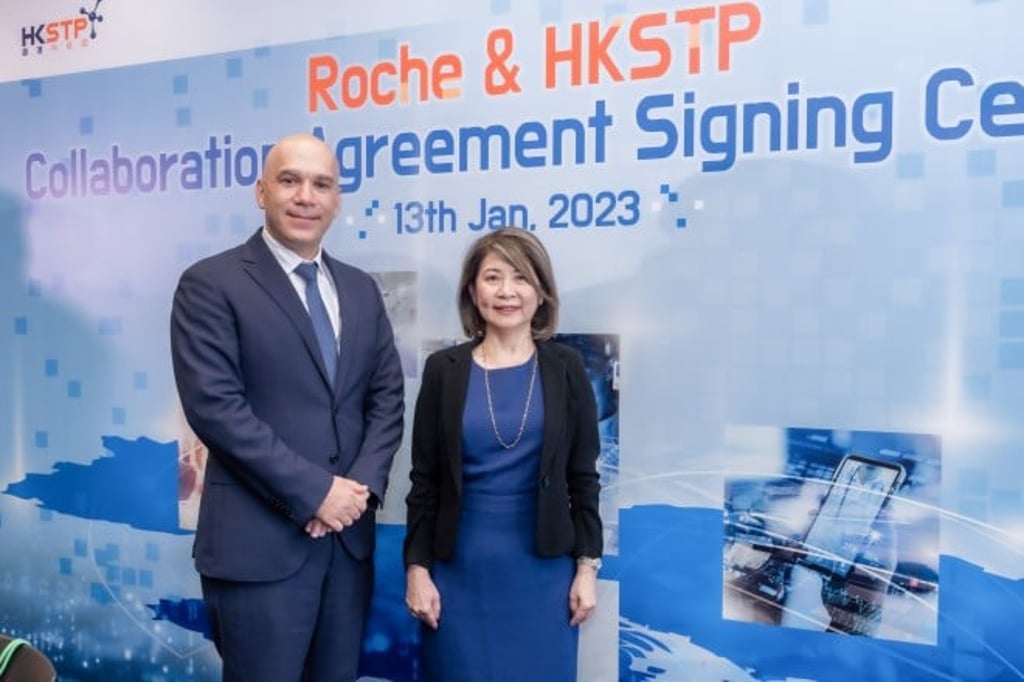
Under the Collaboration Agreement, HKSTP and Roche will work closely together and leverage their established ecosystems to advance life science development by focusing on several key areas, including policy shaping, startup co-incubation in Hong Kong and overseas, and health data sharing.
HKSTP and Roche aim to share ideas and suggestions to help optimise policy in Hong Kong to facilitate life science and biomedical innovation, thereby transforming the city into one of the hubs for GBA and Asia Pacific (APAC) in terms of innovation adoption and treatment registration.
The hub development will be supported by an enhanced co-incubation platform and ecosystem nurturing startups from Hong Kong and overseas in the specialised areas ranging from research and clinical trials to innovation commercialisation, as well as by a network connecting startups with their potential partners. GBA will elevate its status to become one of the APAC centres for innovation and technology talent and corporations.
Through the exchanges and collaboration of all stakeholders, an optimised health data-sharing environment will be built in the HKSTP platform. It will help explore the development of synthetic data generation tools and promote the ‘data collaboration’ concept in the community.

A symbiotic partnership
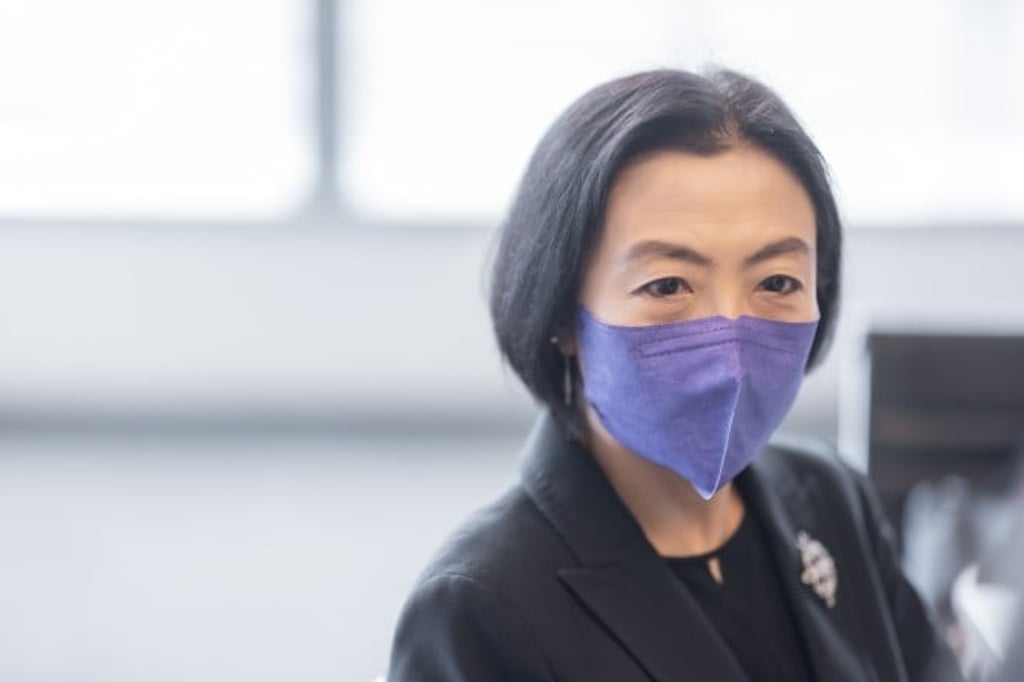
Biotech focuses on health and has high growth potential, said Dr Grace Lau, Head of Institute for Translational Research, HKSTP. “[By bolstering biotech development] we not only drive an industry, but also support and improve human health.” Through the symbiotic collaboration, HKSTP and Roche will take Hong Kong’s strengths in basic research to another level and translate cutting-edge projects into commercial plans. “It’ll benefit not just Hong Kong, but also GBA and the world,” she added.
With many quality startups in its ecosystem, HKSTP aims to attract more large multinationals to become co-incubators and set up their research and development laboratories. “Multinationals play an important role as mentors, sharing their resources and expertise. We have built partnerships with multinationals that run innovation centres abroad. It’s like extending our incubation to other parts of the world. We also want multinationals to help bring more quality startups to Hong Kong,” said Lau. “Roche has an edge in diagnostics, pharmaceuticals and therapeutics, as well as its incubator programme, known as ‘Accelerator’. We welcome it into our ecosystem.”
Roche is equally enthusiastic about the partnership. Collaboration and start-up incubation are at the heart of innovation at Roche, said Agnes Ho, APAC Sub Region 3 Head, Roche Diagnostics Asia Pacific. “Through the HKSTP-Roche partnership, we look forward to fostering and investing in future biomedical innovations that can help accelerate healthcare innovation, close inequity gaps, better support clinicians, and improve human health. The partnership will support startups to achieve greater speed to market and wider market access.”
Roche has achieved success through its partnerships in different countries. For instance, Roche has established a partnership with various stakeholders in Australia, including the Ministry of Health, Lung Cancer Trial Group, National Health and Clinical Trial Centre to support a pioneering programme. The goal is to improve access to comprehensive genomic profiling (CGP) for more efficient patient screening and matching individual patients with the clinical trials more suitable for them. “This is important for patients with advanced or metastatic diseases. Their prognoses and treatment outcomes will improve greatly if they receive the right targeted treatment early,” Ho said.
Aiming to speed up digital health innovation, Roche’s global “Startup Creasphere” programme has established hubs in Munich and Singapore which have nurtured over 60 startups so far. Among the innovations developed in Singapore is an at-home digital monitoring system for the post-discharge management of heart failure patients to detect clinical deterioration, by utilising a combination of advanced breath-cardio sensors and artificial intelligence.
Policy shaping
To develop Hong Kong into one of the pioneer hubs in GBA and APAC, HKSTP and Roche will work towards shaping policy for an environment more conducive to healthcare innovation. Dr Ahmed Elhusseiny, Area Head, Asia Pacific, Roche Pharmaceuticals, said Roche focuses on innovation and speedy adoption across the region and looks at possible changes to the regulatory framework to ensure its work will be translated into real benefits for patients.
For instance, in terms of biologic drug development, some new diseases may be treated with drugs developed through clinical research and these new treatments are subject to approval by the local health authority in a process that can take over a year. Predictability and transparency are the key to Good Review Practice by a health authority. “Some advanced economies are taking an active approach to reducing the timeline. Australia has cut the timeline for drug registration to reimbursement and availability for use to two months from 18 months in some cases while Singapore has reduced the timeline to less than a year,” Elhusseiny noted. “The Hong Kong Government can make its environment more attractive for innovation by taking a proactive approach to ensuring innovations become available to the public as early as possible.”
Hong Kong will be able to lure more biotech companies if it is an effective gateway to the mainland China market. The government can look at further streamlining innovation access to GBA and removing barriers, such as expanding the scope of the programme under which hospitals in GBA can use Hong Kong-registered drugs and medical devices. “At the moment only five hospitals in GBA can leverage innovations developed in Hong Kong. It’ll be great to explore the possibility for expansion,” he said.
United by shared vision
HKSTP and Roche are united in their shared vision for innovating future healthcare as both recognise that ageing population poses an unprecedented challenge globally. “At Roche, we work towards a purpose of “Doing Now What Patients Need Next”,” said Ho. “Personalised healthcare and preventive care that maximises the value of diagnostics enable us to improve lives. Roche’s unique advantage of combining diagnostics and pharmaceuticals empowers us to innovate throughout the entire healthcare spectrum from monitoring, detection, prevention, diagnosis to treatment, for the better lives of people.”
Roche’s vision matches that of HKSTP. “In the post-COVID era, we are looking at remote high-tech patient monitoring and diagnosis to broaden patients’ access to the right diagnosis and treatment,” Lau said. “We recognise the future direction of medical treatment is personalisation (precision medicine.) It’s about tailor-making specific treatment for each patient based on his unique genomic variation.”
Biomedical innovations can help shift the paradigm about how healthcare is administered, thereby reducing the cost considerably, Elhusseiny believed. “Innovations can help lessen the burden we would normally have in secondary and even primary healthcare settings by providing care and screening at home,” he said. “Ultimately innovative solutions help patients utilise resources better and free up the resources for others.”