Expert at CUHK's Business School: optimal integration of AI and robots into personalised services enhances the human touch in hospitality
- Technologies help address the hospitality sector’s labour shortage and take on tedious tasks, allowing staff to unleash their potential and enhance their work experience.
- The sector should find the right balance between personal interactions and advanced technologies, maintaining the core of hospitality while embracing progress.

[The content of this article has been produced by our advertising partner.]
AI and robotics are transforming workplaces across the globe. In China, following DeepSeek AI’s announcement of the DeepSeek R1, which rattled tech sector worldwide, UBTech, a Chinese robotics manufacturer, aims to mass-produce AI-enabled industrial humanoid robots capable of assisting with domestic chores by the end of 2025. In the US, robotics startup Skild AI could achieve a valuation of US$4 billion if SoftBank leads its $500 million funding round. Skild AI is developing a scalable foundation model for robotics, allowing machines to interact with humans safely and dexterously.
These tech developments lead to increased concerns about job displacement. Some argue that while technology enhances roles for certain workers, it may displace others.
For example, a PwC study predicts that 21 percent of existing jobs in China’s service sector could be displaced by 2038.
In the hospitality sector, another study estimates that robots could replace up to 25 percent of the global workforce by 2030.
Despite these concerns, the hospitality industry appears to welcome new technologies. AI and robotics are seen as viable solutions for the sector’s prolonged manpower shortage, especially having demonstrated their effectiveness during the global pandemic.
A harmonious partnership between technology, integrated through a customer and human-centric approach, and employees will streamline operations without sacrificing the personal touch essential for exceptional hospitality services, believes Professor Sungwoo Choi, Assistant Professor at the School of Hotel and Tourism Management at the Chinese University of Hong Kong (CUHK) Business School.
Tech helps unleash human potential
The hospitality market has grown significantly in recent years, projected to reach US$5,816.66 billion by 2027, at a compound annual growth rate of 6.2 percent. Despite these positive prospects, the sector has struggled with attracting and retaining high-calibre employees, with a global turnover rate between 30 and 73 percent, compared to just 12 and 15 percent in other industries.
Professor Choi notes that hotels and restaurants face difficulties in filling frontline positions. The younger generation often lacks interest in mundane jobs. “From the employers' perspective, there are not enough people willing to do frontline hospitality work because it's very physically and emotionally demanding,” he says. “AI and robotics have become the perfect solution to the labour shortage problem.”
Many entering the hospitality industry envision a career focused on making guests happy. However, as newcomers progress, they often find themselves dealing with repetitive, mundane, and sometimes taxing tasks behind every guest’s smile. With AI and robots becoming more prevalent, their idealistic dreams may become reality.
By adopting a well-balanced, human-centric approach to integration, technologies can improve staff work experience, which will, in turn, enhance guest experience.
Professor Choi highlights that AI and robots are gradually creating new opportunities by assuming the tedious tasks that originally deterred the younger generation from entering the hospitality industry. With the help of AI, employees are expected to streamline operations, better understand guests’ preferences, and tailor their services to customers’ specific needs. Instead of being bogged down by routine tasks, hotel staff can feel empowered to curate a superior "home-away-from-home" experience and high-value services at critical touch point for their guests.
The prospect of having a direct impact on customer satisfaction through exceptional service has become a pull factor, drawing young people back to the industry. In fact, a 2018 PwC study estimates a 50 percent growth in jobs for the hotel industry due to AI and related technology by 2038.
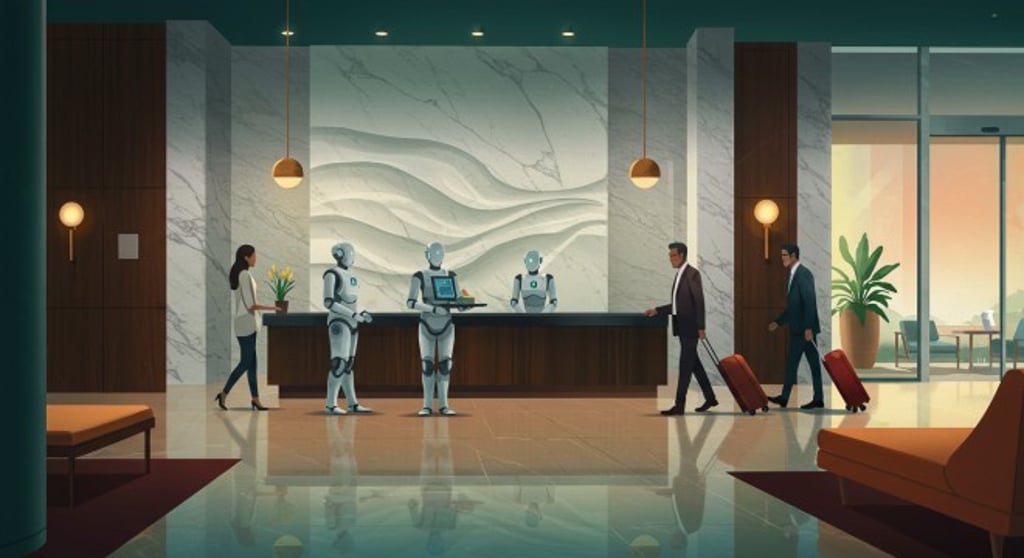
Hospitality is fundamentally about personal touch: guests will always value highly personalised services. Some hotel managers remain hesitant to fully adopt AI due to concerns over reliability, privacy, and safety.
“As the adoption of AI becomes more extensive and sophisticated, we need to look at how we can seamlessly integrate any technology with human touch to transform the guest experience and redefine hospitality,” says Professor Choi.
Traditionally, travellers expect to be greeted by a friendly face and have person-to-person interactions throughout their stay. Given the human-centric, high-touch nature of the hospitality sector, some travellers may be put off by non-human service, especially when the state-of-the-art deployment is still in its infancy.
For instance, the Henn na Hotel Tokyo Ginza in Japan, recognised by Guinness World Records as the first hotel with working robots, was initially staffed largely by robots. It dismissed half of its robotic staff four years after its launch owing to numerous complaints about service errors.
“I think most consumers still prefer human service. We're just hardwired that way. We seek genuine, authentic interactions rather than programmed responses. We want to sense warmth, sincerity, and a human touch. It’s difficult to change our ingrained belief that people are warm, while machines and robots are cold, no matter how human-like they may appear,” says Professor Choi.
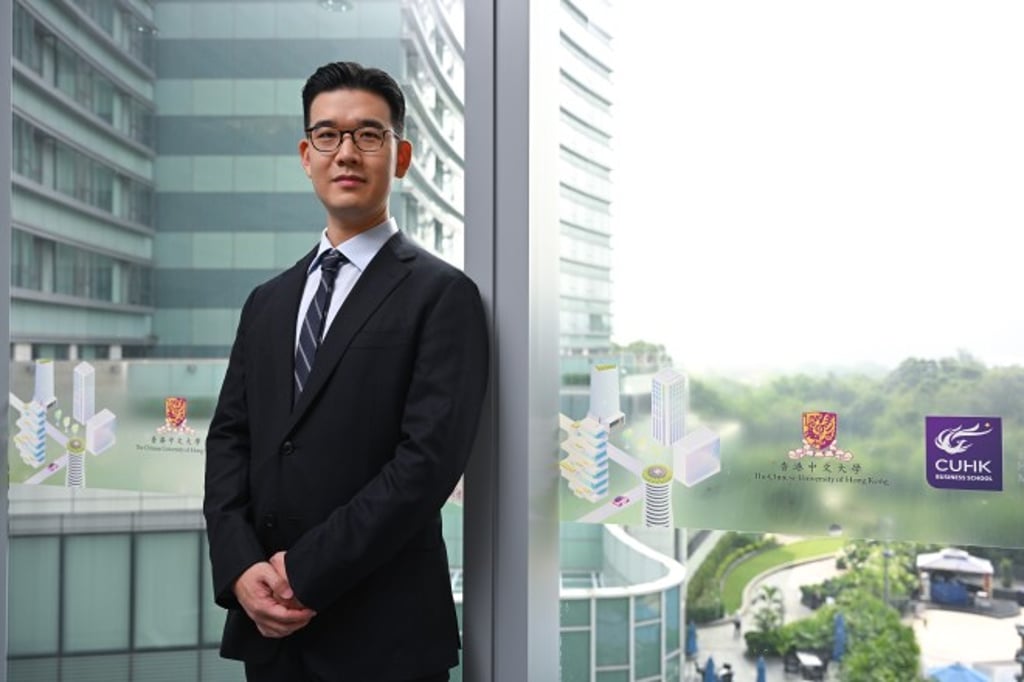
At various touch points in the guest experience, hospitality leaders must devise a strategy that aligns with their brand and seamlessly integrates humans and AI, notes Professor Choi.
“It's possible that robots will learn to simulate feelings and even speak with compassion, but we are wired to sense the coldness of a machine, no matter how closely it imitates human emotions,” adds Professor Choi. “I don't think AI will replace human beings, but as different markets and industries grow more accepting of AI and technology continues to advance, I can imagine human-like AI being a reality in the future.”
While benefiting from technology to improve operational efficiency and acquire customer insights, hotel operators should prioritise designing new products and delivering personalised services that genuinely connect with guests, winning their hearts with an authentic human touch where it is most needed, he adds.