World’s first new discovery of liquid directional steering in two centuries
- An artificial surface with 3D ratchet structures enables liquids of different surface tension to move in different directions.
- The research opens a new avenue for structure-induced liquid transport and emerging applications.

[Sponsored Article]
Inspired by Mother Nature, scientists of City University of Hong Kong (CityU) have discovered that the spreading direction of different liquids deposited on the same surface can be steered, a challenge that had remained unsolved for over two centuries.
This breakthrough enriches our understanding of conventional solid-liquid interactions, and it has profound implications for a whole range of scientific and industrial contexts, such as fluidics design and heat transfer enhancement.
Led by Professor Wang Zuankai, Chair Professor in the Department of Mechanical Engineering (MNE) of CityU, the research team found that the unexpected liquid transport behaviour of the Araucaria leaf provides an exciting prototype for liquid directional steering.
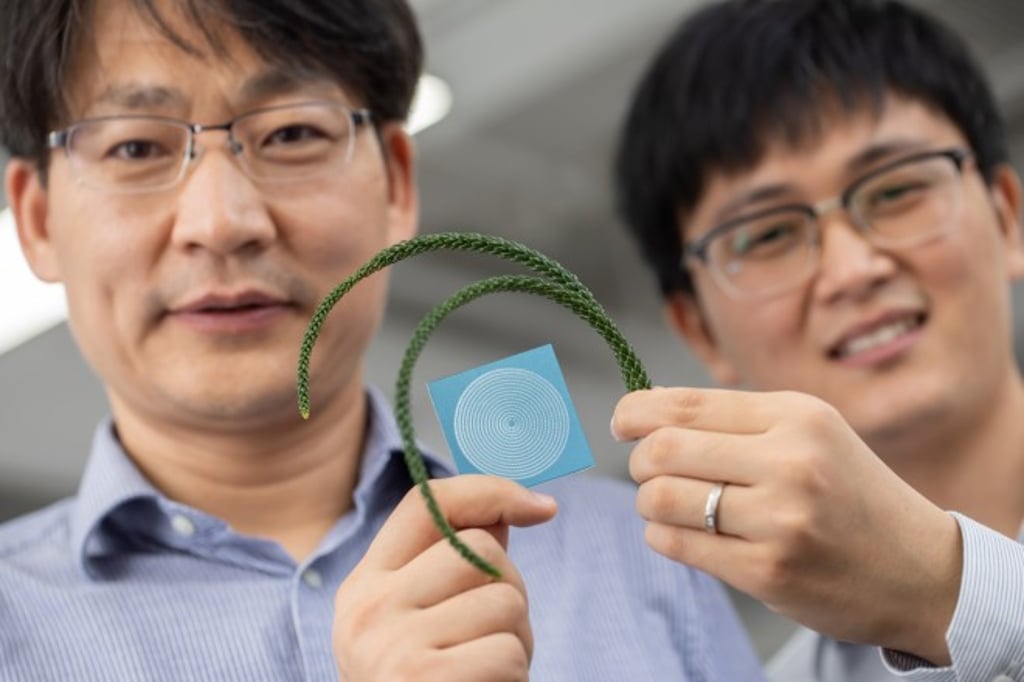
By mimicking the natural structure of the Araucaria leaf, the team designed an Araucaria leaf-inspired surface (ALIS) with 3D ratchets that enable different water-ethanol mixtures, which are subject to varying levels of surface tensions, to spread in three directions: forward, backward and even bidirectional.
The study was recently published in the prestigious scientific journal Science under the title “Three-dimensional Capillary Ratchet-induced Liquid Directional Steering”.
“The conventional perception is that a liquid deposited on a surface spreads in a direction dictated by the surface structure but independent of the liquid properties, such as surface tension”, said Professor Wang. “We demonstrated the first-ever achievement in the directional selection of liquid transport, which successfully addresses a problem in the field of surface and interface science that has existed since 1804.”
The team found that the structures and size of the ratchets, especially the re-entrant structure at the tip of the ratchets and the tip-to-tip spacing of the ratchets, are crucial for liquid directional steering.
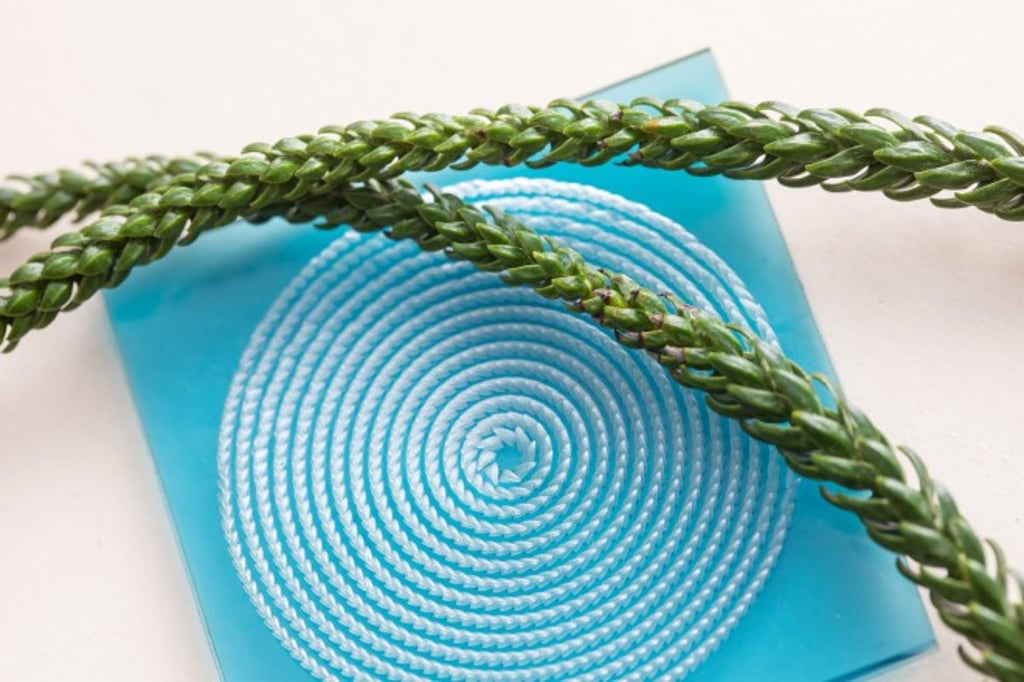
For a liquid with high surface tension, like water, one frontier of the liquid is pinned at the tip of the 3D ratchets, whose tip-to-tip spacing is comparable to the capillary length (millimetre), so the liquid goes backward relative to the ratchet arrangement. In contrast, for a low surface tension liquid like ethanol, the surface tension acts as a driving force, and the liquid moves forward along the ratchet-tilting direction. The rational design of the novel capillary ratchets creates enough room for the liquid to “decide” its spreading direction. “It was like a miracle observing the different directional flows of various liquids. This was the first recorded observation in the scientific world,” said Professor Wang.
Even more astonishing, for the water-ethanol mixture with proper water content, the liquid moves bi-directionally at the same time. “With different proportions of water and ethanol in the mixture, the surface tension is varied, so the liquid flow direction can be altered arbitrarily,” said Professor Wang. This provides an effective strategy for intelligent guidance of liquid transport to the target destination, opening a new avenue for structure-induced liquid transport and emerging applications.