Winter’s thrill: rediscover Hong Kong’s green side with visit to city’s renowned countryside and village life
- Rejuvenated walled Hakka village of Lai Chi Wo – known for sustainable practices – lies in Hong Kong Unesco Global Geopark, northeastern New Territories
- Further south, hikers can take looping High Island Geo Trail, close to High Island Reservoir, beside breathtaking volcanic rock landscapes and coastal scenery

[Sponsored article]
Hong Kong residents are spoilt for choice when it comes to weekend activities. As the weather becomes cooler and drier, many of the city’s residents seek respite from the urban hustle and bustle on their days off to explore Hong Kong’s abundant countryside – which comprises three quarters of the territory’s total area of 1,100 sq km – with the Hong Kong Unesco Global Geopark being one of the top places to visit.
Hong Kong’s iconic image of a high-rise metropolis flanking Victoria Harbour is in stark contrast to Hong Kong Geopark, home to 400 million years of geological history. Yet, these two vastly different worlds are only about one hour apart by public transport.
In 2009, the city’s government designated the area across the eastern and northeastern New Territories as the Hong Kong Geopark, transforming it into a popular winter destination, with Tai Mo Shan, the highest peak in Hong Kong, sheltering the area from the cool subarctic boreal winds. In 2015, it received the Unesco designation and has since earned the reputation of being a “geopark in the city”.
Rejuvenated historical Hakka village
The remote and historical walled Hakka village of Lai Chi Wo, one of Hong Kong’s oldest largest and best-preserved settlements on the northeastern coast near Sha Tau Kok, and High Island Geo Trail in the eastern part of Sai Kung Peninsula, both lie in the heart of the geopark. They are home to internationally renowned rock formations, a vast array of flora and fauna and thriving indigenous culture.
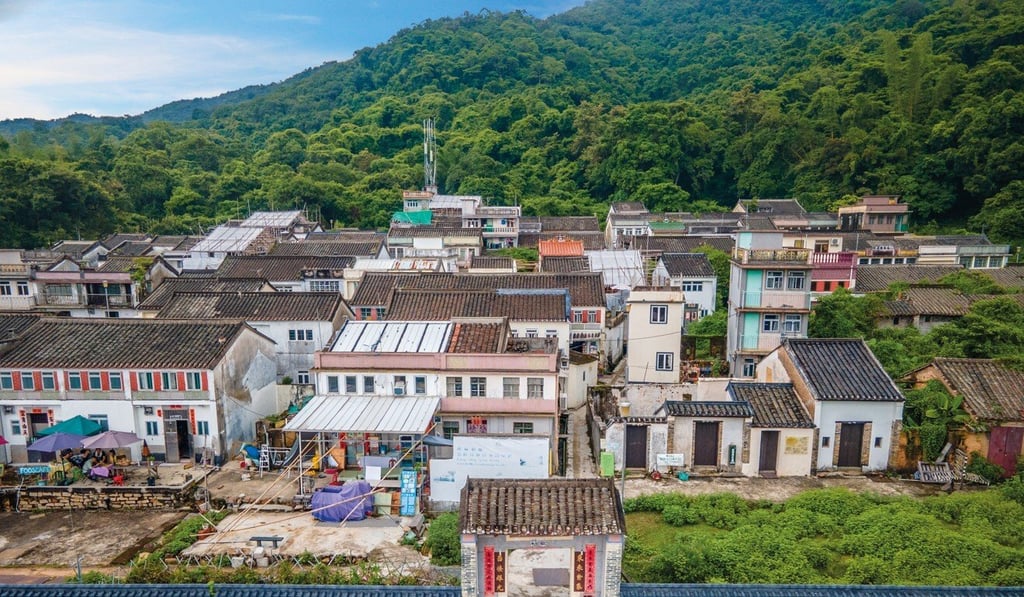
Returning villagers have collaborated with a scientific team from the University of Hong Kong to transfigure previously neglected Lai Chi Wo and its more than 200 picturesque hillside homes – auspiciously arranged in rows when built more than 300 years ago – flanked by a lush feng shui woods and mangrove forests.
The village was once home to more than 1,000 residents before a sharp population drop in the 1960s, but about 50 people have returned in recent years. Today there is a thriving experimental farm, featuring about 700 coffee trees growing beans sold across the city, with farmers also growing organic rice and vegetables, and grazing cows, while some old recently restored houses have been turned into stores, bistros and visitor centres.
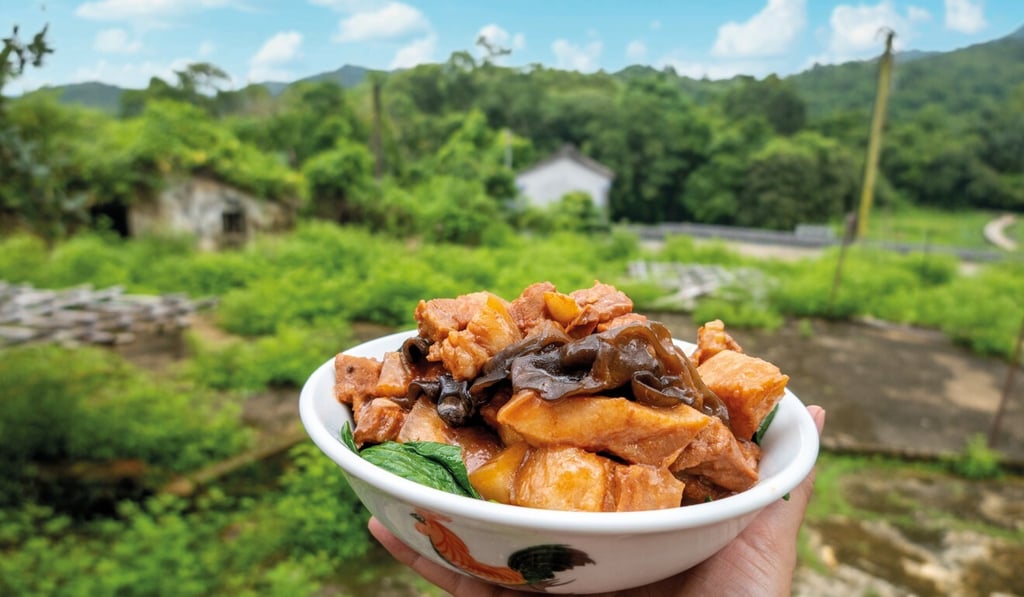
At weekends, the village attracts up to 1,000 visitors, who can buy traditional Hakka food and produce and eat freshly cooked dishes such as stuffed fried tofu, chicken congee and fried vermicelli.
Last year, the village – which also features the Qing dynasty (1644-1911) Hip Tin Temple and Hok Shan Monastery, built in 1900 – won Unesco’s prestigious inaugural Special Recognition for Sustainable Development award for its use of nature-based solutions to carry out “the holistic rejuvenation” of the settlement and promote cultural heritage conservation.
Beside the village, you can walk along Lai Chi Wo Nature Trail, which is home to many species of mammals and butterflies, and take selfies beside the dramatic coastal scenery. The area supports a vibrant ecosystem including seaweed beds, mangrove forests and mudflats with important seagrass species, which provide a safe haven for fry fish, and crab and shrimp larvae.
“Lai Chi Wo is located in the heart of the surrounding ecosystem,” says Anna Yau, manager of the university’s award-winning Rural Sustainability project in the village, launched in 2013. “Amazingly, it doesn’t affect the integrity of the environment. The cultural landscape is a perfect example of how man can live in harmony with nature.”
The coffee trees are a good example of “agroforestry”, she says. “These trees are grown on what used to be abandoned terraced farmland, which was reclaimed by natural forests.
“As the science team didn’t want to chop down the trees, they decided to experiment with growing coffee and have the coffee trees planted throughout the woods.”
The efforts yielded the first harvest last year, and Yau hopes local coffee production in Lai Chi Wo will help educate the public about sustainable consumption and the local value chain.
The university’s campaign has been at the forefront of efforts to revitalise the Hakka village’s traditional houses, farming and cultural landscapes and promote the area’s sustainable rural land use and community development.
Apart from eating at one of Lai Chi Wo’s restaurants, visitors can also support the village’s sustainable farming by buying the local produce, including the coffee beans and soy sauce.
Breathtaking walk back in time
Other than cultural heritage, natural wonders are another reason to visit Hong Kong Geopark.
In the Sai Kung Volcanic Rock Region of the geopark, the looping High Island Geo Trail lies next to the beautiful High Island Reservoir, which was created when two dams blocked a narrow channel between High Island and Sai Kung Peninsula. The area is home to breathtaking rock landscapes of international geological importance formed when a supervolcano erupted 140 million years ago.
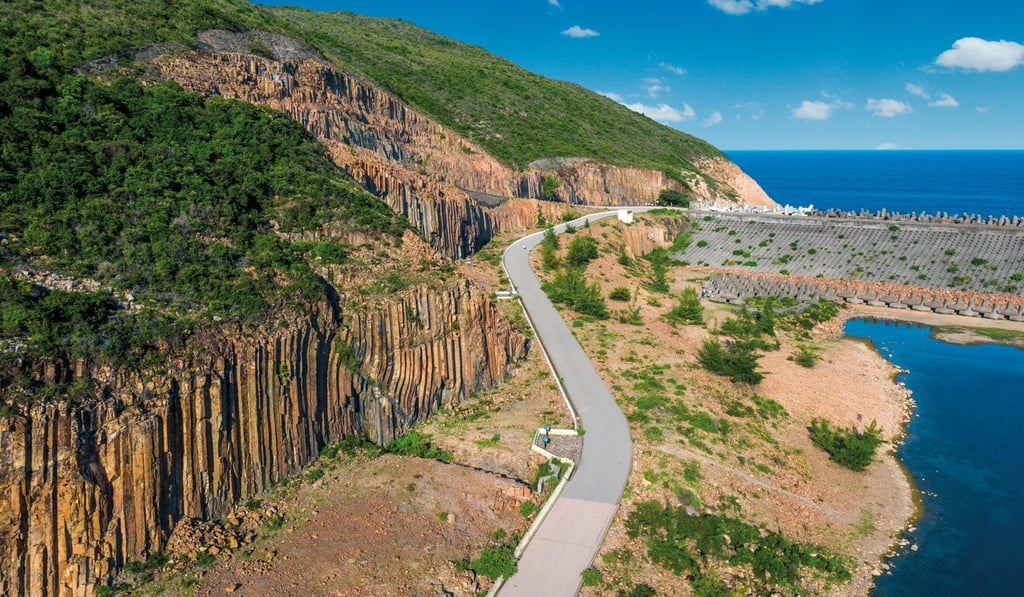
The leisurely route of about 3.3km, located close to the reservoir’s Pacific Ocean-facing East Dam, provides insights into Instagram-friendly delights, such as stunning coastal scenery, mysterious caves, sea stacks and towering cliff faces lined with light-coloured hexagonal rock columns – part of the Geopark’s Sai Kung Volcanic Rock Region – which are estimated to cover an area of more than 100 sq km.
The columns, some of which are now located underwater, were created as dense volcanic ash and lava cooled following an eruption. Those that are visible next to the trail rise to a height of 100 metres and have an average diameter of 1.2 metres.
One part of the route passes a rock face with distorted, S-shaped hexagonal columns, as if melted by the sun, which were twisted by the effects of geological movement before the rocks completely solidified.
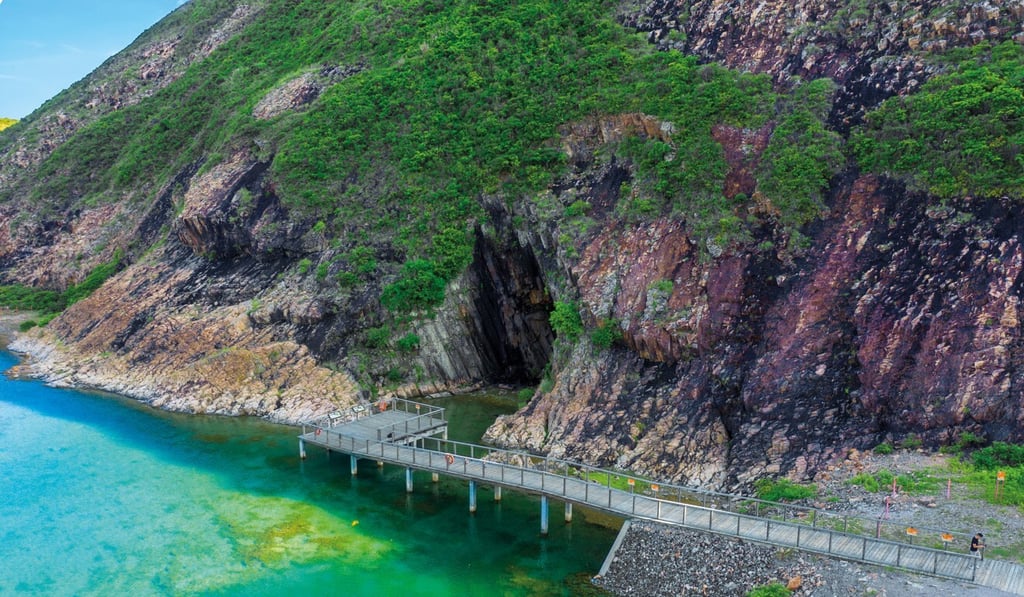
At the end of the trail, a wooden walkway takes you close to the entrance of a cave, created by water erosion, which was part of the narrow waterway along the fault line between High Island and Sai Kung Peninsula before being blocked off when the reservoir was built.
A 1km extension to the trail heads uphill to Biu Tsim Kok viewing point, which provides 360-degree views of the 6.67 sq km reservoir, the triangular Po Pin Chau sea stack – separated from the Fa Shan headland by sea erosion – and stunning Long Ke Wan, with its gently curving bay, crystal-clear waters and unspoilt beach of fine white sand.
With its dramatic landscape, the High Island Geo Trail is always worth revisiting, and watching the sunset from East Dam never loses its appeal. Spending a leisurely day there will show visitors why Unesco has recognised the international importance of Hong Kong Geopark.
For more quintessential Hong Kong experiences that will rejuvenate you and relax your mind, pay a visit to Hong Kong Tourism Board’s Wellness in Hong Kong page.