Singapore design forum will chart a course for tackling pressing global issues
- Design Futures Forum 2023 will bring the business, design, public and social sectors together through the world of design
- The event, which is part of Singapore Design Week 2023, will focus on the potential of design to shape sustainability, care and emerging technologies

[Sponsored article]
The world is at a critical junction, with climate change, an ageing population and the challenges and opportunities posed by new technologies such as artificial intelligence (AI) all transforming our daily lives. These pressing issues and others will shape our future; how we respond to them will be crucial.
With global warming leading to extreme weather events such as wildfires, flooding and super typhoons, addressing the consequences of global warming requires a transformation in the way we live. That means rethinking the design of urban areas, workspaces and homes, as well as the products and services that meet our fundamental needs.
Ageing populations are also a major global concern. According to the World Health Organization, by 2050 the number of people over 80 is expected to triple from 2020’s number to 426 million, many of whom will have vastly different physical and mental health needs.
Emerging technologies could inform the future digital ecosystem in ways that are yet to be fully understood.
Each challenge requires innovative approaches to find urgent solutions. Design will be an essential ally and powerful tool for individuals, businesses and organisations to tackle real-world challenges and strategise for a better future.
Singapore is a small, densely populated city with a tropical climate and no natural resources; it also has an ageing population along with food security challenges. The city, like others around the world, is attempting to address these challenges through design.
The potential impact of design to shape a better future will be the focus of the Design Futures Forum 2023, taking place in Singapore on September 25. The forum will rally stakeholders from design and business, as well as the private and public sectors, to unite and pave the way for a more positive future for the planet. The forum is being held as part of Singapore Design Week and is a key event of the Design Futures pillar of the annual festival, which this year runs from September 21 to October 1.
“We’re living in an age where we are confronted with overlapping challenges, from climate change and urban density to ageing and technological disruptions,” says Dawn Lim, executive director of DesignSingapore Council, the city state’s national agency for design and the organiser of the forum.
“While we do not have all the answers and solutions to these issues, I believe design can be a pivotal catalyst in fostering innovation and changing mindsets to tackle them and create positive impact. Designers can and must play a key role in shaping the future.”
The Design Futures Forum will spotlight leading designers and thinkers who are pioneers in pushing boundaries on both individual and systemic scales. The forum will consist of three segments: Design for the Future of Sustainability; Design for the Future of Care; and Design for the Future of Emerging Tech.
Initiating change
Those participating will include award-winning architect Shigeru Ban, a laureate of the 2014 Pritzker Architecture Prize and a consultant to the United Nations High Commissioner for Refugees, a role he has held for almost 20 years following his initiative to construct shelters from paper tubes for refugees fleeing civil war in Rwanda.
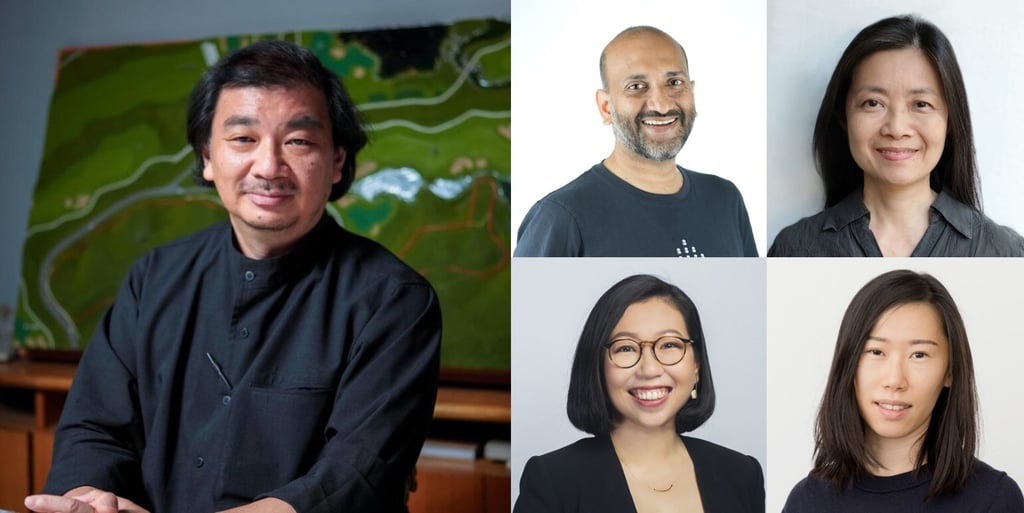
Ban subsequently established the Voluntary Architects’ Network, an NGO that supports relief efforts by constructing temporary shelters, housing and community facilities for victims of natural disasters or those forced to flee conflict. The organisation has helped thousands of people in countries such as Haiti, Turkey and India.
The architect, who will deliver a keynote speech at the forum about balancing architectural works and social contributions, notes that large cities around the world face similar problems. “Tokyo and Singapore both share a common issue of urban centralisation, which can potentially trigger disasters and crises,” he says. “We believe that collaboration between both cities is essential to address this challenge.”
Other speakers on sustainability will include Prasoon Kumar of BillionBricks, who is pioneering income-generating, net-zero homes and communities. The segment will be moderated by Joelle Chen, who was the first Asia-Pacific head of the World Green Building Council (WorldGBC), spearheading net-zero carbon and healthier buildings in the region.
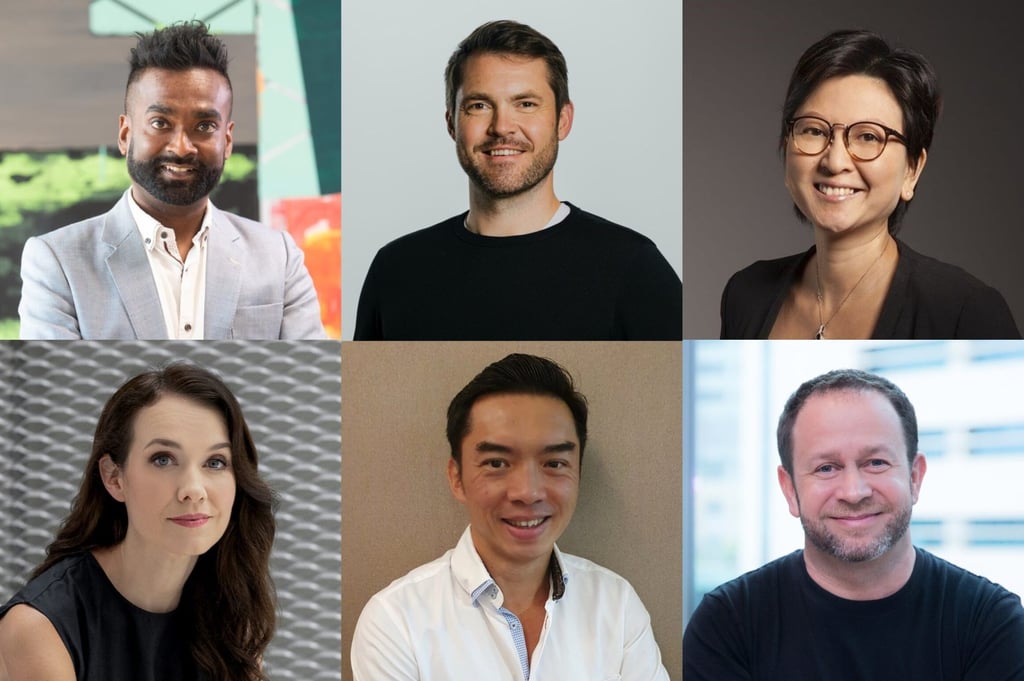
The care segment will be moderated by Tamsin Greulich-Smith, the director of School of X at DesignSingapore Council who leads the organisation’s transformation design programmes. Under discussion will be the multifaceted nature of care, from empowering individuals to take responsibility for their well-being and strengthening the community of care, to creating empathetic specialised care services and driving national-level policy to establish systems of care.
Speakers will include Dr Tom Waller, a sports, health and fitness innovator who founded Lululemon’s Whitespace, the brand’s lab for research and ideation, as well as Lee Poh Wah, CEO of the philanthropic Lien Foundation, which works to improve the lives of the underprivileged, the elderly and children with special needs.
One of the foundation’s most successful projects is Hack Care, a collaboration with architects and furniture designers to develop a toolkit for carers of people with dementia, which received Singapore’s President’s Design Award in June. Presented in a catalogue format, it provides tips on modifying everyday items of furniture and home products so that caregivers can more easily accommodate the needs of dementia patients.
“As our society ages, it is imperative to redefine the purpose, goals and values that underpin our healthcare system,” Lee says. “The future of healthcare is inherently social. It calls for a shift beyond institutional-based models to bring care into the community where seniors reside.” He notes that such an approach values trust and kindness, which are at the heart of positive health outcomes.
“There is a role for design to help bridge the realms of health and social care,” he adds. “By designing for kindness, we can counter the mechanisation of healthcare and humanise the entire care system.”
The proliferation of emerging technologies has made us look again at our digital future. The forum will explore this topic in the emerging tech segment, moderated by Dr Ming Tan, the founding executive director of the Tech for Good Institute, a non-profit research hub.
Among those speaking will be Chng Kai Fong, managing director of Singapore’s Smart Nation and Digital government office, who will discuss new digital solutions and the user experience for government services. Other speakers will include Dr Deb Goswami, a structured and generative AI technologist for developer programmes in the Asia-Pacific for multinational tech company Nvidia. He will examine how design, along with AI and other emerging technologies, can collectively support the drive towards a safe, digital future.
“Given the pace of innovation and scale of adoption, we must remember that the purpose of technology is not just to be novel or inventive, but to serve society in a better way,” Tan says.
“As consumers and citizens, as founders, investors, inventors, developers and designers, we have the ability to shape the trajectory of innovation to tackle the critical challenges of our time and enable sustainable, inclusive and equitable growth for all.”

Lim believes that as a forward-looking city which is always planning and designing with an eye towards the future, Singapore is well placed to showcase its potential in making positive change through design, using the Design Futures Forum as a platform.
“Design is in Singapore’s DNA. Being a small city state in a rapidly changing region, Singapore makes a good test bed for the issues the world is facing today. We have the ability to prototype, test and scale solutions quickly,” Lim concludes.