Why consumers should consider the long-term safety of injectable-based treatments
Merz Aesthetics says users may be unaware of potential resistance to botulinum toxin type A, leading to diminished results over time

[The content of this article has been produced by our advertising partner.]
Asia’s anti-ageing market is increasingly driven not by patients seeking a quick fix but by an emerging group of consumers in their twenties and thirties now considering proactive treatments. As cosmetic interventions increase in popularity among young adults, they are becoming a core part of the generation’s regular beauty regimen.
Globally, medical aesthetics have shifted towards minimally invasive procedures such as injection-based treatments, chemical peels and energy-based tightening methods. The latest survey by the International Society of Aesthetic Plastic Surgery (ISAPS) estimates roughly 38 million aesthetic procedures were performed in 2024, including about 20.5 million that were non-surgical in nature.
ISAPS data also suggests young people are increasingly turning to preventive injectable treatments before deep facial lines appear.

Diminishing effects of treatment
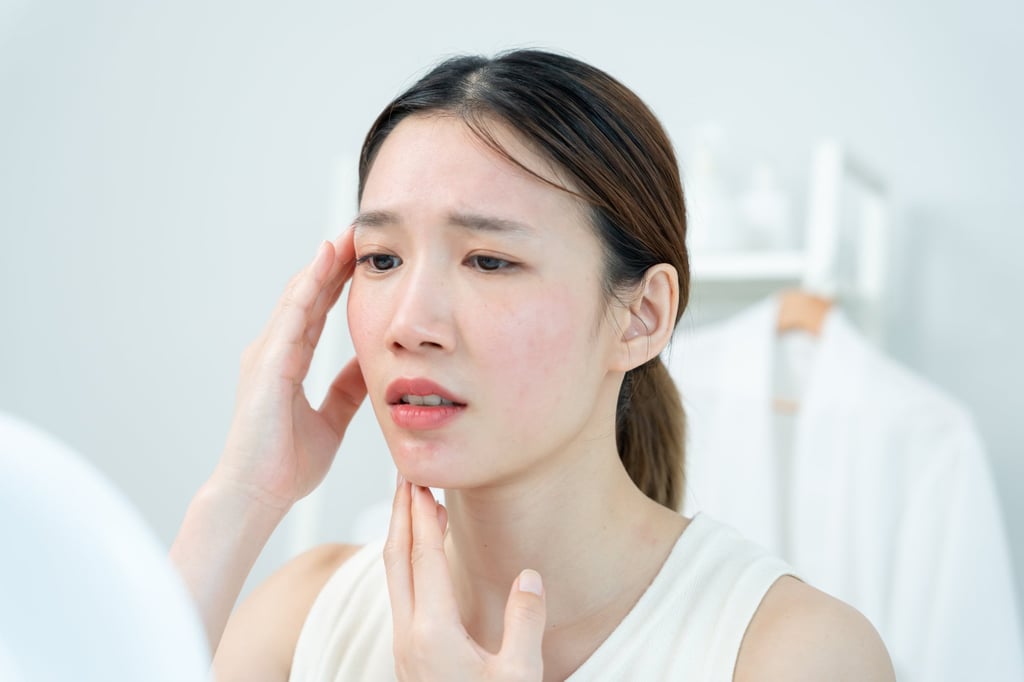
For many users, botulinum toxin type A, or BoNT-A, is attractive because it offers a temporary way to reduce the appearance of facial lines caused by smiling, squinting or frowning, without the need for surgery. But as treatments become more regular and start earlier in life, some patients begin to notice results do not last as long as they used to, or that the effect seems weaker than before.
A recent Asia-Pacific-wide consumer study commissioned by global medical aesthetics company Merz Aesthetics surveyed 2,588 BoNT-A users in nine countries and territories, including Australia, Hong Kong, South Korea and Singapore. Conducted by research firm Frost & Sullivan, the study suggested that up to 81 per cent of respondents aged 21 to 55 had noticed a decline in the efficacy of their treatments over time – higher than levels reported in similar regional surveys from 2018 and 2021.
When this happens, patients often assume the dose is too low, the product is no longer working, or a fast metabolism is to blame. In some cases, however, the issue may be secondary non-response: a form of resistance whereby the body develops neutralising antibodies that reduce the treatment’s effect over time.
“Patients who notice diminished treatment results rarely describe it as resistance,” says Dr Vasanop Vachiramon, a dermatologist at Thailand’s Ramathibodi Hospital and corresponding author of the study “Identifying Different Immunoresistance Risk Profiles”. “They report shorter duration, inconsistent results or changes they can’t quite explain.”
When patients notice fading results, they may respond by shortening the interval between injections, increasing the dose or switching brands repeatedly, without recognising that the underlying issue may be BoNT-A resistance.
Treatment formulations matter
BoNT-A is a purified protein derived from Clostridium botulinum. It works by temporarily reducing the signals between nerves and muscles, helping the targeted muscles relax. In cosmetic practice, BoNT-A is administered by trained healthcare professionals in doses tailored to the treatment area and the patient’s needs.
Currently, there are more than 40 BoNT-A products on the market, each with unique formulations. Studies published on the US National Institutes of Health’s (NIH) online platform have shown that repeated treatments with certain BoNT-A formulations may increase the chance of the immune system developing neutralising antibodies, which may reduce the treatment’s effect over time. However, real-world resistance risk depends on many factors, including total cumulative dose, injection intervals and individual patient physiology.
Merz Aesthetics’ XEOMIN pure formulation contains only the active neurotoxin that temporarily restricts muscle contractions in treatment, and can be just as effective as other BoNT-A, the company says. It is formulated without complexing proteins linked to BoNT-A resistance, which are often found in other formulations. According to studies published by NIH, those complexing proteins are thought to have no active role in the efficacy of treatment.
The risk of growing resistance to BoNT-A could also affect the efficacy of therapeutic treatments which use it as a prescription medicine to manage medical conditions affecting the salivary glands or muscles such as chronic migraines, an overactive bladder and post-stroke plasticity. It may also include chronic drooling, upper limb spasticity and eyelid spasms, according to a review on MDPI, a Swiss-based platform for scientific academics.
Therefore, long-term planning for regular toxin users should address not only when to treat but also which formulation to choose and how to manage lifetime exposure – particularly for younger adults looking to use BoNT-A for many years.

Building awareness
Dermatologists involved in developing the tool say it translates complex BoNT-A risk patterns into clearer talking points, enabling more focused discussions about long-term strategy in clinics.
“By highlighting how these symptoms may be a result of their treatment-seeking behaviours, the tool enables discussions in clinical practice on how patients should best move forward with their upcoming treatments,” Vachiramon says, who was part of the team that developed the tool.
Dr Niamh Corduff, an Australian plastic surgeon and lead author of research into the real-world implications of BoNT-A resistance, is also keen to stress the importance of meaningful and constructive dialogue between practitioners and patients: “Tools that help support these conversations ensure choices are thoughtful, transparent and build treatment plans well into the future,” she says.
The information provided in this article is for informational purposes and reference only, and is not intended to be and does not constitute any medical advice, pharmaceutical advice or any other advice. All content provided by the advertiser is purely its opinions, and SCMP does not warrant or represent that they are correct and will not be responsible for any loss or liability arising therefrom. Readers should consult your own doctors and seek medical advice for an informed decision instead of relying on the article. Any procedures involving injection should only be conducted by registered medical practitioners in Hong Kong.