Experts speak positively of arbitration at PolyU event

[Sponsored Article]
Hong Kong’s role as an international arbitration centre can expand much further under the Belt and Road initiative, said legal experts gathered at the Knowledge Transfer Forum held by the Faculty of Business of The Hong Kong Polytechnic University on 24 January 2019.
Indeed, the Outline Development Plan for the Guangdong-Hong Kong-Macao Greater Bay Area promulgated by the Central Government last month (February) clearly envisioned Hong Kong’s future position as a leading centre for dispute resolution – resonating with the theme of Dispute Resolution Issues in Belt and Road Commercial Transactions and The Role of Hong Kong at the forum.
Veteran lawyers and legal educators shed light on Hong Kong’s niche in supporting companies attracted to the area spanning Asia, Europe and Africa.
Speaking at the start of the event, Liu Chun Hua, Director-General, Department of Law of the Central People's Government’s Liaison Office, lauded Hong Kong’s unique advantages in helping companies resolve cross-border disputes. As echoed by other speakers, Hong Kong’s high level of internationalization, tradition of rule of law, enviable pool of experienced lawyers and arbitrators, many of whom being trilingual (capable of understanding Putonghua), make it an attractive choice for companies venturing into the economically and culturally diverse region.
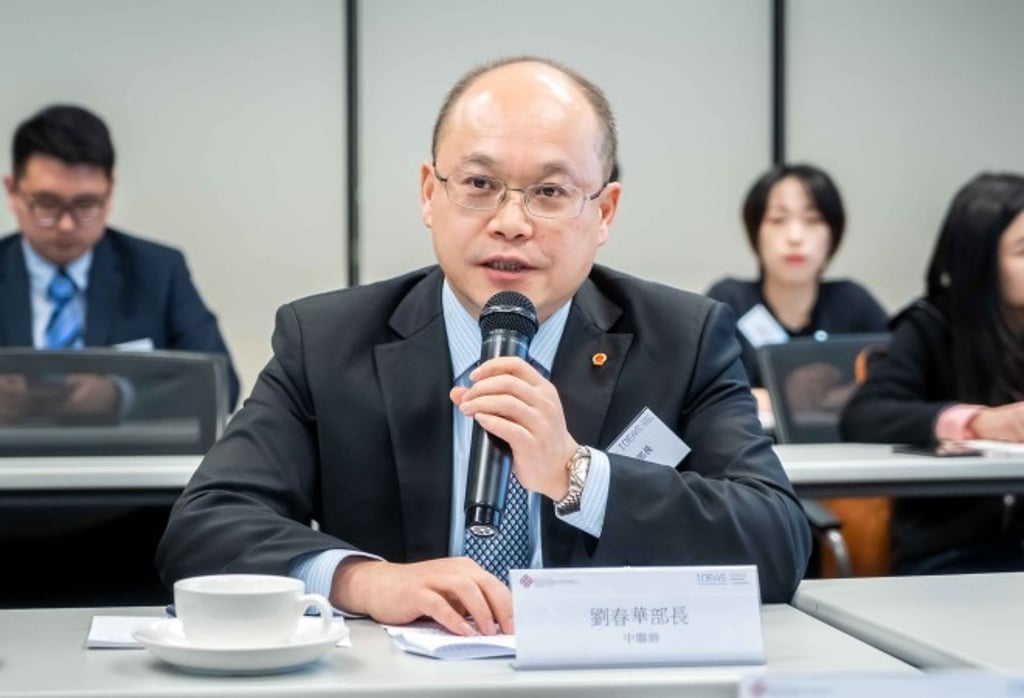
Mr Liu said the Greater Bay Area alone, with a population of 70 million, offer vast business opportunities. But he called for further development in local legal services by for example incorporating big data and artificial intelligence. Hong Kong ranked among the top five seats of arbitration worldwide in the Queen Mary University of London and White & Case's 2018 International Arbitration Survey, which also found that information technology was widely used in international arbitration and respondents welcome increased use of such tools to aid efficiency.
Other speakers at the forum emphasized the importance of nurturing more talents and further support from the government. Sylvia Siu Wing-yee, President of the Hong Kong Institute of Arbitrators, and founder and past president of the Hong Kong Mediation Centre, noted that strong government support led to Singapore’s rapid rise as a key international arbitration centre, ranked just after Paris and London. She urged the government to do more to further develop dispute resolution services here, besides the decision to provide space for law-related organizations in the former Central Government Offices as part of a Legal Hub that comprises the office of the Department of Justice.
Companies have paid increased attention to incorporating dispute resolution courses in investment contracts but the cost of resolution remained their concern, said Ronald Sum, Partner of Locke Lord (Hong Kong office) and Chairperson of the International Chamber of Commerce’s Committee on Arbitration and ADR Sub-Committee. Both he and Ms Siu stressed the need for Hong Kong to deliver cheap, good and efficient arbitration and mediation services, in the face of competition from elsewhere. The Queen Mary University survey cited “cost” as arbitration’s worst feature.
Two corporate representatives : Tong Ying, General Counsel of the China Merchants Financial Group, and Wang Qianyi, Group General Counsel- China of Hutchison Property Group Limited, expressed confidence in Hong Kong’s role in supporting dispute resolution for companies.
Dr Chen Lei, Associate Dean of CityU’s Faculty of Law, pointed to the presence of senior arbitrators and effective enforcement of arbitral awards here, while Dr Gu Weixia, Associate Professor of Law at the University of Hong Kong, said while Hong Kong had done well in capacity building or arbitration education, it can nurture more talents in international law to tap the vast Belt and Road market.
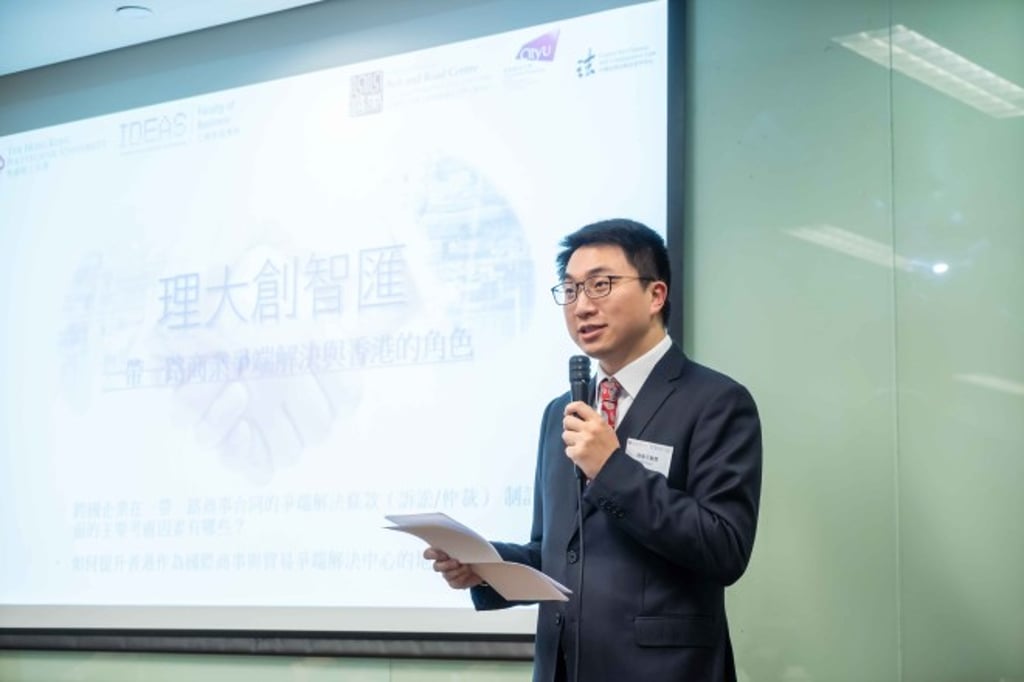
Similarly, Heidi Chui, Partner cum Head of Litigation and Dispute Resolution Department at Stevenson Wong and Co., supports efforts to encourage more young people to specialize in arbitration. “We need to make young people know more about it and know how to do it," said Chui, also a representative of the Hong Kong Law Society’s Belt and Road Committee. Highlighting dispute resolution clause in contracts as a form of risk management, she noted the urgency of adopting latest technology such as Blockchain.
Besides locals, Hong Kong can also attract students from Belt and Road countries to receive arbitration training here, said Lance Jiang, registered foreign lawyer (New York) from Addleshaw Goddard (Hong Kong). The foreign students could then provide service for their home countries or elsewhere in the future.
Already the existing pool of experienced arbitrators in Hong Kong has contributed to a 70 per cent increase in the number of cases involving the Belt and Road at the Hong Kong International Arbitration Centre (HKIAC), said Deputy Secretary-General of HKIAC Joe Liu, another speaker at the forum. The centre has launched an online repository containing information on the Belt and Road, including the rules or policy on arbitration in different jurisdictions. For cases involving joint ventures, merger and acquisition, investment contracts or others, increasingly arbitration was conducted in Chinese with reference to Chinese law, he added.
The growing importance of arbitration in this part of the world is beyond doubt with the diverse talents and constantly expanding experience in Hong Kong.