Banking on 200 Years of Cross-border Expertise
Citi leverages its 200-year cross-border expertise and vast global network under Ernesto Torres Cantú’s leadership to help companies navigate an increasingly complex international landscape.

As geopolitical volatility reshapes global commerce, Citi is positioning its vast international network as the critical infrastructure for companies navigating an increasingly complex world. Leading this effort since September 2023 is Ernesto Torres Cantú, Citi’s Head of International, responsible for delivering Citi’s offerings to clients outside North America.
With operations spanning more than 180 countries and jurisdictions – including a presence in 93 markets where it maintains on-the-ground teams – the bank is leveraging what no competitors can match: deep local expertise combined with truly global reach. Torres Cantú’s mission is to be the “preeminent bank for clients with cross border needs,” he shares.
It was not the destination his early career seemed to promise. Trained as an industrial engineer in Monterrey, Mexico, Torres Cantú began his working life in manufacturing, not finance. His first significant role was at the National Copper Company which produced coins. As head of planning and control, he oversaw production at a mint; quite literally involved in the making of money, though far removed from his later role in global capital.
The work suited his interest in systems, machinery and process discipline, but it was largely solitary. Days could pass with little interaction beyond the production line. Seeking a role that combined structure with human engagement, Torres Cantú made the move into financial services, joining Citi as a corporate banker.
More than three decades later, the shift appears decisive. Torres Cantú still operates as a systems thinker, though the machinery is now global. Yet what prevails is his commitment to ensuring that complex systems work as intended.
Changing the game
This is no simple feat in today’s world of regulatory divergence, political friction, and shifting trade alignments. These tensions now form part of the operating background for any global bank.
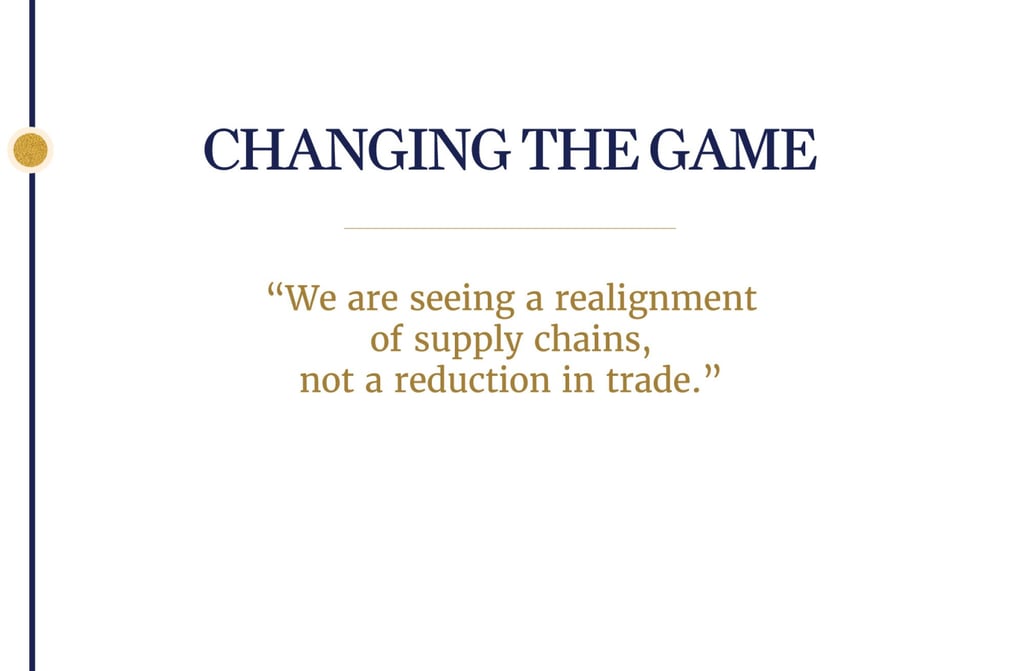
Where others see fragmentation, he sees reconfiguration. “We are seeing a realignment of supply chains, not a reduction in trade,” he says, pointing to the growing economic ties between ASEAN and the Gulf Cooperation Council, where new trade flows are forecast to reach US$50bn by 2027. The distinction matters. It allows Citi to advise clients around this adaptation.
“This general trend started during the Covid pandemic, which spotlighted the risks of being too concentrated in one area. There was a profound shift as companies looked for options to make them more resilient by investing in diverse markets. Our global network was built to support clients in times like these with on-the-ground expertise and more than 200 years’ experience of helping to navigate every type of economic cycle imaginable.”
Citi’s model – built on deep relationships, local presence, and cross-border capabilities – offers clients what they increasingly need: options, resilience, and a partner who can meet them wherever they want to do business.
“Asia-US trade remains one of the fastest growing corridors for our clients,” he says. “We are actively supporting foreign direct investment and outbound trade to the US, but also helping to find efficiencies, so that tariff and transport costs are not passed on to their customers. The aim is to offer insights and unique solutions.”
Shaping tomorrow
The banking sector is being rewritten by digital innovation at an unprecedented pace, and Citi is positioning itself at the center – financing, advising and connecting the emerging digital economy.
“This is happening at an incredible pace,” Torres Cantú says. “So, we are innovating and investing in Al, digital assets and next-generation platforms.”
For Citi, it is a matter of meeting new demands, while also ensuring clarity in terms of products, services, risk and regulatory oversight.
At this stage, many clients are showing particular interest in tokenised cash and deposits, which allow money to be sent around the world seamlessly in real time, making use of blockchain technology and smart contracts.
Separately, a number of internal Al tools have already been rolled out for staff in 80-plus countries and jurisdictions. A designated cohort of “champions” is helping colleagues to learn, troubleshoot, and share best practices.
The purpose might be for operations teams to give faster, more accurate responses to incoming queries. Or, taking a lead from offices in the US, it could be to supply customer service representatives with prompts, live transcripts, and automated after-call summaries.
As a point of principle, though, all cases are evaluated for business impact and ethical considerations. And, where agentic Al is being incorporated to speed up longer. more complex, frequently performed tasks, it is only done under careful human supervision.
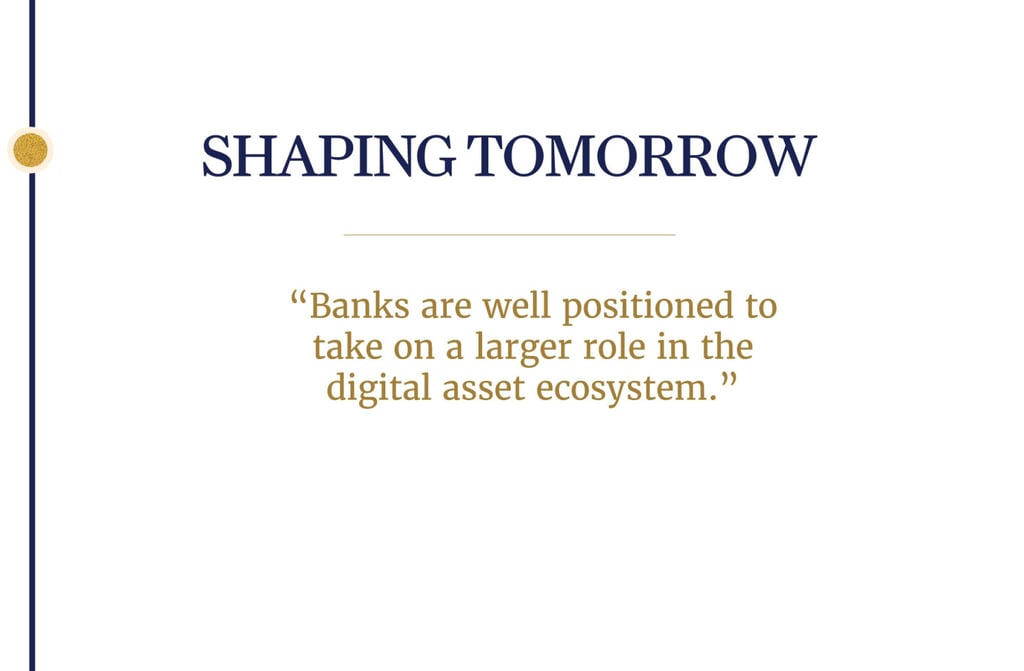
“In general, banks are well positioned to take on a larger role in the digital asset ecosystem,” he says. “They can provide customers with the security of an established institution to support engagement with an emerging asset class in a safe and responsible manner. However, we are proceeding with appropriate caution and with suitable controls and governance in place.”
Lessons that last
Citi sees Hong Kong’s role as a global financial center continuing to evolve and strengthen. The bank has had a front-row seat to the city’s transformation over more than a century of operations.
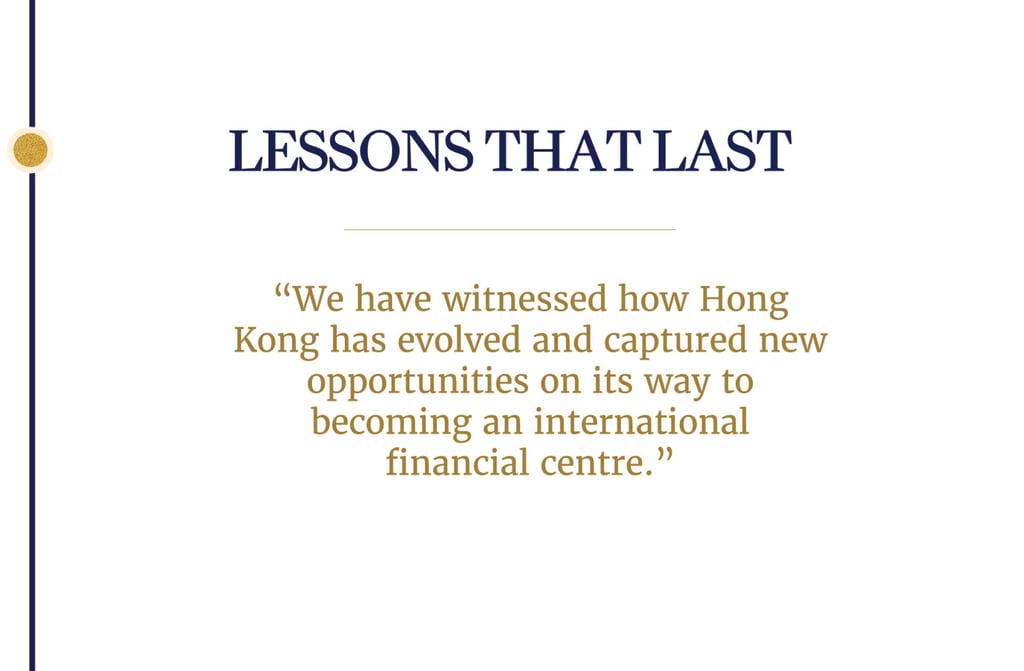
“We have witnessed how Hong Kong has evolved and captured new opportunities on its way to becoming an international financial centre,” says Torres Cantú, who has an MBA from Georgia State University in Atlanta and most recently served close to four years as Citi’s chief executive for Latin America. “Every time I visit, I am energised by the vibrancy.”
He is confident that the long-established gateway role will see ever more Chinese companies using Hong Kong as a springboard for their overseas expansion plans, while continuing to attract global firms keen to enter the mainland market.
Beyond transactional support, Citi is convening the ecosystem. The bank hosted its China Conference in November 2025 in Shenzhen and Shanghai, bringing together leading corporates, investors and thought leaders to discuss themes shaping the global economy and strategic opportunities in China.
The clarity of Citi’s strategic focus is producing tangible results. “Our CEO Jane Fraser has defined that as a global strategy and it has paid dividends very well,” Torres Cantú notes.