Searching for opportunities in challenging times: Asian Insurance Forum 2025
Speakers at the Asian Insurance Forum 2025 said insurers must adapt to rising macroeconomic risks, rapid ageing trends and AI boom

[The content of this article has been produced by our advertising partner.]
The Asian Insurance Forum (AIF) 2025, hosted by the Insurance Authority (IA) on December 8 and attracting over 4,000 participants, closed on a reflective note as regulators, insurers, tech leaders and academics set out concerns about a future marked by compounding shocks.
The event was held a week or so after the deadly Wang Fuk Court fire in Tai Po. A moment of silence dedicated to victims affected was observed before the proceedings.
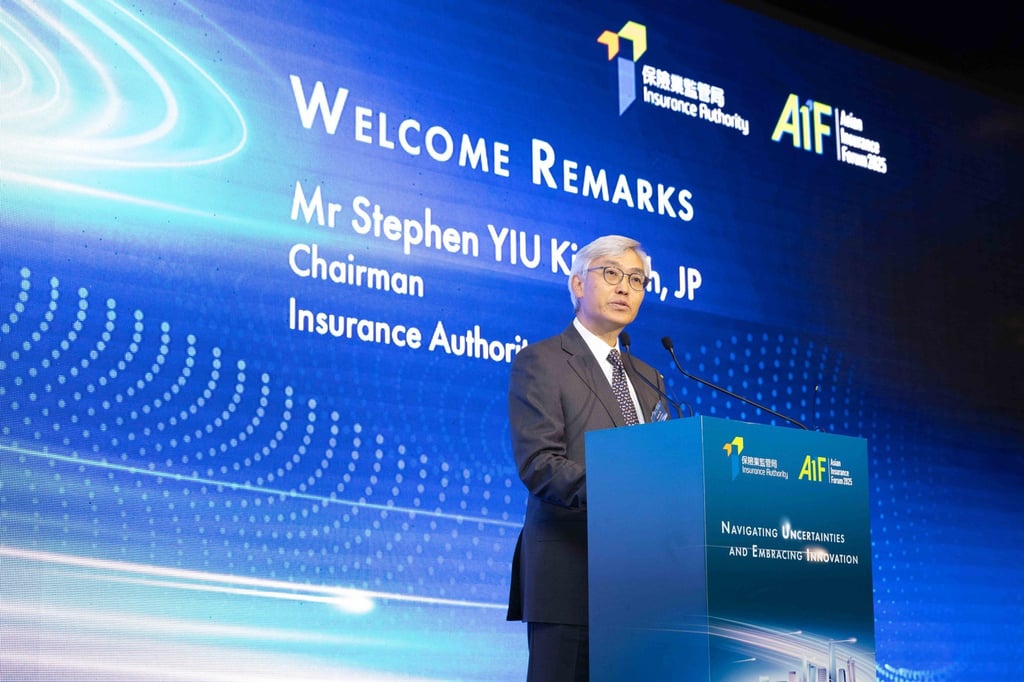
In the welcome remarks, Stephen Yiu, Chairman of the IA, explained why the theme “Navigating Uncertainties and Embracing Innovation” was chosen for this year. “It captures the challenge for regulators to nurture development while grappling with climate change, demographic shifts, economic volatilities, geopolitical tensions and trade disputes. It compels us not only to navigate with foresight and agility, but also to embrace innovation with inclusion and governance.“
Across the numerous speeches and panel discussions, speakers acknowledged that the industry is facing both existing and emerging pressures that will not ease soon. However, these pressures also stimulate fresh thinking in risk mitigation, health systems and supervisory practice.
The discussions began with a focus on regulation. In his keynote speech, Xiao Yuanqi, Vice Minister of the National Financial Regulatory Administration, emphasized that supervisors should ensure insurers adopt sustainable business models to safeguard financial stability and protect stakeholders’ long-term interests. He outlined four key areas for assessment: strategies, balance sheets, resources and flexibility.
He also reiterated the importance of enhancing collaboration between the Chinese Mainland and Hong Kong. He said, “Hong Kong has a highly advanced insurance industry. Its insurance density and penetration remain world-leading. The Mainland insurance industry is moving toward high-quality development. We will continue to strengthen bilateral cooperation with Hong Kong, and support its role as an international financial centre.”
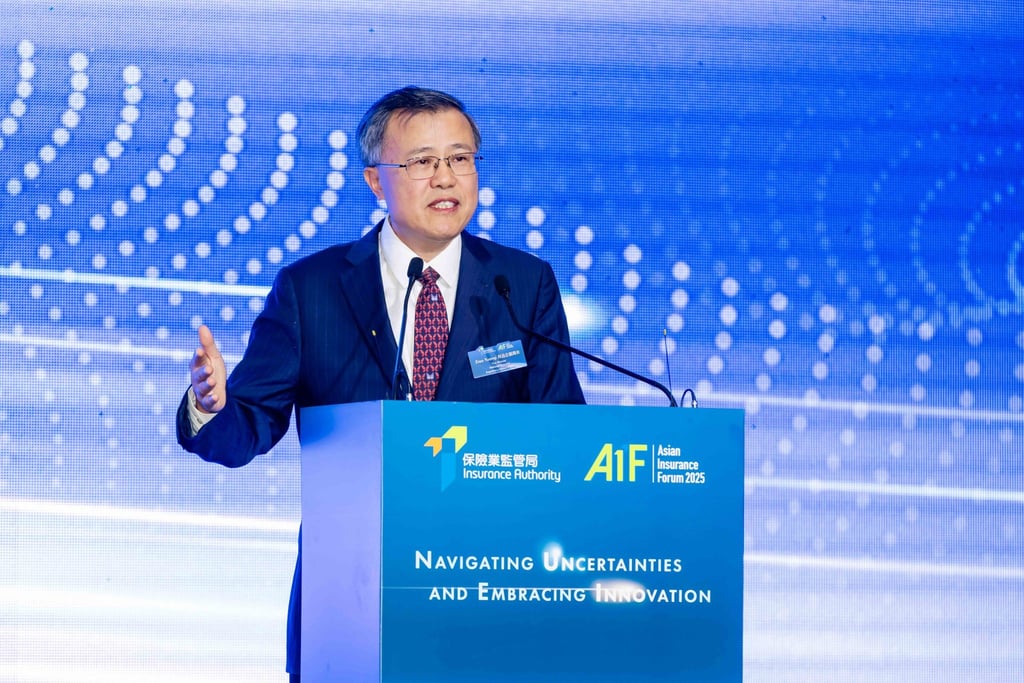
To ensure market resilience, he stressed the need for consistent and comprehensive implementation of global standards, and striking the right balance between embracing innovation and managing risks, adding that collaboration with global policymakers and international fora is more vital than ever.
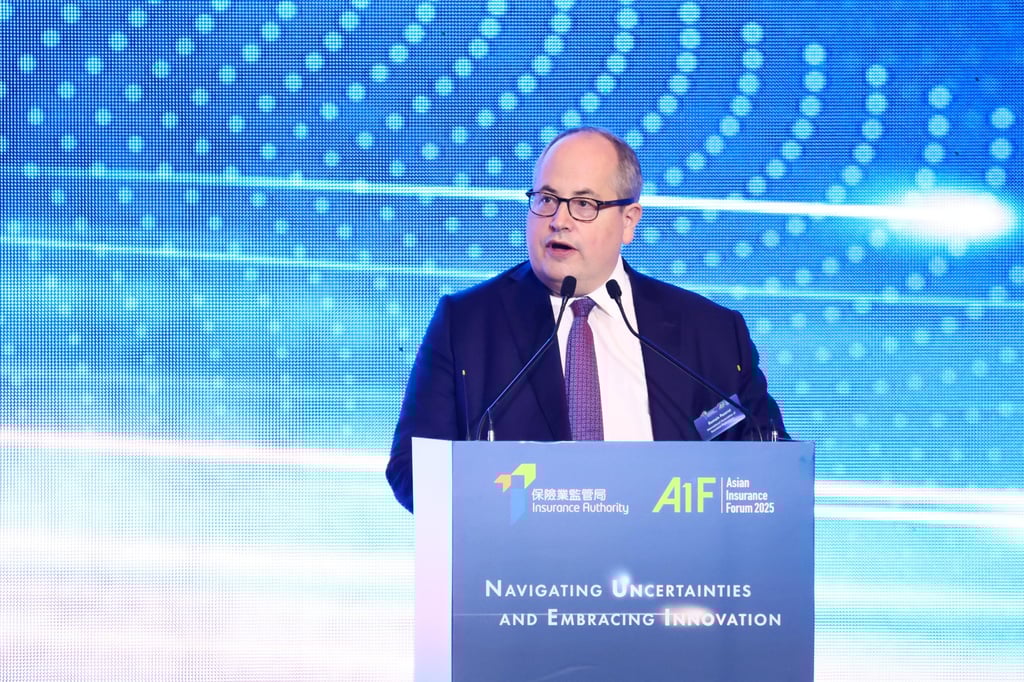
Dieter Hendrickx, Head of Insurance Supervision at the National Bank of Belgium, pointed out that investments in alternative assets could bring benefits, enabling insurers to match long-term liabilities, generate higher returns and enhance portfolio diversification. However, insurers must establish investment policies grounded in robust due diligence and sound governance, and supervisors need to develop a common understanding of these asset classes and examine the roles insurers play in these markets, as the dynamics may have implications for financial stability.
On climate risk, Debasish Panda, former Chairperson of the Insurance Regulatory and Development Authority of India, said that climate change has shifted from being seen as a long-term environmental issue to one that affects the core financial resilience of insurers, underscoring the need for more detailed data, better governance and clearer disclosure.
Siham Ramli, Director of Communication and International Relations at Morocco’s Supervisory Authority of Insurance and Social Welfare, concurred and outlined efforts made by Moroccan authorities to close the protection gap and strengthen resilience across public and private sectors, including the introduction of a regulatory framework for climate risk management and the development of products to provide coverage for vulnerable populations.
Speaking on how regulators could effectively tackle these challenges while fostering innovation, Bassam H Albader, Deputy Chief Executive Officer for Prudential Supervision of the Saudi Insurance Authority, highlighted the importance of proactively engaging with global regulatory peers and leveraging sandboxes as safe environments for the industry to test new ideas.
Ageing societies and the reinvention of health and elderly care
The second panel discussion turned to demographic change. Moderator and IA’s Non-Executive Director Dr Fung Hong set the stage, noting that the ageing population in Asia is bringing increasing pressures on public healthcare systems, and insurance can respond to some of the challenges.
Prof Yeoh Eng-kiong, Director of the Centre for Health Systems and Policy Research of the Jockey Club School of Public Health and Primary Care at the Chinese University of Hong Kong, summarized the complexities of the issue: while an ageing population drives greater health needs due to rising chronic diseases, technological advances have increased costs and disrupted traditional care models. A systemic approach is therefore essential to improve population health, build capacity and reduce the decline in later stages of life.
Dr Cecilia Fan, Under Secretary for Health of the HKSAR, gave an overview of Hong Kong’s dual-track healthcare system, where the public sector serves as a safety net and the private sector offers choice. She said that the launch of the Voluntary Health Insurance Scheme has enhanced transparency in the private insurance market, strengthening public confidence in using insurance to finance secondary and tertiary healthcare services.
The role of the private sector was explored by Antony Leung, Group Chairman of Nan Fung Group and New Frontier Group. He described how the group’s network of hospitals and clinics in Hong Kong and the Chinese Mainland, combined with research capabilities and artificial intelligence applications, has formed an integrated ecosystem that supports diagnosis and treatment, while also orienting services towards prevention first to improve people’s health span.
Li Qing-ming, Group Business Director of China Taiping Insurance Group, reflected on how insurers have been adapting by shifting their role from “payer” to “life-cycle health manager”, offering services that embed health management, nursing care and lifestyle guidance. He also described how partnership models that bring together insurers, medical care and elderly care providers and the Government as a key direction for future development.
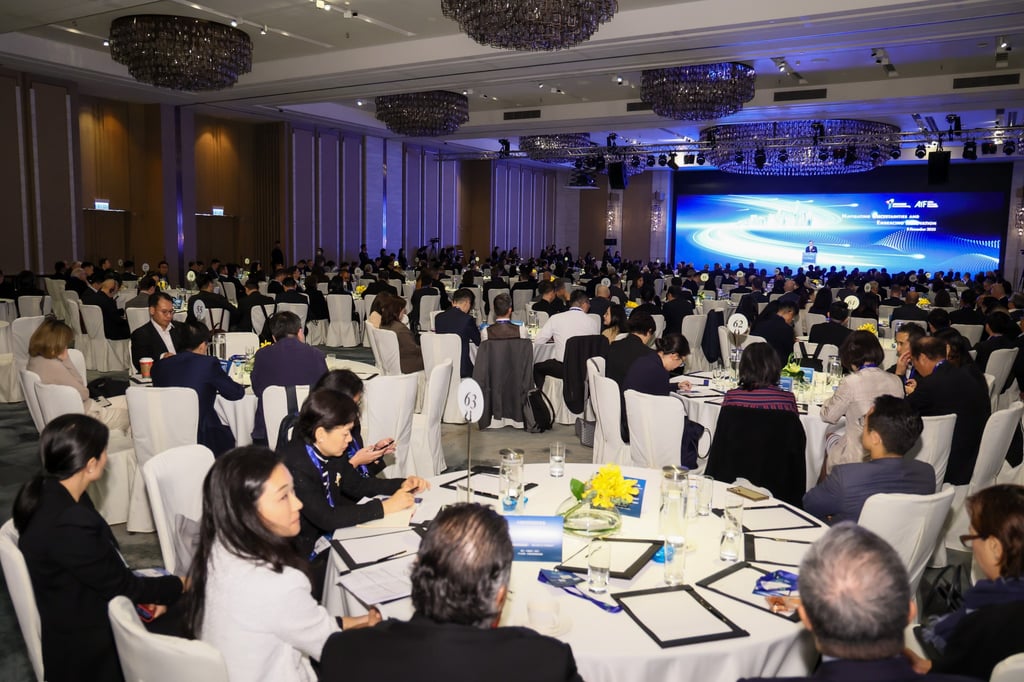
The afternoon panel, moderated by Neil Tan, Founder and Chairman of the Artificial Intelligence Association of Hong Kong, explored the influence of AI and the importance of its responsible and ethical use.
Biswa Prakash Mishra, Group Chief Technology and Life Operations Officer of the AIA Group, cited examples of how AI could address pain points in claims management and customer relationships. By integrating AI into digital platforms, routine transactional tasks and processes can be automated, freeing up resources to provide more personalized and high-touch services to customers, ultimately generating greater value.
So how can we ensure responsible and ethical application of AI? Rodrigo Kede Lima, President of Microsoft Asia, emphasized the need for corporates to establish frameworks that prioritize safety, transparency, inclusiveness, privacy and accountability. He also noted that open discussion between the public and private sectors will help shape and advance these frameworks.
On public-private collaboration, Lucy Wong, Advisor of the BIS Innovation Hub Hong Kong Centre, said that dialogue between regulators, insurers and start-ups is crucial, enabling the authorities to truly understand how different technologies function, and the private sector to demonstrate their benefits and risks, thereby facilitating mutual understanding and scaling of applications.
In terms of nurturing AI talent, Prof Tam Kar-Yan, Vice President of Administration and Business and Chair Professor of Information Systems, Business Statistics and Operations Management at HKUST, highlighted that AI education should span the entire organization, from equipping entry-level staff with technical skills to helping senior management understand AI’s potential and future trajectory. He encouraged companies to start with pilot AI projects and gradually scale up as they gain experience.
A close that looked forward
In their closing remarks, IA’s Chairman Stephen Yiu and Chief Executive Officer Clement Cheung concluded that Hong Kong could become a place where regulatory co-operation, technological experimentation and industry development co-exist. They also took the opportunity to welcome guests to join the IAIS Annual Conference which will be held in Hong Kong in November 2026 for more inspiring discussions by global and local influential speakers.