Remote villages, surprise cocktail bars and hilltop churches on Nagasaki’s Goto Islands
Those searching for solitude in these tranquil Japanese isles follow in the footsteps of persecuted Christians forced to practise their faith in secret

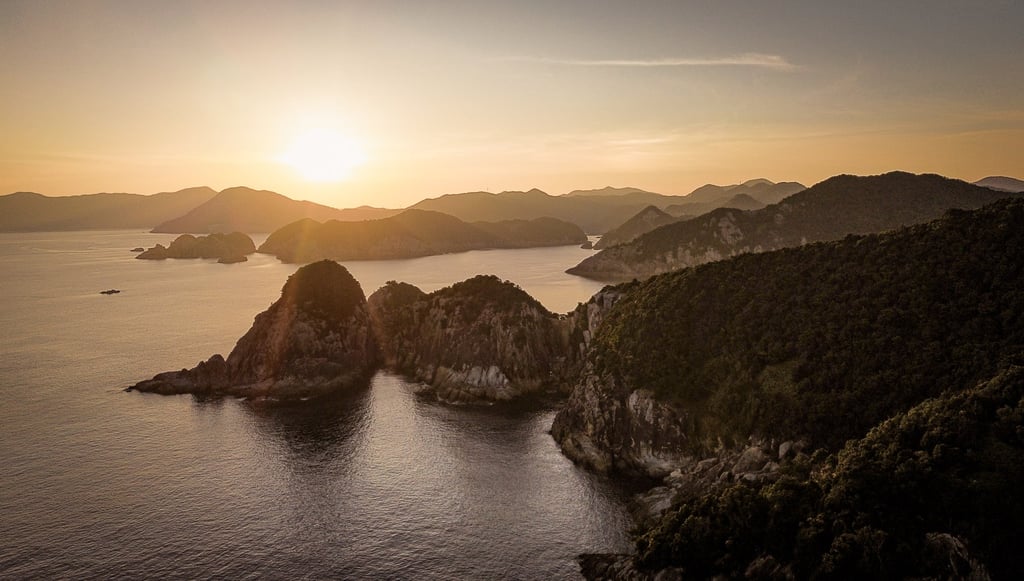
We approach from the east, leaving the main islands of Japan behind. The late afternoon sun bounces off the sea in a blinding glare as our anchor chain rattles out of its locker and slides into a small bay off Tairajima Island.
All is still as our sailing boat, the Teng Hoi, gracefully pirouettes in the currents, searching for her point of balance, where she’ll rest for the night.
Below the sinking sun stretch the Goto Islands, or Goto Retto, literally “five-island chain”, an archipelago of 140 specks of rock off the west coast of Kyushu. From small, outlying Tairajima the five main islands – Wakamatsu, Nakadori, Naru, Hisaka and Fukue – spread some 85km to the south.
The sails need folding and lines are yet to be coiled but the gin-clear water is irresistible and no other boats are in sight. We dive over the railing, the sea bottom clearly discernible. We pull on masks and dive deeper, collecting handfuls of top snails from the seabed for dinner. We explore the reefs around the edge of the bay, startling parrot fish and myriad other tropical fish that flit through the colourful coral.
Although we are alone, we are not the first to come to the Goto Islands seeking seclusion – and some of those who came before us were hiding for their lives rather than looking for a remote bay to swim in. Although open water may separate them from the rest of Nagasaki, the Goto Islands are bound by history to the centuries-long story of the prefecture.