Advertisement
PostMag
Life.Culture.Discovery.
Locals' Guide
PostMagTravel

Insiders’ guide to Bhutan, the Land of the Thunder Dragon

The tiny Himalayan kingdom has plenty to energise visitors after any number of breathtaking hikes

Reading Time:5 minutes
Why you can trust SCMP
The Paro Taktsang, or Tiger’s Nest Monastery, Bhutan’s most popular tourist attraction. Photo: Bibek Bhandari
Bibek Bhandari
Bhutan is known as the Land of the Thunder Dragon due to the frequent thunderstorms that sweep its dramatic valleys. But visitors are often welcomed by stillness after a stomach-churning landing in mountain-ringed Paro, home to the country’s only international airport. There is rarely much traffic during the hour’s drive to the capital, Thimphu, to drown out the sound of gushing rivers and the wind.
Since opening up to tourists in the early 1970s, Bhutan, the world’s only carbon-negative country, has prioritised “high value, low volume” tourism, to prevent overcrowding.

To help visitors find their way in and around Thimphu, Paro and Punakha, the three major centres of the tiny kingdom sandwiched between India and China, we asked three insiders for their recommendations.

Spiritual awakening
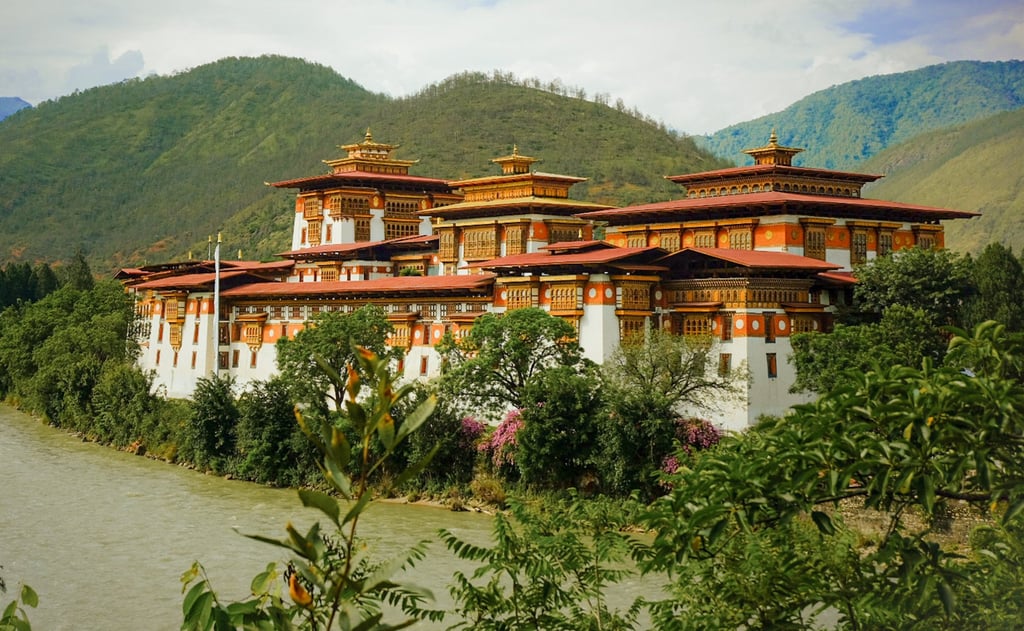
The Punakha Dzong is one of Bhutan’s most significant architectural marvels. Photo: Bibek Bhandari

“Everyone visits the Punakha Dzong [a dzong is a fortress-monastery], but the Khamsum Yulley Namgyal Chorten is a must-see when you’re in Punakha,” says Punap Ugyen Wangchuk, photographer and author of Authentic Bhutanese Cookbook (2010). This 30-metre-tall hilltop monument, commissioned by the mother of King Jigme Khesar Namgyel Wangchuk, offers panoramic views of the Mo Chhu River valley and surrounding mountains. It’s about an hour’s hike from Yebesa village.

Advertisement
Among Bhutan’s thousands of temples and monasteries, the Chimi Lhakhang temple in Punakha is known for something very specific.

“It’s just here that you’ll find representations of [human] phalluses, not at any other monasteries or temples,” says Tshering Denkar, Bhutan’s first female travel blogger and vlogger. “It’s a really powerful temple because we believe it blesses couples who are struggling to conceive children, and a lot of Bhutanese go there.”

Advertisement

Asha Kama Wangdi, one of Bhutan’s most accomplished artists, believes that “Paro is very spiritual”, not least because of the Taktsang (Tiger’s Nest Monastery), Bhutan’s most popular tourist attraction.

Advertisement
Select Voice
Choose your listening speed
Get through articles 2x faster
1.25x
250 WPM
Slow
Average
Fast
1.25x