Advertisement
PostMag
Life.Culture.Discovery.

Bordeaux is embracing organic for a different class of red

The winds of organic change are being felt even among the vineyards of France’s most traditional wine-producing region

Reading Time:8 minutes
Why you can trust SCMP
At Château Anthonic, owner Jean-Baptiste Cordonnier grows crops between the vines to increase biodiversity. Photo: John Brunton

Bordeaux and bio – the French term for “organic” – are not words that are often seen in the same sentence. The world-renowned wines from the 7,000 or so chateaux that define this part of southwest France have an image of quality that is based on tradition rather than trends. So it is not surprising to learn that even today, official figures from the Bordeaux Wine Council reveal that only about 25 per cent of Bordeaux wines come from vineyards that are certified organic.
Nevertheless, as I discovered on a series of recent road trips, behind the conservative, old-fashioned image, tremors of radical change are rippling through France’s most famous vineyards. Innovative vignerons are crossing once-sacred boundaries, not just responding to consumer demand for organic wines, but embracing cutting-edge biodynamic production techniques and the unpredictable zero-sulphites world of natural wines. And it is no longer rare to see terracotta amphorae and ceramic jars standing alongside conventional oak casks.
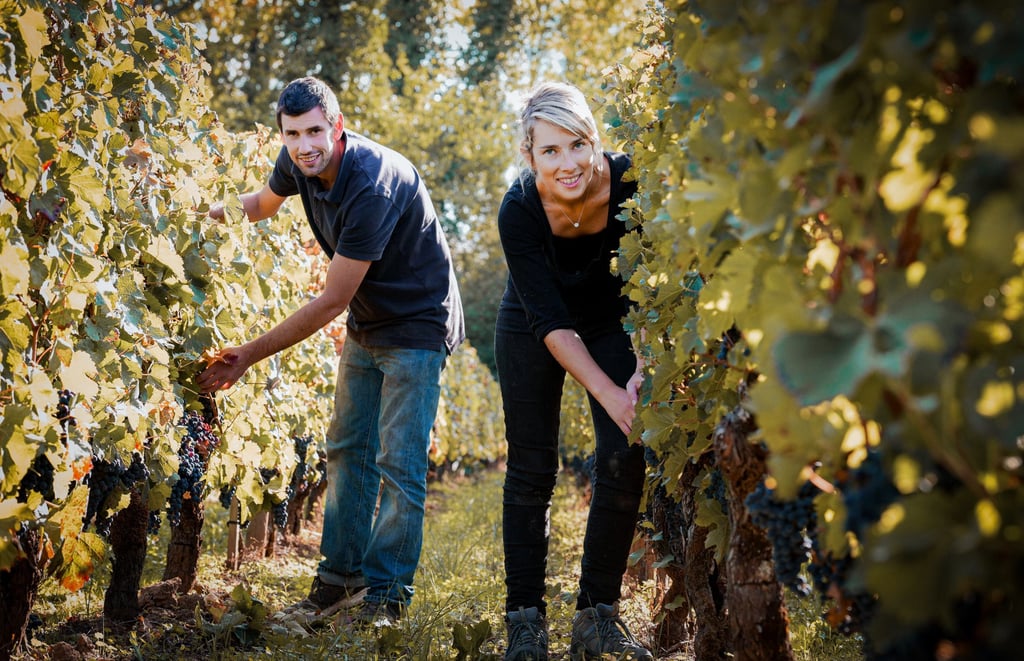
At Château La Grande Clotte, owners Julie and Mathieu Mercier do most of the work themselves, with Julie looking after the vines. Photo: Château La Grande Clotte

The Bordeaux vineyards are spread over an area of 110,000 hectares, and to explore these new trends, my designated driver and I travelled through the lavish chateaux of the Médoc, Sauternes and Saint-Émilion, visited wineries in Blaye and Entre-Deux-Mers, and even ventured to little-known vineyards in remote corners of the Bordelais (a term used to describe the wine-growing region around the city of Bordeaux).

Advertisement

In addition to families who have been making wine here for centuries, we met dynamic female vigneronnes and enthusiastic newcomers who had abandoned business careers to become winemakers. And for the wine-loving traveller, tourism here has moved on from formal cellar tastings to envelop everything from wellness vinotherapy to vineyard picnics and escape games.

Heading north from the city of Bordeaux and along the left bank of the Gironde estuary, we soon reach the prestigious Médoc vineyards, which produce wines that you find in gourmet restaurants around the world: Margaux, Saint-Julien, Pauillac.
Advertisement

Each chateau seems more opulent and sumptuous than the last, surrounded by perfectly manicured vineyards – so the anarchic vines of elegant 18th century Château Anthonic, broken up into small plots by hedges, ditches, woods and fruit trees, could not look more out of place.

Château de La Rivière, where the elegant graphic lines of the vineyard look down over the Dordogne river. Photo: John Brunton
Advertisement
Select Voice
Choose your listening speed
Get through articles 2x faster
1.25x
250 WPM
Slow
Average
Fast
1.25x