Former Hong Kong rugby team captain reflects on the first Sevens tournament in 1976
The former England international rugby player tells Annemarie Evans about his turn as captain of the Hong Kong team at the inaugural Sevens tournament here in 1976

I was born in Plympton, Devon (southwest England), in 1943. My family moved to London because of my father’s work and then to Glasgow, where I was in a preparatory school, Belmont House School, in Newton Mearns. That’s where I learned to play rugby. I went with the school team to Murrayfield (Stadium in Edinburgh) to watch Scotland play. My father was in the packaging business and he was the managing director of the Scotland part of the organisation. My mother was a physiotherapist. We had a very large house and garden in Pollokshields. The guy who lived opposite was a civil engineer. I enjoyed his company, and when I was very young, I said, “I want to do that.” I have an older brother and a younger sister.
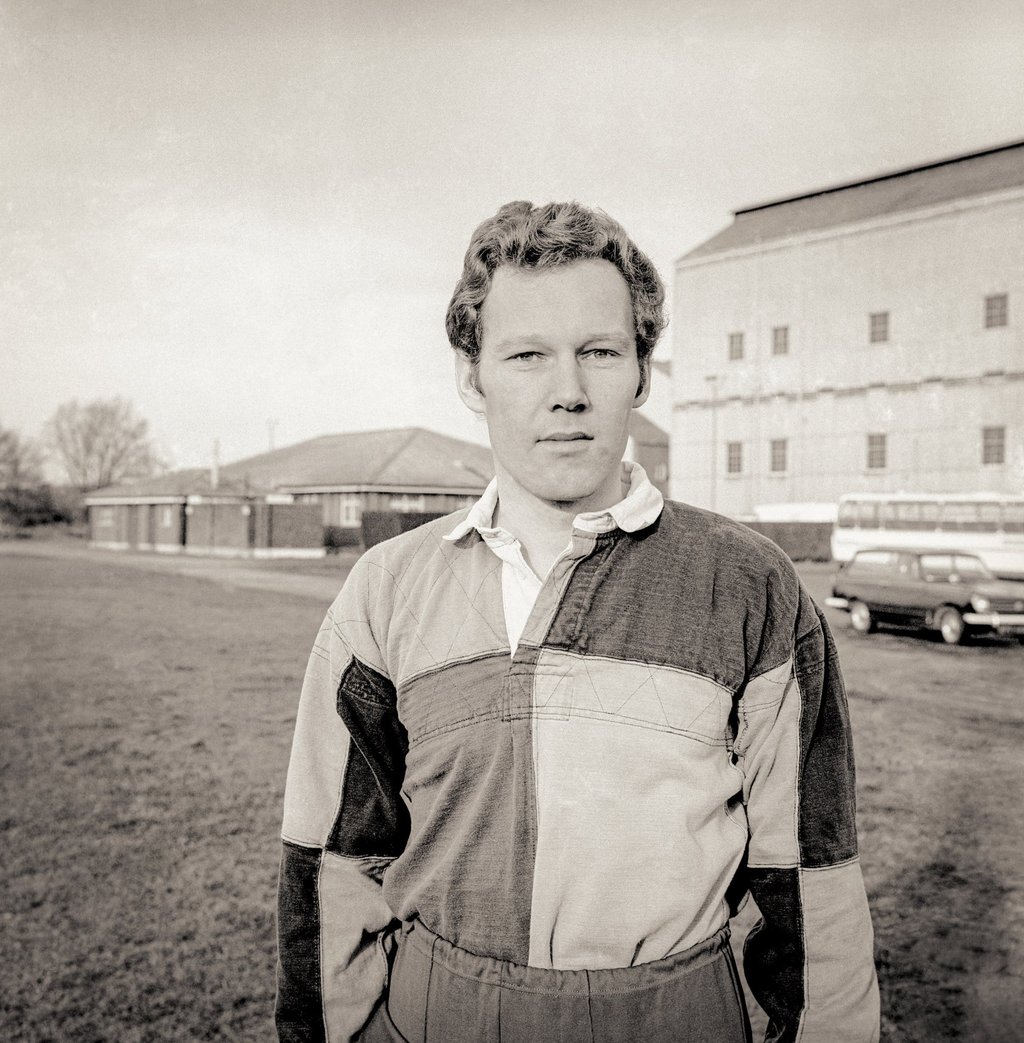
At Belmont House in the winter, there was only one sport: you will play rugby! I was a centre; I’ve always been a centre. You had to be quick and able to pass and run. I left Belmont House having captained the school 15s. At the age of 13, I was sent to Cheltenham College in Gloucestershire (southern England), where I later took my A-levels. At Cheltenham College, I was captain of the Junior Colts. I studied sciences – physics, chemistry, biology – to do civil engineering, which I took at Hatfield Polytechnic (now University of Hertfordshire). Then I did three years in London with the Greater London Council Public Health Engineering Department to qualify for being admitted as a full-time civil engineer. We went into sewers – not fun.
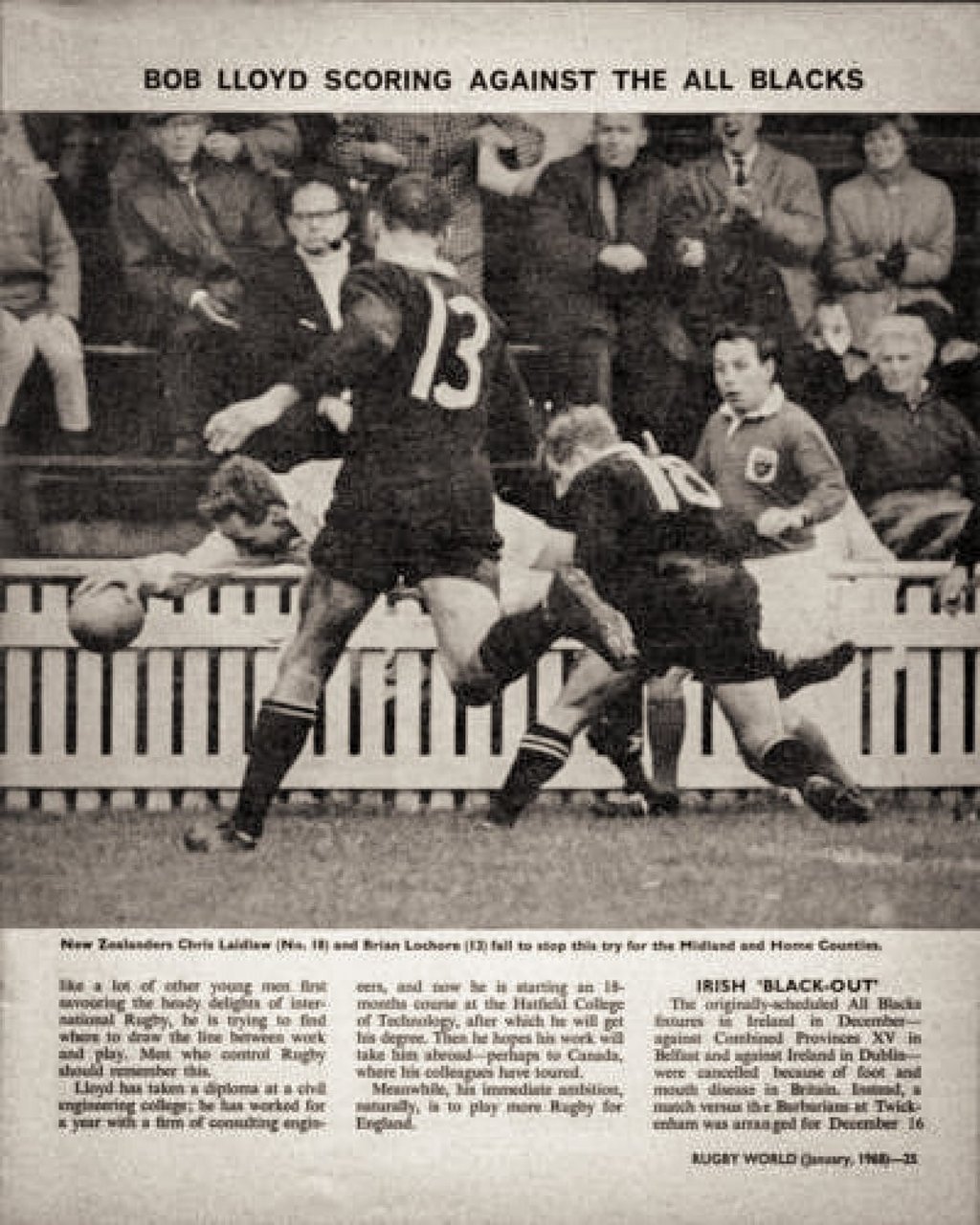
At Hatfield, I played for the Harlequins at Twickenham. I also played a midweek game for Surrey County. Surrey was part of the Midlands, London and Home Counties group and I got picked to play against the All Blacks in October 1967, on the second game of their tour. We played at Leicester and I was fortunate enough to score a try.
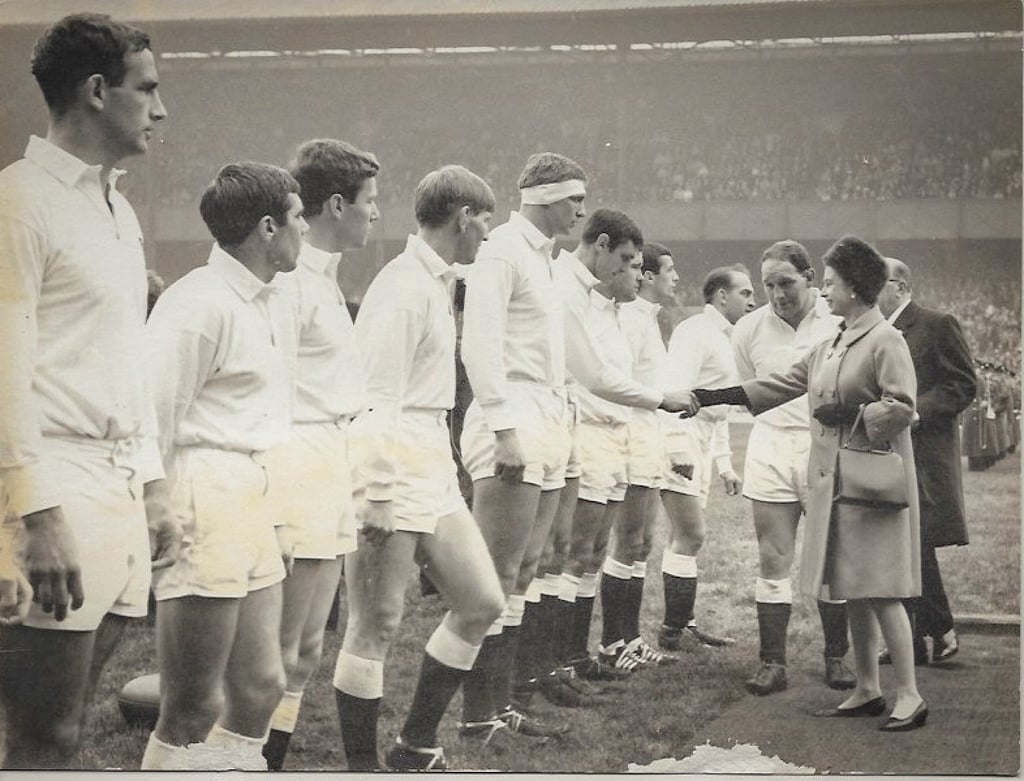
Danny Hearn led the backs that day and he was my co-centre. Ten minutes after the start, he was lying face down on the ground. He said, “I can’t move my legs.” They brought on the stretcher and took him off. (Hearn had broken his neck and was left paralysed from the neck down). A week later, I got invited to play for England (again against the All Blacks). I remember standing, listening to the national anthem at Twickenham, absolutely petrified. The queen was there watching, so it was absolutely wonderful. I scored two tries. It was my best year, 1967. At the last game in the New Zealanders’ tour of Britain, they were playing the Barbarians and I got picked for that with people like Barry John at fly-half, Gareth Edwards at scrum-half and so many stars of yesteryear, particularly from Wales, but still we didn’t beat them. But I scored another try and I was chuffed with that. And I could claim that I’d scored four tries (against the All Blacks) and was the only Englishman to have done so.
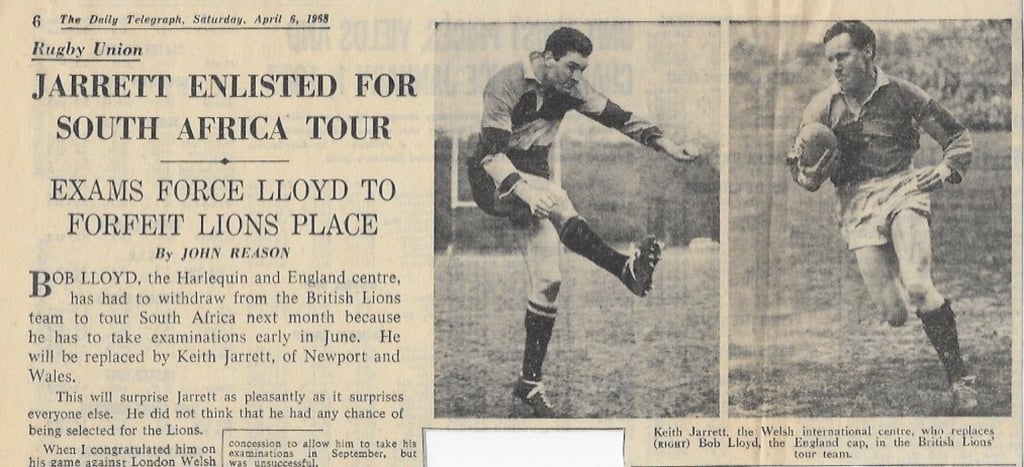
In the Five Nations in 1968, England drew with Wales and Ireland. We lost to France, but we beat Scotland at Murrayfield. And a few days later, after the Scottish game, which was the last one of that Five Nations, they announced the British and Irish Lions team would travel to South Africa. And lo and behold, I was in it. Now what to do? I was given an option by my head of department at Hatfield Polytechnic: you go and delay your exams for 12 months, or you don’t go and you take your exams. I withdrew. I went out into the car park and sat in my car and wept like a child, because I knew I was going to pull out. That’s the first and last time I cried as an adult. I was so emotional about it.
In 1971, I was picked for England’s Far East Tour. Three games in Japan, one in Hong Kong, one or two in Singapore and one or two in Sri Lanka. In Japan, the England captain, Budge Rogers, got injured in the first game against Waseda University. He couldn’t play in the second game in Osaka, so they needed another England captain. About five years ago, Budge was visiting Hong Kong and he told me over a long lunch, “I picked you.” I captained England against Japan and we won fairly comfortably. I’ve got a photo of us at Kai Tak Airport.