Author Hu Anyan on work, writing and overcoming an inferiority complex
The author of I Deliver Parcels in Beijing, a viral account of China’s gig economy, will appear at the Hong Kong International Literary Festival in March
I WAS BORN in Guangzhou in 1979. In the 1980s and 90s, Guangzhou was a relatively special city in China. Many of my classmates had relatives in Hong Kong. It was more open, more connected to the outside world. People generally valued profit and were practically minded. The direct comparison with Hong Kong coupled with the continuous transmission of a kind of folk culture means that Guangdong has always had a very secular society. Even during the political movements of the 50s, 60s and 70s, people didn’t completely believe in those things.
I WASN’T THE kind of student who liked school. Once, the teacher forgot her textbook and borrowed mine since I was in the front row. When she held it up, the class laughed because I’d covered it with drawings. I think I have a mild form of ADHD. I just couldn’t sit and concentrate.
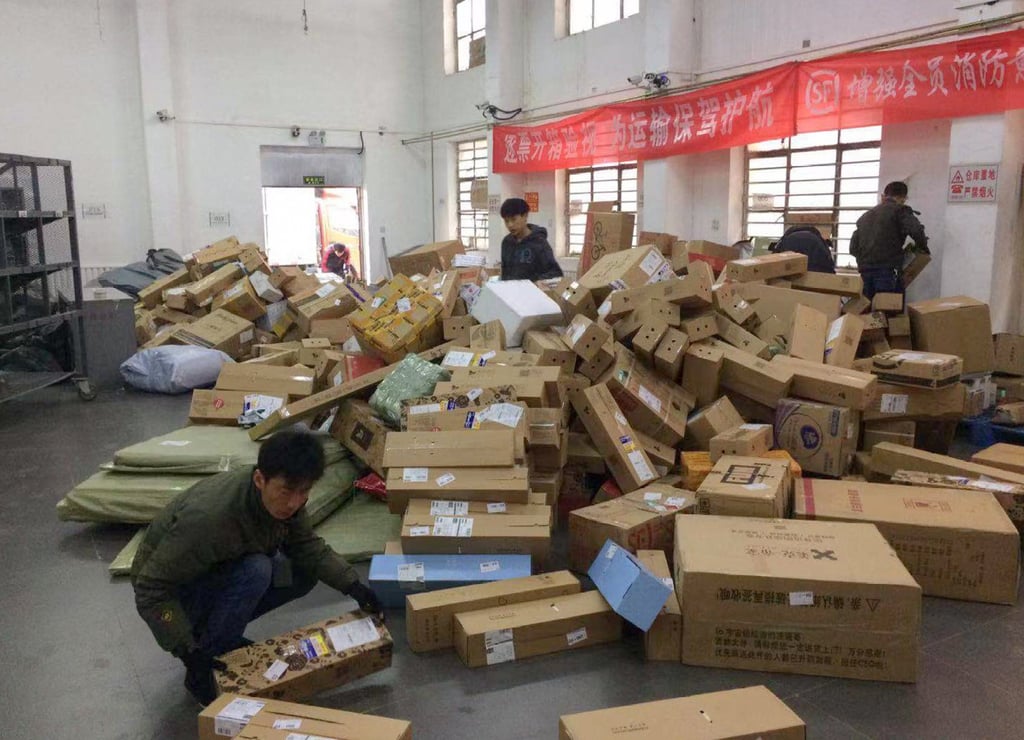
Hu Anyan sorts parcels during his days working as a courier in Beijing, China. Photo: courtesy Hu Anyan
I HAVE BEEN reading manga ever since I learned to read. The themes of passion, struggle and friendship had something in common with the moralism promoted in China at that time. Sometimes, I’d even cry while reading them. The first I remember is Osamu Tezuka’sAstro Boy. Then I read Saint Seiya, Dragon Ball, Ranma ½ and Slam Dunk. I read pirated versions, printed on offset paper, only a third the thickness of the Hong Kong edition.
MY FAMILY WERE immigrants to Guangzhou. My mother moved there with my grandparents when she was six, from Shanghai. During the Cultural Revolution, she was sent to the countryside to work on a farm in Hainan. That’s where she met my father, who came from a poor peasant family in Lufeng, in eastern Guangdong. He left the countryside to join the army. His mother tongue was Hakka. He couldn’t speak Cantonese, so he spoke Mandarin. I spoke to my mum and grandparents in Shanghainese, and to my sister in Cantonese. Our family was relatively isolated. Our values, culture and even language were different from those of the locals.
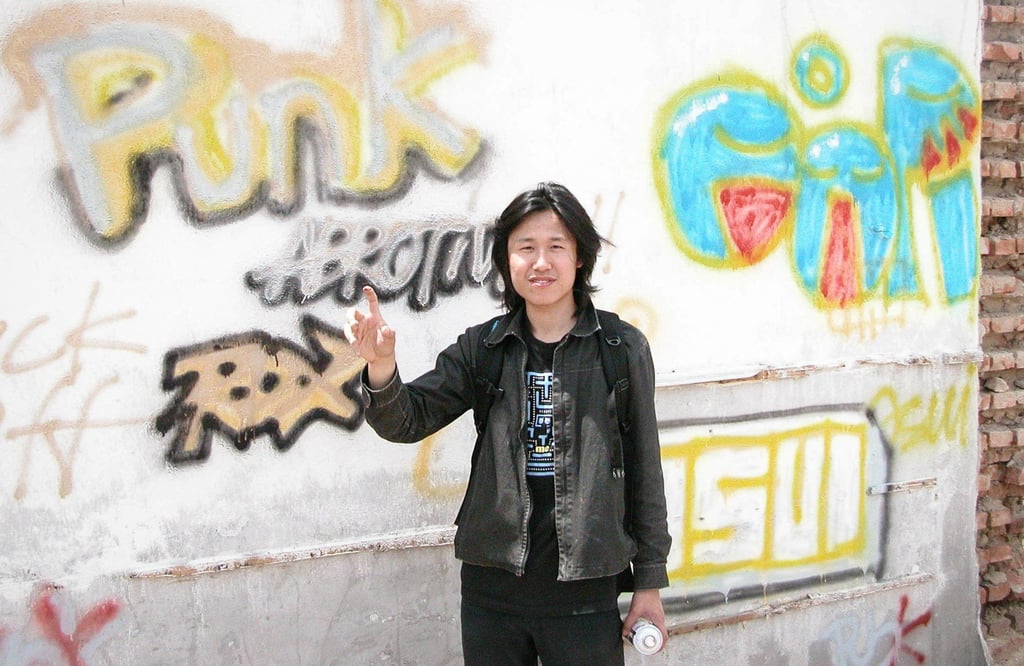
Hu Anyan in Beijing in 2004. Photo: courtesy Hu Anyan
UNIVERSITY ENROLMENT hadn’t yet expanded and your employment prospects were better if you went to a vocational school. So, I studied home-appliance repair. In 1999, I started an internship as a waiter at a four-star hotel, working eight hours a day. After six months, I left. I worked various jobs – at a clothing store, a petrol station, an ice-cream wholesaler, delivering fast food and at a small studio doing architectural renderings. I also studied advertising design at night school.
IN 2003, ONE of the top commercial manga studios in China was recruiting apprentices. Most of the friends I met there had broader interests than me, in novels, literature, movies, rock music, even philosophy. With them, I moved to Beijing, where many of the editorial departments of domestic manga publications were based. We wandered around, chatted, talked big but drew only occasionally. We relied entirely on friends and family for income. In the end, we were overwhelmed by the pressures of reality and went our separate ways.