How Zara Chui aims to find early-warning solutions for fatty liver disease
PostMag talks to five bright and ambitious recipients of the AIA Scholarships initiative to find out what lies ahead for them: here, we meet Zara Chui, a doctoral researcher seeking early-warning solutions for detecting fatty liver disease

Fatty liver disease, Zara Chui Siu-wa will tell you, has a strict definition: when more than 5 per cent of liver cells contain fat. But while defining the cause is straightforward, the hard part is identifying it. In most cases, there are no symptoms until the condition becomes severe. “It is a relatively silent disease,” she says, “but it is also the driver of other diseases.”
Chui, 24, is a second-year PhD student in medicine at the University of Hong Kong, specialising in endocrinology and metabolism. Her research area is fatty liver disease, also known as metabolic dysfunction-associated steatotic liver disease, or MASLD.
“Many people have fatty liver disease without knowing it,” she says. According to a recent study published in the Singapore Medical Journal, the prevalence of fatty liver disease in Asian adults has increased significantly, rising from 25.3 per cent in 1999 to 2005 to 33.9 per cent in 2012 to 2017 – roughly one in three people – underlining the importance of the topic.
Fatty liver disease’s “invisibility” is what makes it dangerous. It is mistakenly associated only with visible body fat, alcohol use or obvious ill health, but someone can appear slim, or have a low body-fat percentage, and still have liver dysfunction. As fat accumulates in the liver, it becomes a stressor: liver function deteriorates, inflammation builds and, over time, the cycle can contribute to fibrosis, cirrhosis, liver cancer and other metabolic conditions.
For this AIA Scholar, the liver’s complexity begins with a paradox: it is one of the body’s most regenerative organs, able to heal itself in ways many others cannot, and that regenerative potential was what first drew Chui in. But the deeper question – the one that continues to fascinate her – is why that ability disappears at a certain point.
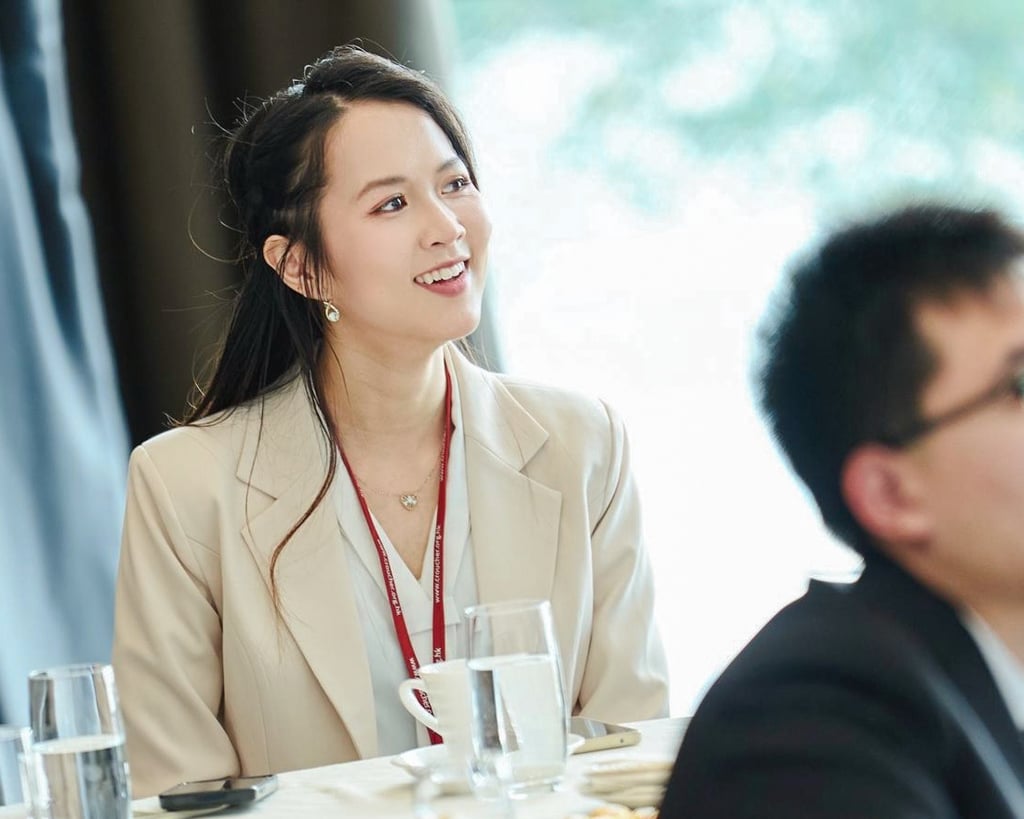
Because the liver is famous for healing itself, many assume that early-stage fatty liver disease is harmless. Chui wants to challenge that idea. Once fibrosis or cirrhosis develops and the liver stiffens, its regenerative capacity is blunted. Even if the organ retains its normal size, it can no longer heal itself or function as it once did.
Her research is aimed at finding solutions to spot the warning signs of the condition early enough to reverse the damage. Instead of relying mainly on liver biopsies, which are invasive, or ultrasounds, which can be costly and are better at reflecting later-stage stiffness, Chui is investigating how to maximise the use of a far simpler indicator to detect the existence of fatty liver: blood. So far, blood tests have not been definitive enough to signal the disease on their own, meaning other, more surgical, or more expensive assessments are usually required. She wants to change that.
Using AI-assisted systems, she analyses liver-tissue slides to identify features such as lipid droplets and immune cells – small visual clues that may point towards larger disease patterns – which are then cross-referenced with protein levels in blood, in the hope of recognising biomarkers that can support earlier diagnoses, more personalised treatment plans and, eventually, new drug targets for a disease with limited medication options.
Her work matters particularly for non-Western patients, as existing tools do not always reflect biological differences between populations. “Many AI algorithms and non-invasive panels are developed using predominantly Caucasian population data. But the progression pattern of liver disease in Asians is very different,” says Chui.
She believes AI algorithms for fatty liver disease should recognise biological and genetic differences. MASLD research on non-Western populations is still relatively limited, she says. However, with the kind of resources her pharmaceutical biotechnology lab team at HKU can access – unique biobank clinical data, including blood and tissue biopsy samples from 1,200 obese patients of Chinese ethnicity, collected by the Hong Kong Cardiovascular Risk Factor Prevalence Study – more can be done to make good use of available information.
Despite studies showing its strong performance, Chui remains cautious about AI. A diagnostic platform, she believes, should assist clinicians, not replace them. AI can provide data and hints, but the final diagnosis still needs human judgment and clinical context.
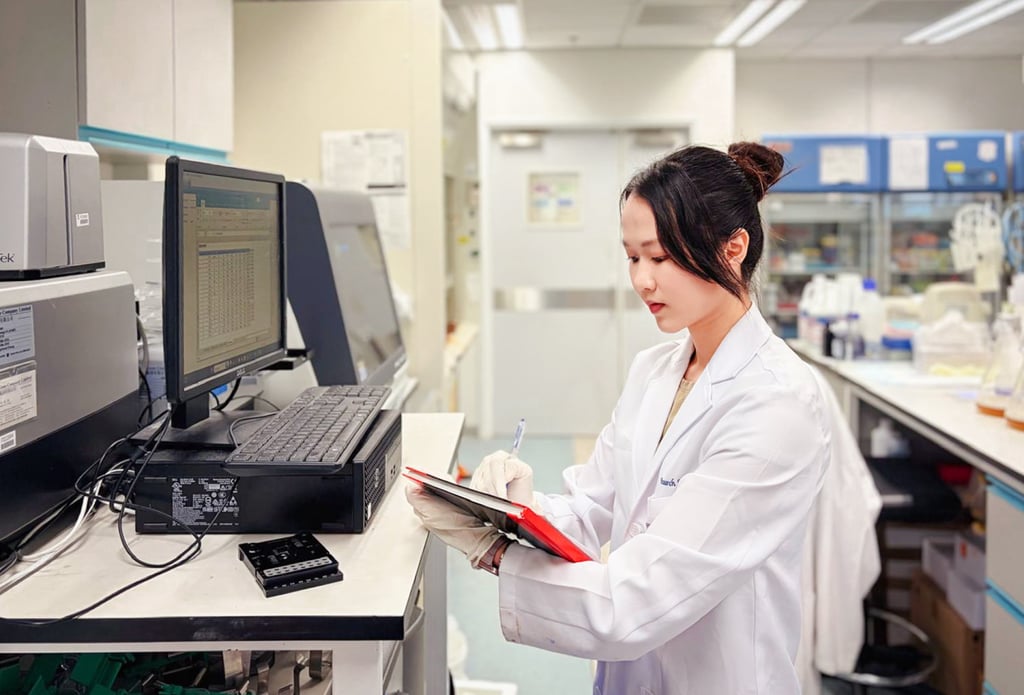
Her path to the lab began in secondary school, when she learned about iGEM, an international competition specialising in synthetic biology. It offered her a rare opportunity to glimpse the inner workings of the research world, through presentations led by various universities. Later, during her time as an undergraduate in biomedical sciences at HKU, she interned at a biotech start-up at Hong Kong Science Park, working on metal 3D printing for orthopaedic implants and surgical guides – an early lesson in how raw lab discoveries can turn into real-world medical care.
In her third year, she travelled to Switzerland with the company as it explored overseas growth, where she saw research from a different perspective: not only as experiments and prototypes, but as factories, hospitals, banks, tax incentives, talent schemes and market strategy. It was an eye-opening experience that showed her how scientific ideas can be translated into products, but it also clarified her path forward: to stay in academia.
What the AIA Scholarships gave her was time. With the programme’s funds covering the tuition fees for her undergraduate degree, Chui gained time that she would have otherwise lost to chasing hourly wages through part-time jobs. “It’s how I was able to do so many lab and industry internships,” she says, adding that the support helped her “discover what I wanted to do next”.
But even with her mind set on her goal, research is anything but glamorous. Much of her work happens behind the scenes: cleaning data, repeating experiments, studying inconsistent results, annotating images and testing biomarkers. Failure is a daily occurrence.
In textbooks, experiments seem foolproof: follow the protocol and expect the result. In real life, even the same steps can produce different outcomes. Wrestling with unexpected results is exhausting, Chui admits, but it is also when the real breakthroughs happen.
After her PhD, Chui hopes to continue researching fatty liver disease and explore whether her biomarker candidates can be translated into drug development. One day down the line, she plans to teach and pass on knowledge and curiosity to a new generation.
For Chui, doing good means breaking the silence around a quiet disease, raising awareness of an underestimated health risk and taking action before the organ loses its chance to heal.